I took the CLT


Clay Daniel is the founder of Clayborne Test Prep and Tutoring, a Charlottesville-based company offering college and graduate school entrance exam preparation, personalized tutoring, and organizational coaching. A graduate of Harvard University and Dallas Theological Seminary, Clay brings over 15 years of experience in education and test preparation, with near-perfect scores on numerous standardized exams. He has also served as a question editor for the Classic Learning Test (CLT), an undergraduate admissions exam rooted in classical education. Through Clayborne, Clay is dedicated to expanding access to high-quality test preparation, helping thousands of students build brighter academic futures.
Picture a guy in his 30s amidst a sea of high school students early on a Saturday morning. They’re all standing in a high school hallway waiting to take the SAT...but what is the old guy in the hoodie doing there? This is kind of weird.
That old guy was me...in the early years of Clayborne (2009-2014 or so), I showed up with the students on the occasional Saturday to take the official SAT and ACT. The hope was that sitting with the students in the intense environment of the official test would increase my ability to guide them successfully, not just to the threshold of test day, but through it and beyond.
Now? I’m an older guy, and it’s even more impossible for me to blend in with high school students than it was in my thirties–hoodie or no hoodie. But I still like to stay current on all the major standardized tests. For this reason, I’m thankful–among the many reasons I’m enduringly thankful for the Classic Learning Test–that the CLT is an online test that can be taken right from my home office. So in January 2026, I decided to do just that! I once again took a standardized test among a sea of high schoolers...but none of them happened to be sitting in the same room. Let me tell you about my experience.
Consistent content and a seamless experience
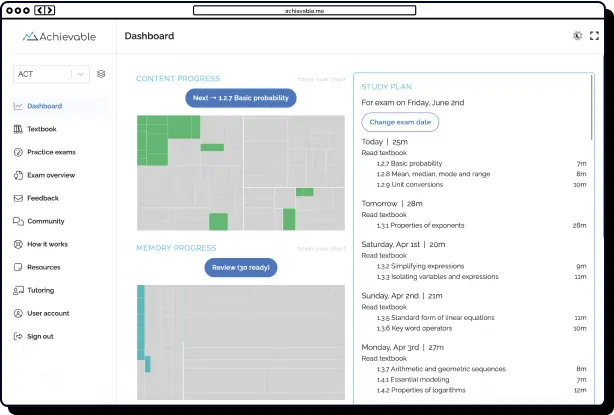
Now it’s true that I generally knew what to expect. I spent a season as a freelancer editing and writing questions for the CLT; I have tutored quite a few students for the test over the past five years; and my team and I wrote the first online, comprehensive self-study course for the test, in partnership with the outstanding team at Achievable. So my curiosity about content was not a general question about what I would find, but about how consistently the official test content would mirror the online practice tests and the material found in the CLT Student Guide. I also wanted to explore the test-taker experience: would the official test feel like the practice tests that are available online?
But first, a bit of history. The CLT has been an online test since its inception in 2015 (a paper-based test has been available, but only for test takers with particular accommodations or for schools without the digital bandwidth to administer the online test to their students). This was a major boon to the CLT during COVID; while the SAT and ACT had to cancel multiple administrations of their tests in 2020 due to social distancing concerns, the CLT kept right on humming. The CLT has also avoided rampant cheating that has plagued other testing providers. In short, the team at CLT is an old hand with digital tests; they have had the opportunity to smooth out many hiccups over the years.
The first thing to note is how well the CLT prepared me for test day. I got no fewer than five emails in advance of test day, several of them helpfully divided into “Part 1,” “Part 2,” etc. I even got a post-test email thanking me for taking the CLT. Following these pre-test instructions meant I entered the test day with almost no uncertainty about what to expect.
As for test day itself, here’s another feature that makes CLT unique among college-preparatory standardized tests: you can take the CLT anytime during the day of test day, from 7:00 a.m. to 7:00 p.m. This proved mightily convenient for me, as I was busy with other responsibilities until early afternoon; even for a high school student with a relatively free Saturday schedule, the chance to choose the ideal time of day for wakefulness and focus represents a major advantage for the test taker.
Once I logged in and started the test, things went smoothly. The interface has improved compared to the online practice tests, but the format is similar enough that any student who has practiced online will know what s/he are looking at. Working through the Verbal Reasoning and Grammar/Writing sections, I encountered the characteristic mix of ancient, medieval, and more recent writings that makes the CLT’s verbally oriented sections so much more interesting than a test with only (or mostly) modern selections. The quantitative section bore the telltale challenges to one’s logical and critical thinking abilities. Unlike the two verbally-oriented sections, the CLT quantitative section proceeds from easier to harder questions. Given this, I was surprised at the placement of a couple of the questions (one or two seemed too early and another one or two too late), but I know CLT tests their questions for difficulty based on previous student responses (correct vs. incorrect). Therefore, I have to conclude that, in these cases, I have misjudged the difficulty of the question I’m viewing.
Well, what about the results?
I know I’ve kind of buried the lede here. You’re probably wondering: how did the 20-plus-year test prep professional do on this college entrance exam? I had high hopes, as I’ve managed perfect scores on the ACT, SAT, GRE, and GMAT in the past. Working with online CLT practice tests, I had never exceeded 117 out of 120, but I told myself that I had taken those tests without maximum concentration and focus. This time, I made sure to note any answers I felt uncertain about and spent plenty of time reviewing them. In the process of review, I did find two answers that needed correcting, and I was hopeful I had fixed all the errors.
No such luck. I still haven’t beaten 117, for that’s exactly what I got. Though I scored perfectly on the Verbal Reasoning section, I missed one question on Grammar & Writing and two questions on Quantitative. Since the CLT (like other digital standardized tests) does not release the official questions with a personal score record, I’ll never know where I messed up. If experience is any guide, I misread information, leading to an inappropriate conclusion.
This Classical Learning Test is no joke! If you had any doubt, consider this: although more than one million students have taken the CLT since its inception, only one–one!–has ever aced the test. No wonder the CLT is often considered a “differentiator” on college applications, even for schools that don’t accept it as an official measure. If you can succeed on the CLT, scoring 110 or better, your prospects for academic success at the college level are truly outstanding.
So what?
The CLT has a ways to go to achieve full parity with the ACT and SAT in terms of college acceptance. But its recent progress, including the announcement that it will be accepted by the entire North Caroline school system beginning in 2026, suggests that this universal acceptance is only a matter of time. For my part, I’d much rather interact with the meaty material the CLT has to offer than with the relative fluff on the ACT and SAT, a symptom of the massive “dumbing down” epidemic in American education. There is a great deal to appreciate about the great tradition of Western civilization, and the CLT rightly celebrates it. As far as I’m concerned, may its tribe increase!