

IRS Enrolled AgentExam information (Part 1)
Exam information (Part 1)
What it is, what's tested, and how it's scored.
IRS EA Part 1 exam details
The IRS Special Enrollment Examination (SEE), commonly called the Enrolled Agent (EA) Exam, is a three-part multiple-choice exam administered for the U.S. Internal Revenue Service by PSI. Candidates who pass all three sections earn the right to represent taxpayers before the IRS in matters such as tax return issues, audits, appeals, and other proceedings. The EA designation is the highest credential issued by the agency and authorizes individuals to practice in all 50 states and before any IRS office.
All exams in this series contain 100 questions total (85 of which will be scored). Part 1 of the exam covers individual taxation, including income and assets, deductions and credits, taxation, taxpayer advising, and specialized returns. Each section can be taken separately and in any order. A passing score carries over for three years from the date you passed that section, so the remaining sections must be passed within that time to qualify as an Enrolled Agent.
The IRS EA Part 1 exam is hosted by IRS and costs $317 per part to register. Participants have 3.5 hours to answer 100 multiple-choice questions. The passing score is 500 (on a scale of 200-800).
Time
3.5 hours
Format
100 multiple-choice questions
Exam fee
$317 per part
Passing score
500 (on a scale of 200-800)
Details
To become an EA, you must complete the following steps, in this order:
- Obtain a Preparer Tax Identification Number (PTIN) from the IRS website. To apply for a PTIN, you will need to provide the following information:
- Social Security number
- Personal information
- Business information
- Previous year's individual tax return
- Explanations for felony convictions (if any)
- Explanations for problems with your U.S. individual or business tax obligations (if any)
- Credit/Debit/ATM card for the $18.75 PTIN user fee (non-refundable)
- If applicable, any U.S.-based professional certification information (CPA, attorney, state license, etc.), including certification number, jurisdiction of issuance, and expiration date
- Schedule each part of the exam with PSI, which has developed and administered the exam for the IRS since March 1, 2026. The $317 testing fee for each part is paid when you schedule it.
- Pass all three parts of the exam. A passing score on a part carries over for 3 years from the date you passed it.
- Apply for enrollment on Form 23, within one year of the date you passed your third part. The $140 enrollment fee is paid with this application, after passing all three parts, and not to sit for the exam.
- Pass a suitability check, which the IRS conducts as part of your application. It reviews your personal tax compliance, to confirm that you have filed all necessary tax returns and have no outstanding tax liabilities, and your criminal background.
Each part of the IRS SEE is scored on a scale of 200 to 800, and the IRS has set the passing score at a scaled 500. 15 of the 100 questions on each part are experimental questions that are not identified and do not count toward your score. A pass or fail message appears on your screen when you finish, and PSI emails your score report. If you pass, the report shows that you passed and gives no score. If you fail, it shows your scaled score, with diagnostic information to help you prepare for your next attempt.
IRS EA Part 1 exam summary
Preliminary Work and Taxpayer Data
14%
14 questions
Tests the ability to gather, verify, and organize taxpayer information while ensuring compliance with filing requirements and due diligence standards.
Income and Assets
17%
17 questions
Covers identifying, calculating, and reporting income (wages, interest, dividends, retirement income, etc.), sales of real and personal property, and adjustments to income.
Deductions and Credits
17%
17 questions
Assesses skills related to determining eligibility for itemized deductions, the qualified business income (QBI) deduction, and credits (child tax credit, education credits, etc.).
Taxation
15%
15 questions
Covers the taxes figured beyond regular income tax, including the alternative minimum tax, self-employment tax, the net investment income tax, the additional Medicare tax, and underpayment penalties and interest.
Advising the Individual Taxpayer
11%
11 questions
Involves applying tax law to client situations, including reporting obligations, property sales, planning for education, retirement, and estates, marriage and divorce, and estimated taxes.
Specialized Returns for Individuals
11%
11 questions
Focuses on estate tax, gift tax, and international information reporting (e.g., the FBAR and Form 8938), including their filing requirements and due dates.
Unscored Questions
15%
15 questions
Unscored, pretest questions may cover any of the topics covered above.
Achievable IRS EA Part 1 content outline
1
Preliminary work to prepare tax returns
Covers taxpayer information, filing status, dependency rules, required filing thresholds, and comparisons of standard versus itemized deductions, including special cases such as military taxpayers and the "kiddie tax."
2
Taxability of income
Explains what income is taxable, including wages, interest, dividends, self-employment income, clergy income, foreign income, cancellation of debt, illegal income, and adjustments to income such as MAGI.
3
Retirement, investment, and supplemental income
Covers taxation of Social Security and retirement income, capital asset sales, capital gains rules, wash sales, installment sales, digital assets, rental and royalty income, and Schedule K-1 reporting.
4
Deductions
Examines adjustments and deductions available to individual taxpayers, including IRA deductions, itemized deductions, medical expenses, taxes, interest, charitable contributions, business expenses, depreciation, and special deductions.
5
Credits
Explains refundable and nonrefundable tax credits such as the child tax credit, earned income credit, education credits, premium tax credit, foreign tax credit, energy credits, adoption credit, and credits for the elderly and disabled.
6
Taxation
Covers additional tax calculations and compliance topics, including alternative minimum tax, estimated taxes, retirement plan penalties, unemployment and household employee taxes, self-employment tax, amended returns, and special taxpayer relief provisions.
7
Advising the individual taxpayer
Focuses on tax planning considerations related to divorce, home sales, education savings, estate and gift planning, retirement planning, and community property issues.
8
Specialized returns
Introduces estate and gift taxation, including estate income tax returns, gross versus taxable estate calculations, generation-skipping transfer tax concepts, marital deductions, and life insurance considerations.
Enrolled Agent Part 1 exam: quick answers
- What is on the Enrolled Agent Part 1 exam?
- The Enrolled Agent Part 1 exam has 100 multiple-choice questions (85 scored, 15 experimental), and candidates have 3.5 hours to complete it. The content outline on this page lists every tested topic with the number of questions and the percentage of the exam it accounts for.
- How long is the Enrolled Agent Part 1 exam?
- Candidates have 3.5 hours for the Enrolled Agent Part 1 exam, covering 100 multiple-choice questions (85 scored, 15 experimental).
- What score do you need to pass the Enrolled Agent Part 1 exam?
- The passing score for the Enrolled Agent Part 1 exam is 500 (on a scale of 200-800).
- How much does the Enrolled Agent Part 1 exam cost?
- Registering for the Enrolled Agent Part 1 exam costs $317 per part, paid to IRS. Prep materials are a separate cost.
- Who administers the Enrolled Agent Part 1 exam?
- The Enrolled Agent Part 1 exam is administered by IRS, which sets the official content outline and scoring.
More questions about the exam and how to prepare for it? Enrolled Agent Part 1 FAQ
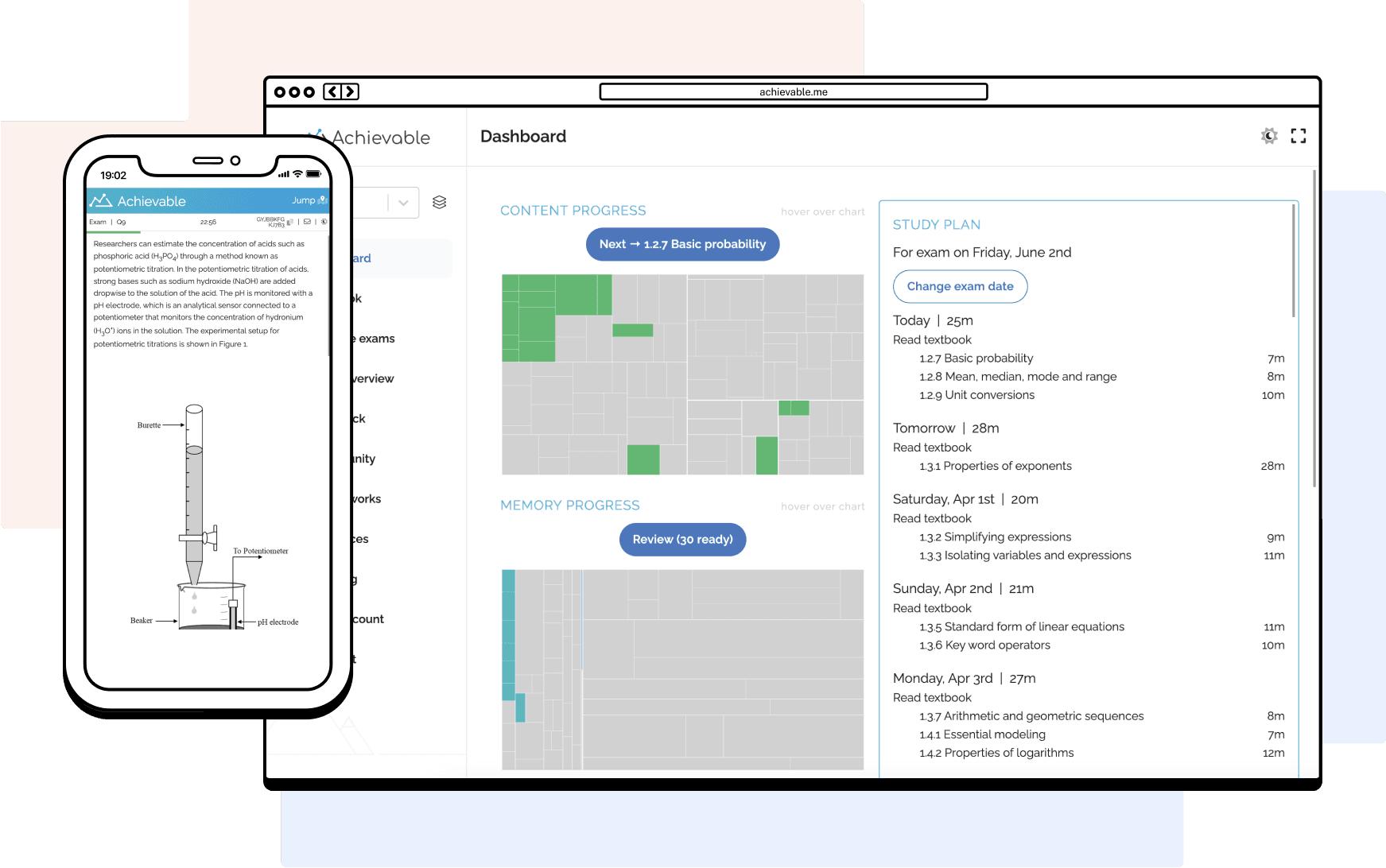
Pass the IRS EA Part 1. Guaranteed.
Achievable is the best IRS EA Part 1 prep course: effective, personalized, and convenient. With Achievable, you'll spend less time studying and pass your exam the first time, or your money back.