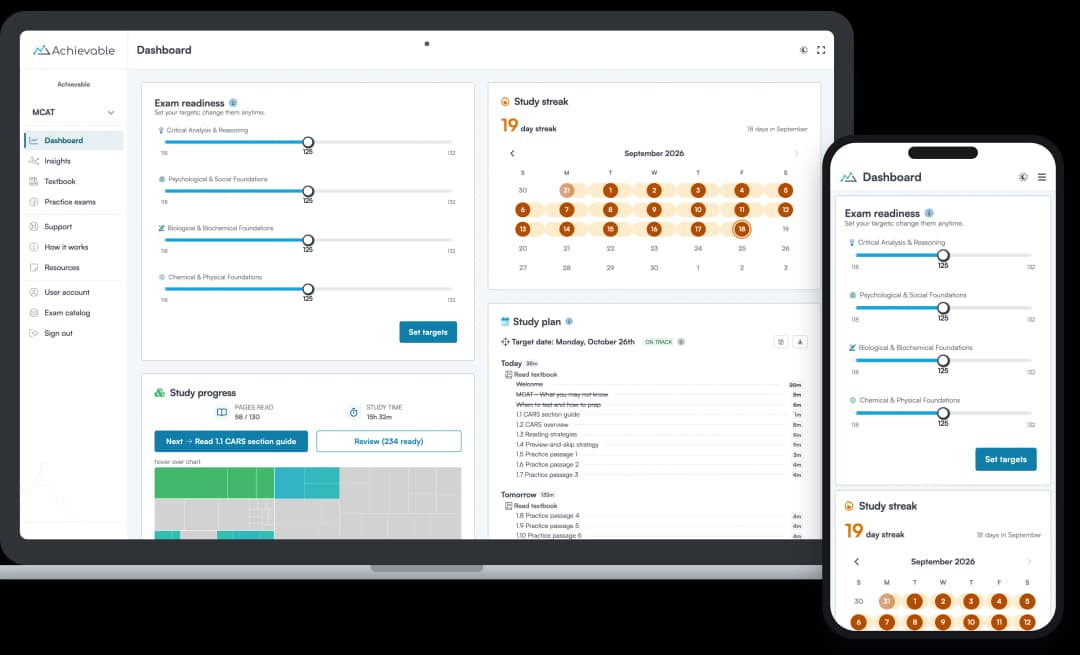
Personalize your MCAT prep for real results


Dr. Güler serves as a Med Ed advisor and neurodiversity consultant to individual students as well as a faculty development provider through her company, On-Call Advising & Consulting.
A medical educator since 2019, Dr. Güler has guided hundreds of premed, MD/DO and PA students and residents through all aspects of their training. She was previously a university Learning Specialist for undergraduate and graduate students. Dr. Güler earned her M.Ed. in Curriculum & Instruction, EdD in Educational Leadership specializing in Reading, and a graduate certificate in Autism Spectrum Disorder.
Dr. Güler specializes in learning and decision-making in exam preparation, strategies to support neurodivergence within education and career, and standardized exam accommodations requests. She co-wrote the Guide to Requesting Accommodations on the USMLE Step Exams through Docs with Disabilities.
She has lived and worked in India, Turkey, and the US, and her favorite shopping spot is the 2,000-year-old Kemeralti Bazaar, a ferry ride away from her home in Izmir.
Table of contents
- MCAT 101: Understanding the test, its importance, and effective preparation
- What is the MCAT, and why does it matter?
- Personalized MCAT study strategies
- Best ways to personalize your MCAT prep
- Focus on high-yield topics
- Match your study methods to your learning style
- Use active learning techniques
- High-impact MCAT test-taking techniques
- Learn when to move on
- Practice under timed conditions
- Review reasoning, not just answers
- CARS: Skill over content
- How to improve your CARS score
- Best resources for CARS practice
- Evolving medical school admissions expectations
- Gap years are increasingly common
- Clinical experience is now essential
- Supporting diverse learners and abilities
- MCAT accommodations and accessibility
- Top MCAT study mistakes to avoid
- Common MCAT prep mistakes
- Next steps for MCAT success
- MCAT preparation checklist
- Adaptive MCAT prep and clinical experience: The new standard for medical school success
MCAT 101: Understanding the test, its importance, and effective preparation
Preparing for the MCAT can feel insurmountable at times, especially with so much conflicting advice online. Whether you’re wondering how to study for the MCAT, improve your CARS score, or build a stronger medical school application, understanding the exam strategically is essential. The Medical College Admission Test (MCAT) is more than just a medical school requirement: it’s a comprehensive assessment of critical thinking, scientific knowledge, and problem-solving skills needed for success in medicine.
This guide explains how the MCAT is structured, why medical schools value it, and the most effective MCAT study strategies for today’s pre-med students. You’ll also learn how clinical experience, personalized preparation, and evolving admissions expectations shape the path to medical school success.
What is the MCAT, and why does it matter?
The MCAT is a standardized exam required by most medical schools in the U.S. and Canada. Designed by the Association of American Medical Colleges (AAMC), the test evaluates not only scientific understanding but also reasoning, analysis, and knowledge of behavioral science.
Medical school admissions committees often use MCAT scores as one indicator of academic readiness. However, the exam measures much more than memorization. Strong performance requires critical thinking, time management, endurance, and the ability to apply concepts under pressure.
The MCAT includes four major sections:
- Biological and biochemical foundations of living systems
- Chemical and physical foundations of biological systems
- Psychological, social, and biological foundations of behavior
- Critical analysis and reasoning skills (CARS)
Because the exam spans multiple disciplines, successful students typically focus on strategy and skill-building rather than solely on passive memorization.
“MCAT preparation is not merely an academic exercise, but a sophisticated project in self-management.”
Understanding how the MCAT works and how to prepare for the exam effectively can help reduce anxiety and improve long-term performance.
Personalized MCAT study strategies
One of the biggest mistakes students make is following generic MCAT study plans that don’t match their learning style or academic background. Personalized MCAT preparation is often far more effective.
The exam covers biology, chemistry, physics, psychology, sociology, and critical reasoning. Most students naturally have strengths in some areas and weaknesses in others. Taking a diagnostic test early can help identify where to focus your study time.
For example:
- Students strong in biology may need extra practice with physics or chemistry
- Strong readers may perform better initially in CARS
- Nontraditional students may need more foundational science review
Tailoring your approach helps maximize efficiency and prevent burnout.
Best ways to personalize your MCAT prep
Focus on high-yield topics
Some concepts appear more frequently on the MCAT than others. Prioritize:
- Enzyme kinetics
- Amino acids
- Electrochemistry
- Circuits and physics fundamentals
- Research methods
- Psychological theories
Studying high-yield topics first often yields faster score gains than reviewing low-frequency material.
Match your study methods to your learning style
Different learning formats work better for different students.
- Visual learners may benefit from diagrams, flowcharts, and videos
- Auditory learners often retain more through podcasts or discussion
- Kinesthetic learners improve through active problem-solving and practice tests
The best MCAT study plan is the one you can consistently maintain.
Use active learning techniques
Passive reading rarely leads to strong retention. Instead:
- Practice retrieval with flashcards
- Teach concepts out loud
- Work through timed practice questions
- Review why answers are correct and incorrect
- Summarize difficult concepts in your own words
Active learning strengthens long-term recall and improves test-day performance.
High-impact MCAT test-taking techniques
Strong content knowledge alone does not guarantee a high MCAT score. Test-taking strategy plays a major role in performance.
Students who score well often combine:
- Strategic pacing
- Time management
- Practice under realistic conditions
- Prioritization of high-yield content
- Emotional endurance during long exams
Learn when to move on
One of the most valuable MCAT strategies is knowing when to temporarily skip difficult questions.
Spending too much time on a single passage can hurt your performance across the entire section. Instead:
- Make an educated guess
- Flag the question
- Return later if time permits
This approach preserves mental energy and helps maintain pacing throughout the exam.
Practice under timed conditions
Untimed studying creates a false sense of readiness. The MCAT is a marathon, and endurance matters.
To simulate real testing conditions:
- Complete full-length practice exams
- Limit distractions
- Follow official timing rules
- Review mistakes carefully afterward
Timed practice improves both confidence and stamina.
Review reasoning, not just answers
The most effective students analyze why they missed questions. This helps identify:
- Knowledge gaps
- Timing problems
- Misreading patterns
- Logic errors
Understanding your thinking process is often more important than memorizing additional facts.
CARS: Skill over content
The Critical Analysis and Reasoning Skills (CARS) section is one of the most misunderstood parts of the MCAT.
Many students believe success in CARS depends on memorizing content from philosophy, literature, or history. In reality, CARS evaluates reasoning and reading comprehension, not outside knowledge.
“CARS isn’t about what you know; it’s about how you think. Preparation is skill-building, not memorization.”
All questions are based strictly on the information presented in the passage. Bringing in outside assumptions can actually lower performance.
How to improve your CARS score
Instead of memorizing facts, focus on:
- Reading dense material regularly
- Identifying main arguments quickly
- Recognizing tone and perspective shifts
- Evaluating evidence critically
- Practicing passage timing
Students with strong CARS scores typically develop adaptable reading habits over time.
Best resources for CARS practice
Helpful preparation methods include:
- Daily reading from humanities publications
- Timed passage drills
- AAMC CARS practice materials
- Reviewing incorrect answers carefully
Improving CARS requires consistency and repetition, not cramming.
Evolving medical school admissions expectations
Medical school admissions have changed significantly in recent years. Academic achievement remains important, but admissions committees increasingly seek well-rounded applicants with meaningful experiences beyond the classroom.
Gap years are increasingly common
More students now take one or more gap years before entering medical school. These years often provide opportunities for:
- Clinical experience
- Research
- Volunteering
- Personal growth
- Leadership development
Admissions committees frequently view productive gap years positively because they demonstrate maturity and commitment.
Clinical experience is now essential
Clinical exposure has shifted from a preferred credential to an expected one for many applicants.
Common pre-med clinical experiences include:
- Medical scribing
- Hospital volunteering
- EMT work
- Certified nursing assistant roles
- Shadowing physicians
These experiences help students understand patient care and confirm their interest in medicine.
“Clinical experience has shifted from a preferred credential to a near prerequisite in the admissions process.”
Students should be prepared to explain how their experiences shaped their motivation for medicine and strengthened their communication and empathy skills.
Supporting diverse learners and abilities
Recent changes to the MCAT and admissions process reflect a broader emphasis on diversity, accessibility, and inclusion in medicine.
The addition of behavioral and social science content highlights the importance of understanding patients from multiple perspectives. At the same time, more students from nontraditional academic backgrounds are successfully entering medicine.
MCAT accommodations and accessibility
The MCAT offers accommodations for students with documented disabilities, including:
- Extended testing time
- Additional breaks
- Accessible testing formats
Medical schools increasingly recognize that accommodations support equity rather than lowering standards.
“Supporting diverse learners and abilities on the MCAT moves the field closer to a meritocracy grounded in real-world competencies, not rote memorization.”
This shift helps create a more representative healthcare workforce and supports students with diverse learning needs.
Top MCAT study mistakes to avoid
Many students lose valuable time by using ineffective preparation methods.
Common MCAT prep mistakes
- Starting practice exams too late
- Relying only on memorization
- Ignoring weak subjects
- Studying without a structured schedule
- Avoiding timed practice
- Neglecting mental health and sleep
Avoiding these mistakes can improve both efficiency and long-term retention.
Next steps for MCAT success
If you’re beginning your MCAT journey, start with a clear and realistic plan.
MCAT preparation checklist
- Take a diagnostic exam
- Build a personalized study schedule
- Prioritize high-yield concepts
- Complete timed practice tests regularly
- Review the reasoning behind mistakes
- Gain meaningful clinical experience
- Monitor progress and adjust your strategy
Consistency matters more than perfection. Small improvements over time often lead to major score gains.
Adaptive MCAT prep and clinical experience: The new standard for medical school success
Success on the MCAT is not about memorizing endless facts. Today’s most effective preparation strategies emphasize adaptability, critical thinking, and long-term skill development.
Students who personalize their study methods, practice strategically, and pursue meaningful clinical experiences position themselves best for medical school admissions success. Equally important, these habits help develop the resilience, communication skills, and analytical thinking required in medicine itself.
The journey to becoming a physician begins long before medical school. By approaching the MCAT with structure, flexibility, and purpose, students can build not only stronger applications but also a stronger foundation for a future career in healthcare.