How to ace the SAT: Top study tips revealed


Table of contents
- How to study for the SAT
- Review SAT exam requirements
- What is SAT School Day?
- Digital SAT format
- How long is the digital SAT?
- How is the SAT adaptive?
- ACT vs. SAT: What’s the difference?
- SAT study plan
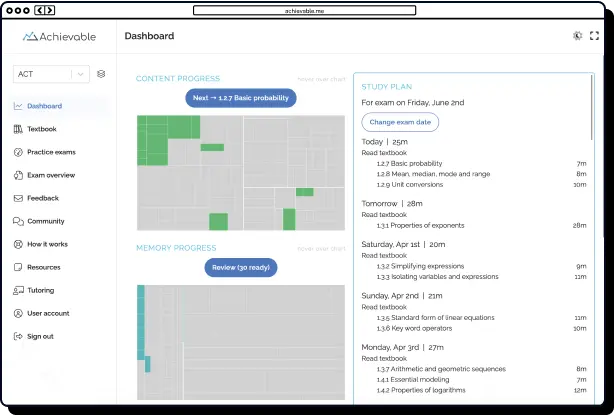
- 1. Create an effective SAT study calendar
- How long should I study for the SAT?
- Is SAT tutoring worth it?
- 2. Practice under real SAT conditions
- 3. Identify and target problem areas
- 4. Prepare for your SAT exam day
- 5. Ace the SAT!
- Is the SAT hard?
- Colleges that don’t require the SAT: A note on test-optional policies
- Last-minute pro-tips
- Conclusion
To ace the SAT, start preparing two to three months in advance with a structured study plan, take multiple full-length practice tests under timed, realistic conditions, and focus your review on your personal weak areas. This guide walks you through everything you need to get started, from the Digital SAT format and registration steps to proven study strategies and exam-day tips.
The SAT plays a pivotal role in the college admissions process, standing as one of the two primary national exams that help assess students’ readiness for higher education. Created and overseen by the College Board, the computer-based SAT presents unique challenges and opportunities, featuring:
- 98 multiple-choice and fill-in questions
- A fixed two-hour, 14-minute duration
- Two major sections: Reading & Writing and Math
- Four adaptive modules, split evenly across both sections
- A format that adjusts question difficulty based on performance
Despite the rise of test-optional admissions policies across institutions, SAT scores remain key metrics that speak to a student’s qualifications in skills such as algebraic reasoning and reading comprehension. The demand for high-quality SAT study guides remains strong, especially among those aiming for competitive results.
Admissions teams use SAT scores, evaluated together with GPA, academic rigor, recommendation letters, extracurricular records, and personal statements, to help make well-rounded decisions about admits from a nationwide pool. The significance of SAT results varies by college; for many students, however, achieving a high score can improve application outcomes and expand options at selective schools.
With an effective SAT study plan and targeted preparation, you can optimize your performance on every section of this exam, opening up more opportunities in your college search and setting yourself up for long-term academic success.

How to study for the SAT
Preparing for a rigorous, standardized test like the SAT is often a months-long process, but knowing how to ace the SAT starts with following a focused study plan that makes the most of your time and effort:
- Start early and draft a study calendar that aligns with your school commitments, extracurricular activities, and work schedule, ensuring sustained and balanced test preparation.
- Tip: Life happens. Starting early means more time for flexibility.
- Familiarize yourself with the SAT format, section breakdowns, and official scoring guidelines to be fully prepared on test day.
- Take full-length, timed practice exams to simulate the real testing environment. This critical step helps you master test-taking strategies while tracking your progress.
- Supplement official College Board resources with reliable third-party materials; selecting high-quality tools that closely align with the SAT ensures your study plan is effective, varied, and maximizes your potential score.
Beginning your review well in advance brings your academic goals closer within reach. Many students begin their SAT preparation in the summer or fall of junior year, giving ample time to study and register for the spring exam. This structured timeline also leaves an opportunity for retesting during the summer or early fall of senior year, giving you the best shot at reaching your target SAT score.
Review SAT exam requirements
The SAT is administered between August and June of the following year. Students and families can register for the SAT online through the My SAT Dashboard (be sure to check registration deadlines in advance to avoid late fees). From there, students will be able to:
- Create a College Board account
- Explore SAT testing locations near them
- Choose a test date
- Enter high school information and code (970000 for those who are homeschooled)
- Select colleges and scholarships to be considered for (up to four)
- Opt to be a part of the Student Search Service and send information to scholarships and colleges across the country
While registering, make sure you have the following ready:
- Digital photo that meets the College Board’s requirements
- List of prospective colleges and scholarship programs
- Credit card to pay the $68 fee, or fee waiver information, if applicable
- Any information required for accommodations (for example, evidence of an individualized education program or IEP). Accommodations must be requested in advance.
To take the SAT, you will also need an approved electronic device (a Windows or Mac laptop, iPad, or school-managed Chromebook) with the Bluebook testing application installed and logged into your College Board account.
Within 5 days of the exam, your testing registration ticket will be available in the Bluebook application. You cannot take the SAT remotely at home, so you will need to bring your own device to a physical testing site. Addressing technological requirements or issues in advance will ensure a smoother registration and test-taking experience.
Important: If you don’t have your own laptop to take the test on, you must request one from your school or through a participating program.
On the day of the exam, don’t forget to bring:
- Your fully charged testing device with Bluebook installed
- Your admissions ticket (preferably printed)
- A valid photo ID (physical, not electronic)
- Pencils or pens for scratchwork
- An acceptable calculator for the math section
- Alternatively, you can access the Desmos calculator available directly through Bluebook
A watch, some water, and a charging cable are also good to have in the testing room with you. Practicing in advance with your testing device and equipment will help you prepare for the SAT’s digital format.
Note: These are the requirements for students taking the SAT independently on weekends. Some schools offer students the chance to take the SAT during the school day, often for free, which requires a different registration process.
What is SAT School Day?
SAT School Day offers students the chance to take the exam during regular school hours, rather than over the weekend. Instead of registering with the College Board, students can sign up directly with their school (in some states, like Colorado and Delaware, students are required to take the SAT).
In many cases, schools and districts will offer in-school test administration for free, which means you will not have to pay to take the test. For schools that do require students to pay, fee waiver qualifications still apply. The testing window usually falls in springtime, between March and April. Ask your principal or counselor if your school offers the SAT and for more details.
Digital SAT format
As of 2024, the digital SAT format has fully replaced the traditional pen-and-paper exam, ushering in a modern era of educational technology and assessment. This updated format not only streamlines testing logistics but also provides a more adaptive and efficient test-taking experience for students. By leveraging a dynamic, digital platform, the SAT now offers enhanced flexibility and accessibility, aligning with current trends in standardized testing.
The digital SAT consists of two main subject areas: Reading & Writing and Math. These sections are structured as follows:
| Section | Time allowed (minutes) | Total number of questions |
|---|---|---|
| Reading and Writing | 64 (divided into two 32-minute modules) | 54 multiple-choice questions |
| Math | 70 (divided into two 35-minute modules) | 44 multiple-choice and student-produced response questions |
| Total | 134 | 98 |
Reading & Writing includes:
- Vocabulary in context
- Reading comprehension
- Grammar and punctuation
- Sentence structure
- Rhetorical synthesis
- Transitions and organization
- Interpreting graphs and tables in context
Math evaluates students on:
- Algebra concepts
- Advanced math topics such as quadratics and exponents
- Problem-solving and data analysis
- Geometry and trigonometry
A brief break is allowed between the two sections, contributing to a more manageable, student-friendly testing experience. Note that while most of the test is multiple-choice, about 25% of the Math questions are student-produced responses, requiring students to enter their answers directly in the test interface. The redesigned digital SAT format reflects a commitment to innovation while maintaining rigorous college admissions standards.
How long is the digital SAT?
As shown in the chart above, the digital SAT features a total test time of 2 hours and 14 minutes, almost 45 minutes shorter than the 2016-era paper-based SAT (which ran 3 hours without the essay), making it more efficient for students. While the format has changed, the score scale remains consistent with the 2016 redesign: each section scores 200-800, and these scores are combined to produce a composite ranging from 400 to 1600. Note that the digital adaptive format uses a different scoring algorithm than the legacy paper exam, so the scale remains the same, but the calculation method differs.
How is the SAT adaptive?
The digital SAT is section-adaptive, shaping each test-taker’s experience based on their performance. The adaptive format adjusts question difficulty throughout the test to provide a fair and accurate measure of proficiency.
Each of the main sections, Reading & Writing and Math, is divided into two modules. The first module in each section features a balanced mix of easy, medium, and challenging questions. Depending on your performance in that first module, the digital SAT adjusts the difficulty of the second module.
Scoring reflects this adaptability: more difficult questions generally contribute more to your overall SAT score. Demonstrating strong skills on higher-difficulty questions in the second (adaptive) module can significantly boost your result. This efficient format delivers accurate results in just over two hours, thanks to its adaptive structure and strategic question selection.

ACT vs. SAT: What’s the difference?
When preparing for college admissions, one of the most significant decisions high school students face is choosing between the SAT and ACT. Both exams serve as dependable benchmarks in the college admissions process across the U.S., and neither is favored over the other, as colleges treat them as equal measures of college readiness.
Unlike the SAT, the ACT has five sections, two of which are optional:
- English: 35 minutes, 50 questions on passage assessment, grammar, and rhetoric
- Math: 50 minutes, 45 questions on geometry, algebra, and other math topics covered through grade 11
- Reading: 40 minutes, 36 questions on long passages, vocabulary, main ideas, and comprehension
- Science: 40 minutes, 40 questions on visual interpretation and scientific reasoning (optional)
- Writing: 40-minute argumentative essay (optional)
For the three required sections, the ACT runs just over 2 hours and 131 questions, meaning there is less time per question than on the SAT. ACT questions tend to be more straightforward, while SAT questions are generally more analytical.
Taking a mock ACT and SAT test at the start of your college application process can help you decide early on which exam plays to your strengths.
SAT study plan
Preparing for the SAT can feel overwhelming at first. A well-organized plan helps you divide your prep by topic area, close knowledge gaps, and focus on high-impact content.
1. Create an effective SAT study calendar
Juggling test prep alongside school, extracurriculars, and college application essays is manageable with the right strategy. Follow these steps to build an efficient approach:
- Define your goal: Research schools and programs you’re applying to and find median scores for accepted students. Aim for that score or higher to be competitive.
- Remember: Requirements vary. A competitive Ivy League application demands strong scores in every section; a highly ranked STEM or humanities program at a less selective school may weigh one section more heavily than the other.
- Gather resources: Use reputable online SAT study guides, practice questions, and flashcards to reinforce learning.
- Take a diagnostic test: Start with a full-length practice exam to assess your current level. Use this as a benchmark rather than worrying about the initial score.
- Prioritize subject areas: Rank subtopics by importance and difficulty using your diagnostic results.
- Set a timeline: Break your available study time into manageable blocks for each subtest.
How long should I study for the SAT?
Test-prep experts agree that following a consistent study plan over two to three months is the most effective approach for achieving your best score. Dedicating one to two hours a day allows you to build skills, avoid burnout, and boost retention gradually. Structure your sessions to address each subject area, whether algebra, passage interpretation, or geometry, by creating mini-plans targeting your specific weaknesses.
Additional study strategies include:
- Summarizing each section in your own words after studying.
- Using spaced repetition (such as Anki or Quizlet) to master vocabulary and other memorization-heavy material.
- Completing practice problems soon after learning new content.
- Creating mind maps or outlines to visually organize information.
- Incorporating memory aids (mnemonics or acronyms) for easier recall.
- Teaching concepts aloud to reinforce understanding.
- Wrapping up each session by testing yourself, rather than simply re-reading material.
The key is to build knowledge gradually over several weeks rather than resorting to last-minute cramming. This steady approach ensures greater retention and leads to stronger test-day performance.
Is SAT tutoring worth it?
Many students turn to SAT tutoring to add structure and expert guidance to their test preparation. One-on-one or group tutoring can be particularly beneficial for students who:
- Learn most effectively with a teacher and prefer traditional study methods
- Begin SAT preparation early enough to maximize the value of tutoring sessions, rather than rushing through the material
- Have flexible schedules that allow for regular meetings with a tutor
- Come from non-traditional educational backgrounds and need extra support navigating standardized assessments
Investing in SAT tutoring is a significant commitment of both time and money, so weigh the decision carefully. For many students, however, personalized tutoring can be a valuable supplement to self-study or prep courses, providing tailored support and improving overall exam readiness.
2. Practice under real SAT conditions
Integrating realistic test simulations into your study plan is critical for achieving top scores. A comprehensive routine should not only cover content review but also build the mental stamina required to excel during a two-hour-plus exam.
- Complete high-quality SAT practice tests under timed, exam-like conditions to accurately assess your progress.
- Avoid limiting practice to isolated sections; dedicate time to full-length exams.
- Replicate the exact digital format by accessing the Bluebook testing app.
- Practice math problems using both a physical calculator and the on-screen calculator to determine which best supports your performance.
- Thoroughly review key concepts and mistakes after each practice session to reinforce learning.
Schedule at least three full-length practice tests: a diagnostic test at the outset, a mid-prep exam to measure improvement, and a final practice test shortly before your official SAT date. This structured approach builds both knowledge and confidence for the test day.
3. Identify and target problem areas
As you progress through your SAT prep, focus on the subjects and question types that challenge you most. An effective strategy isn’t about reviewing every section equally: concentrate on the skills that consistently trip you up.
- Assess your strengths. Are you confident with reading comprehension? Is trigonometry easy for you? Steer your attention to areas that need work.
- Start with a comprehensive review of major SAT topics, then gradually zero in on more detailed subtopics.
- Maintain an error log to record mistakes and problem areas; revisit it regularly.
- Dedicate additional practice time to weak spots highlighted by your error log and practice test results.
By following a targeted approach, you’ll consistently build on the specific skills that most impact your total SAT score.
4. Prepare for your SAT exam day
The night before the SAT should be about getting mentally ready, not last-minute cramming. Double-check that you have a valid government-issued ID and your admission ticket for your testing center. If you’re taking the SAT outside the U.S., there may be additional requirements.
Testing usually begins between 8:15 and 8:30 AM, though test center doors often close by 8:00 AM. Plan to arrive an hour early to account for check-in; late arrivals may not be admitted. Students using a loaned device from the College Board must arrive by 7:15 AM. Always confirm your test center’s arrival time on your admission ticket.
Additional pre-test advice:
- Get 7-9 hours of sleep before exam day
- Eat a nutritious breakfast
- Quickly review key summaries or flashcards; avoid learning new material
You’ve put in weeks of preparation. Trust your process and avoid unnecessary stress the night before.
5. Ace the SAT!
Exam day is the ultimate opportunity to apply everything you’ve practiced. Use these proven strategies for peak SAT performance:
- Calm your nerves with deep breathing techniques and positive self-talk.
- Pace yourself throughout the test; avoid spending too much time on a single question. There is no penalty for incorrect answers, so make educated guesses when needed.
- If you encounter a particularly tough question, move on rather than losing valuable time.
After test day, keep in mind that you have up to nine days to adjust the list of colleges set to receive your SAT scores automatically. For weekend SAT administrations, scores are typically released about 13 days after your test date; School Day SAT scores may take three to four weeks. Check the College Board score release page for your specific administration. If you wish to send additional score reports after release, a $15 fee applies per report.
By following an organized SAT study plan, you’ll position yourself to reach your target scores and unlock new opportunities at your top-choice colleges.

Is the SAT hard?
The SAT is often regarded as a moderately demanding test for high school students. It evaluates essential skills in mathematics, critical analysis, and reading comprehension, all areas that directly reflect knowledge gained through 9th- to 11th-grade coursework. Because the SAT’s content is carefully aligned with typical high school classes, recognizing your academic strengths and weaknesses is key to setting an effective study focus.
The SAT’s overall length (just over two hours) also contributes to its reputation for difficulty. Extended testing times pose particular challenges for students who find long exams taxing. Consistently practicing with full-length assessments, rather than solely relying on brief quizzes or topic reviews, helps build endurance and familiarity with the exam’s demands.
The national average SAT composite score is approximately 1028 out of 1600 (College Board, Class of 2023), which meets admission requirements for many public institutions and smaller private colleges across the U.S. Research suggests that investing 6 to 8 hours in focused SAT practice typically yields a score increase of about 90 points. For test-takers starting at the average level but aiming for a highly competitive score of 1,450 or higher, about 40 hours of committed, strategic preparation is recommended.
Colleges that don’t require the SAT: A note on test-optional policies
Because of nationwide testing equity concerns during the COVID-19 pandemic, many schools shifted their admissions policies to make standardized test scores optional. This movement toward test-optional policies has included top universities such as:
Always verify current policies, as test-optional status changes constantly.
In certain instances, including the University of California system, admissions are fully test-blind: standardized test scores are not reviewed at all, regardless of whether applicants submit them.
Important: Many schools have reversed their test-optional admissions policies in recent years. Always verify a school’s current requirements directly on its admissions website before applying.
When applying to schools that don’t require SAT scores, your decision to submit test results should be guided by each program’s specific admission criteria and your own testing performance. Begin by confirming whether your chosen schools are test-optional or test-blind. Then, research the average or median scores for previously accepted students to understand what a competitive result looks like for that institution. Even when a school is test-optional, submitting a strong score can provide an additional data point to strengthen your application profile.
If your SAT performance doesn’t reflect your academic potential, it may be in your best interest to withhold your results, as lower scores could reduce your admission chances at test-optional institutions.
Last-minute pro-tips
Approach your SAT study routine with intention and a clear plan:
- Start by choosing high-quality SAT study materials.
- Use the effective study strategies outlined above.
- Complete plenty of mock questions and exams to get comfortable with exam wording and style.
- Track your progress along the way and regularly reassess what is and isn’t working.
By consistently evaluating your progress, you can make your studying more focused, flexible, and effective, helping you reach your target score while reducing the need for multiple retakes.

Conclusion
The SAT is a critical step in the college admissions process. While universities take a holistic approach to review, strong SAT scores remain a key factor, especially for selective or specialized programs. Learning how to ace the SAT requires more than understanding the format: it takes consistent practice with full-length tests, targeted review of weak areas, and, when appropriate, expert SAT tutoring.
Balancing SAT prep with AP exams, college applications, and other commitments can be challenging. But with an organized study plan, structured schedule, and clear strategy, you can manage your time efficiently and approach test day with confidence.