Best study tips for the SIE exam (from a finance student)


Carver Eubanks is a finance student at Tennessee Technological University with a growing passion for financial advising and helping people make smarter financial decisions. He recently passed the Securities Industry Essentials (SIE) exam and is continuing to build his knowledge of investing, markets, and long-term financial planning. Driven, personable, and eager to keep learning, Carver is working toward a future career in the financial services industry.
Table of contents
When I decided to take the Securities Industry Essentials (SIE) exam, it was really about taking a concrete step toward a career in financial advising.
I’m currently a finance student at Tennessee Technological University, and I’ve known for a while that I want to work in financial services. The SIE felt like the right place to start because it gave me a way to begin building real industry knowledge and credibility early.
Facing challenges head-on
The biggest challenge during my prep wasn’t just the material; it was balancing workload and life. I was studying while keeping up with school, work, and normal day-to-day responsibilities, so consistency mattered more than having perfect study sessions.
One thing I learned pretty quickly is that the SIE covers a wide range of material, and it’s easy to get overwhelmed if you feel like you have to know every minute detail perfectly. At first, I spent too much time trying to fully master every topic. Over time, I realized the goal was to understand the concepts well, recognize patterns in the questions, and stay sharp through repetition.
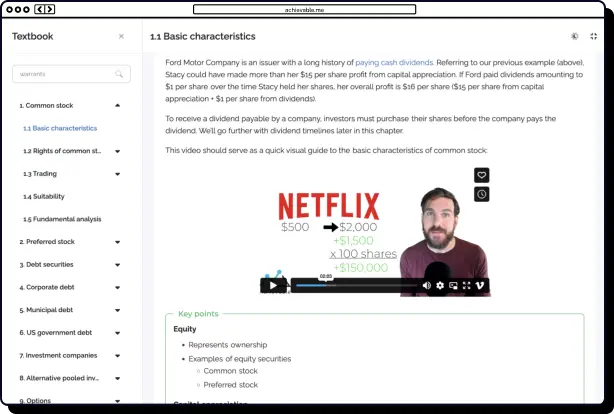
Achievable played a big role in helping me do these things. I used it as my main prep resource, and it gave me a structure that made studying feel a lot more manageable. I relied heavily on the reading sections, review questions, and practice exams, especially as test day got closer.
Active review builds confidence
Toward the end, what helped most was shifting to active review, doing more questions, identifying weak spots, and revisiting the topics I kept missing. That helped me build confidence and get more comfortable with how the exam actually tests the material.
Going into test day, I was definitely a little nervous, but I also felt prepared. Passing the SIE was a big milestone for me because it confirmed that I’m moving in the right direction.
Now that I’ve passed, I’m continuing to build on that foundation by working toward the Series 66 and, eventually, the Series 7 as I pursue a career in financial advising.
Setting realistic goals
If I could give one piece of advice to someone studying for the SIE, it would be this: don’t just read endlessly. Start doing practice questions early, and use them to guide what you need to improve. Also, don't stretch out your study time too much, as you will notice introductory information starts to leak away if you don't keep it fresh in your mind. Don't rush yourself, but set realistic goals to avoid lagging.
Passing the SIE was a great first step, and I’m so glad I used Achievable. I'm excited for what comes next in my career.