MCAT: Biology and Biochemistry practice exam


Free MCAT practice exam
A competitive inhibitor of an enzyme affects which of the following kinetic parameters?
ATP is composed of three phosphate groups, labeled as alpha, beta, and gamma based on their position relative to the ribose sugar. When ATP is hydrolyzed to release energy, which phosphate group is typically cleaved, and what is the resulting molecule?
The figure below shows the reducing SDS-PAGE analysis of different protein extracts. Based on the appearance of the gel, which of the following statements would most likely be correct? (Line A is the marker line)

Which of the following hormones is derived from cholesterol?
Which of the following is correct about fat-soluble vitamins?
I. Vitamin A is important for calcium regulation
II. Vitamin D acts as an antioxidant
III. Vitamin K is necessary for the posttranslational introduction of calcium-binding sites
IV. Vitamin A is metabolized to retinal, essential for sight
Which of the following molecules is not a direct substrate or product in the citric acid cycle?
Which two nucleotides exists as keto-enol tautomers?
A point mutation in the coding region of a gene results in a premature stop codon. This type of mutation is classified as a:
All of the following features of HIV hinders the immune response except which of the following?
Where does glycosylation typically occur?
Which of the following cell types is most likely to be in a quiescent G₀ phase?
Which of the following hormones is released by the anterior pituitary and stimulates the adrenal cortex to secrete glucocorticoids?
Which of the following is able to pass through the lipid bilayer without a transport protein the most easily?
A bacterium is exposed to an antibiotic that inhibits peptidoglycan synthesis. Which of the following will most likely be a result of this treatment on the bacterium
Which of the following bacterial structures contains genes for building antibiotic resistance
Enzyme kinetics describes how enzymes interact with substrates to catalyze reactions. The Michaelis-Menten equation models this behavior, but direct analysis of its hyperbolic curve can be challenging. Instead, a Lineweaver-Burk plot (a double reciprocal plot) linearizes enzyme kinetics by plotting 1/V (reaction velocity) vs 1/[S] (substrate concentration) (see image below). Various types of enzyme inhibition can be identified using Lineweaver-Burk plots including: competitive inhibition, noncompetitive inhibition, uncompetitive inhibition, and mixed inhibition. Understanding these inhibition patterns helps researchers design drugs that regulate enzyme activity, such as those targeting metabolic pathways and disease mechanisms.
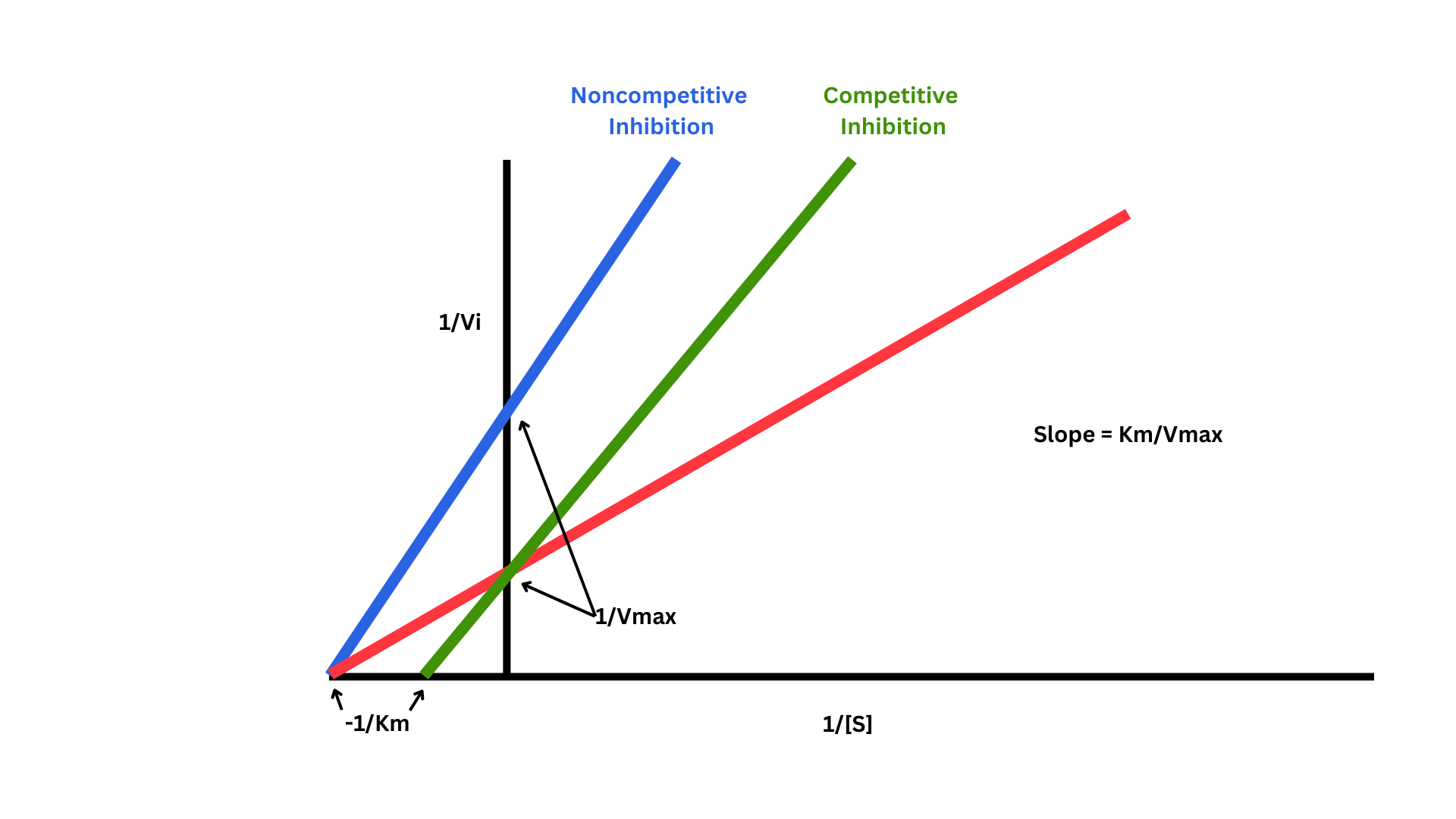
A researcher is studying an enzyme-catalyzed reaction and observes that the reaction slows down when a molecule structurally similar to the substrate is introduced. However, when the substrate concentration is increased, the reaction rate return to normal. What type of enzyme regulation is most likely occurring?
Enzyme kinetics describes how enzymes interact with substrates to catalyze reactions. The Michaelis-Menten equation models this behavior, but direct analysis of its hyperbolic curve can be challenging. Instead, a Lineweaver-Burk plot (a double reciprocal plot) linearizes enzyme kinetics by plotting 1/V (reaction velocity) vs 1/[S] (substrate concentration) (see image below). Various types of enzyme inhibition can be identified using Lineweaver-Burk plots including: competitive inhibition, noncompetitive inhibition, uncompetitive inhibition, and mixed inhibition. Understanding these inhibition patterns helps researchers design drugs that regulate enzyme activity, such as those targeting metabolic pathways and disease mechanisms.
The Michaelis-Menten constant () represents:
Enzyme kinetics describes how enzymes interact with substrates to catalyze reactions. The Michaelis-Menten equation models this behavior, but direct analysis of its hyperbolic curve can be challenging. Instead, a Lineweaver-Burk plot (a double reciprocal plot) linearizes enzyme kinetics by plotting 1/V (reaction velocity) vs 1/[S] (substrate concentration) (see image below). Various types of enzyme inhibition can be identified using Lineweaver-Burk plots including: competitive inhibition, noncompetitive inhibition, uncompetitive inhibition, and mixed inhibition. Understanding these inhibition patterns helps researchers design drugs that regulate enzyme activity, such as those targeting metabolic pathways and disease mechanisms.
A researcher discovers an inhibitor that binds exclusively to the enzyme-substrate complex, preventing product formation. How would this appear on a Lineweaver-Burk plot?
Enzyme kinetics describes how enzymes interact with substrates to catalyze reactions. The Michaelis-Menten equation models this behavior, but direct analysis of its hyperbolic curve can be challenging. Instead, a Lineweaver-Burk plot (a double reciprocal plot) linearizes enzyme kinetics by plotting 1/V (reaction velocity) vs 1/[S] (substrate concentration) (see image below). Various types of enzyme inhibition can be identified using Lineweaver-Burk plots including: competitive inhibition, noncompetitive inhibition, uncompetitive inhibition, and mixed inhibition. Understanding these inhibition patterns helps researchers design drugs that regulate enzyme activity, such as those targeting metabolic pathways and disease mechanisms.
If an enzyme inhibitor is found to lower Vmax but leave unchanged, what conclusion can be made about the mechanism?
Enzyme kinetics describes how enzymes interact with substrates to catalyze reactions. The Michaelis-Menten equation models this behavior, but direct analysis of its hyperbolic curve can be challenging. Instead, a Lineweaver-Burk plot (a double reciprocal plot) linearizes enzyme kinetics by plotting 1/V (reaction velocity) vs 1/[S] (substrate concentration) (see image below). Various types of enzyme inhibition can be identified using Lineweaver-Burk plots including: competitive inhibition, noncompetitive inhibition, uncompetitive inhibition, and mixed inhibition. Understanding these inhibition patterns helps researchers design drugs that regulate enzyme activity, such as those targeting metabolic pathways and disease mechanisms.
A researcher studies an enzyme-catalyzed reaction and finds that at low substrate concentrations, increasing substrate concentration significantly increases reaction velocity. However, at high substrate concentrations, further increases in substrate concentration having little to no effect on reaction velocity. Which of the following best explains this observation?
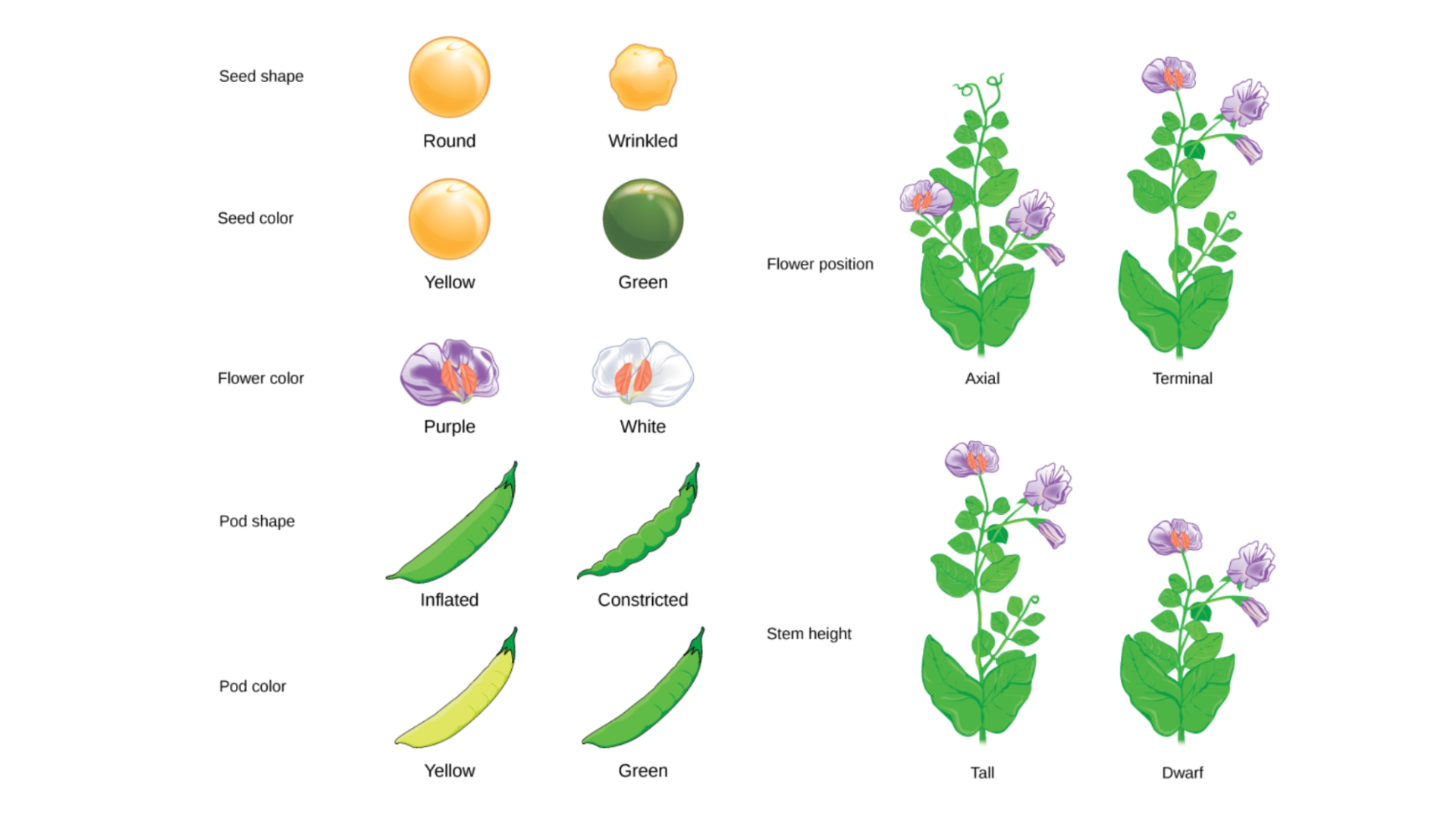
Gregor Mendel’s experiments with pea plants led to discovery of fundamental inheritance laws. Various traits were observed (image below), including seed shape (round vs. wrinkled), seed color (yellow vs. green), flower color (purple vs. white), flower position (axial vs. terminal), pod shaped (inflated vs. constricted), pod color (yellow vs. green), and stem height (tall vs. dwarf).
Mendel performed monohybrid crosses, breeding plants that differ in a single trait which produced offspring (F1 generation). When these F1 generation plants self-fertilized, the recessive trait reappeared in the F2 generation in a consistent 3:1 phenotypic ratio, which leads to the law of segregation. Mendel’s work was further expanded with the dihybrid crosses, tracking the inheritance of two traits simultaneously. This work lead to the law of independent assortment.
Which of the following best explains why Mendel observed a 3:1 phenotypic ratio in the F2 generation of his monohybrid crosses?
Gregor Mendel’s experiments with pea plants lead to discovery of fundamental inheritance laws. Various traits were observed (image below), including seed shape (round vs. wrinkled), seed color (yellow vs. green), flower color (purple vs. white), flower position (axial vs. terminal), pod shaped (inflated vs. constricted), pod color (yellow vs. green), and stem height (tall vs. dwarf).
Mendel performed monohybrid crosses, breeding plants that differ in a single trait which produced offspring (F1 generation). When these F1 generation plants self-fertilized, the recessive trait reappeared in the F2 generation in a consistent 3:1 phenotypic ratio, which leads to the law of segregation. Mendel’s work was further expanded with the dihybrid crosses, tracking the inheritance of two traits simultaneously. This work lead to the law of independent assortment.
A researcher is conducting a dihybrid cross between two heterozygous pea plants (YyRr x YyRr) from the F1 generation for seed color (yellow vs. green) and seed shape (round vs. wrinkled). Assume that yellow (Y) is dominant over green (y) and round ( R) is dominant over wrinkled ( r). What proportion of F2 generation (offspring) is expected to display both recessive traits (green, wrinkled seeds) and what proportion is expected to be heterozygous for both traits (YyRr)?
Gregor Mendel’s experiments with pea plants lead to discovery of fundamental inheritance laws. Various traits were observed (image below), including seed shape (round vs. wrinkled), seed color (yellow vs. green), flower color (purple vs. white), flower position (axial vs. terminal), pod shaped (inflated vs. constricted), pod color (yellow vs. green), and stem height (tall vs. dwarf).
Mendel performed monohybrid crosses, breeding plants that differ in a single trait which produced offspring (F1 generation). When these F1 generation plants self-fertilized, the recessive trait reappeared in the F2 generation in a consistent 3:1 phenotypic ratio, which leads to the law of segregation. Mendel’s work was further expanded with the dihybrid crosses, tracking the inheritance of two traits simultaneously. This work lead to the law of independent assortment.
Which of the following conditions would most likely violate Mendel’s law of independent assortment?
Gregor Mendel’s experiments with pea plants lead to discovery of fundamental inheritance laws. Various traits were observed (image below), including seed shape (round vs. wrinkled), seed color (yellow vs. green), flower color (purple vs. white), flower position (axial vs. terminal), pod shaped (inflated vs. constricted), pod color (yellow vs. green), and stem height (tall vs. dwarf).
Mendel performed monohybrid crosses, breeding plants that differ in a single trait which produced offspring (F1 generation). When these F1 generation plants self-fertilized, the recessive trait reappeared in the F2 generation in a consistent 3:1 phenotypic ratio, which leads to the law of segregation. Mendel’s work was further expanded with the dihybrid crosses, tracking the inheritance of two traits simultaneously. This work lead to the law of independent assortment.
In Mendel’s pea plant experiments, flower color is determined by a single gene with two alleles: purple (P) is dominant over white (p). A researcher crosses a heterozygous, purple-flowered plant (Pp) with another plant of unknown genotype. The resulting F1 offspring display 75% purple flowers and 25% white flowers. Which of the following is the most likely genotype of unknown parent plant, and what proportion of the offspring from this cross are expected to be heterozygous?
Gregor Mendel’s experiments with pea plants lead to discovery of fundamental inheritance laws. Various traits were observed (image below), including seed shape (round vs. wrinkled), seed color (yellow vs. green), flower color (purple vs. white), flower position (axial vs. terminal), pod shaped (inflated vs. constricted), pod color (yellow vs. green), and stem height (tall vs. dwarf).
Mendel performed monohybrid crosses, breeding plants that differ in a single trait which produced offspring (F1 generation). When these F1 generation plants self-fertilized, the recessive trait reappeared in the F2 generation in a consistent 3:1 phenotypic ratio, which leads to the law of segregation. Mendel’s work was further expanded with the dihybrid crosses, tracking the inheritance of two traits simultaneously. This work lead to the law of independent assortment.
If Mendel had studied traits controlled by polygenic inheritance, which of the following outcomes would be most likely observed?
Reporting lac Operon Activity with GFP
In E. coli, lacZ, lacY, and lacA are transcribed together from one promoter, with an operator next to it. The lac repressor, the product of the separately transcribed lacI gene, occupies the operator unless an inducer is bound to it. The natural inducer is allolactose, an isomer of lactose; laboratories often substitute isopropyl β-D-thiogalactoside (IPTG), a synthetic inducer that binds the repressor but is not broken down by the cell. Strong transcription also requires the catabolite activator protein (CAP), which binds a site just upstream of the promoter only when it carries cyclic AMP (cAMP).
To follow operon activity in living cells, researchers inserted a gene for green fluorescent protein (GFP), with its own ribosome-binding site but no promoter, immediately after lacA on the chromosome of four strains. Strain W was otherwise wild type, and Strain X lacked cya, the gene for adenylate cyclase. Strains Y and Z each carried one unmapped mutation recovered from a screen for abnormal fluorescence. Cultures were grown with glycerol or glucose as the main carbon source, with or without 1 mM IPTG, in a medium supplemented with amino acids so that every strain could grow; some also received 5 mM cAMP, which E. coli can take up from the medium. Table 1 reports fluorescence after four hours, corrected for cell density.
Table 1. GFP fluorescence (relative units)
| Strain | Glycerol | Glycerol + IPTG | Glucose + IPTG | Glycerol + IPTG + cAMP |
|---|---|---|---|---|
| W | 2 | 100 | 18 | 105 |
| X | 1 | 6 | 5 | 92 |
| Y | 98 | 101 | 17 | 104 |
| Z | 2 | 3 | 2 | 3 |
Strain Z fluoresces weakly under every condition in Table 1. Which defect best accounts for this pattern?
Reporting lac Operon Activity with GFP
In E. coli, lacZ, lacY, and lacA are transcribed together from one promoter, with an operator next to it. The lac repressor, the product of the separately transcribed lacI gene, occupies the operator unless an inducer is bound to it. The natural inducer is allolactose, an isomer of lactose; laboratories often substitute isopropyl β-D-thiogalactoside (IPTG), a synthetic inducer that binds the repressor but is not broken down by the cell. Strong transcription also requires the catabolite activator protein (CAP), which binds a site just upstream of the promoter only when it carries cyclic AMP (cAMP).
To follow operon activity in living cells, researchers inserted a gene for green fluorescent protein (GFP), with its own ribosome-binding site but no promoter, immediately after lacA on the chromosome of four strains. Strain W was otherwise wild type, and Strain X lacked cya, the gene for adenylate cyclase. Strains Y and Z each carried one unmapped mutation recovered from a screen for abnormal fluorescence. Cultures were grown with glycerol or glucose as the main carbon source, with or without 1 mM IPTG, in a medium supplemented with amino acids so that every strain could grow; some also received 5 mM cAMP, which E. coli can take up from the medium. Table 1 reports fluorescence after four hours, corrected for cell density.
Table 1. GFP fluorescence (relative units)
| Strain | Glycerol | Glycerol + IPTG | Glucose + IPTG | Glycerol + IPTG + cAMP |
|---|---|---|---|---|
| W | 2 | 100 | 18 | 105 |
| X | 1 | 6 | 5 | 92 |
| Y | 98 | 101 | 17 | 104 |
| Z | 2 | 3 | 2 | 3 |
Strain X fluoresces weakly on glycerol with IPTG but almost normally once cAMP is also added. Which statement best explains this result?
Reporting lac Operon Activity with GFP
In E. coli, lacZ, lacY, and lacA are transcribed together from one promoter, with an operator next to it. The lac repressor, the product of the separately transcribed lacI gene, occupies the operator unless an inducer is bound to it. The natural inducer is allolactose, an isomer of lactose; laboratories often substitute isopropyl β-D-thiogalactoside (IPTG), a synthetic inducer that binds the repressor but is not broken down by the cell. Strong transcription also requires the catabolite activator protein (CAP), which binds a site just upstream of the promoter only when it carries cyclic AMP (cAMP).
To follow operon activity in living cells, researchers inserted a gene for green fluorescent protein (GFP), with its own ribosome-binding site but no promoter, immediately after lacA on the chromosome of four strains. Strain W was otherwise wild type, and Strain X lacked cya, the gene for adenylate cyclase. Strains Y and Z each carried one unmapped mutation recovered from a screen for abnormal fluorescence. Cultures were grown with glycerol or glucose as the main carbon source, with or without 1 mM IPTG, in a medium supplemented with amino acids so that every strain could grow; some also received 5 mM cAMP, which E. coli can take up from the medium. Table 1 reports fluorescence after four hours, corrected for cell density.
Table 1. GFP fluorescence (relative units)
| Strain | Glycerol | Glycerol + IPTG | Glucose + IPTG | Glycerol + IPTG + cAMP |
|---|---|---|---|---|
| W | 2 | 100 | 18 | 105 |
| X | 1 | 6 | 5 | 92 |
| Y | 98 | 101 | 17 | 104 |
| Z | 2 | 3 | 2 | 3 |
To locate Strain Y's mutation, researchers give Strain Y a plasmid that carries a wild-type lacI gene but no lac operator. Which result would most strongly suggest that the mutation lies in the operator rather than in lacI?
Reporting lac Operon Activity with GFP
In E. coli, lacZ, lacY, and lacA are transcribed together from one promoter, with an operator next to it. The lac repressor, the product of the separately transcribed lacI gene, occupies the operator unless an inducer is bound to it. The natural inducer is allolactose, an isomer of lactose; laboratories often substitute isopropyl β-D-thiogalactoside (IPTG), a synthetic inducer that binds the repressor but is not broken down by the cell. Strong transcription also requires the catabolite activator protein (CAP), which binds a site just upstream of the promoter only when it carries cyclic AMP (cAMP).
To follow operon activity in living cells, researchers inserted a gene for green fluorescent protein (GFP), with its own ribosome-binding site but no promoter, immediately after lacA on the chromosome of four strains. Strain W was otherwise wild type, and Strain X lacked cya, the gene for adenylate cyclase. Strains Y and Z each carried one unmapped mutation recovered from a screen for abnormal fluorescence. Cultures were grown with glycerol or glucose as the main carbon source, with or without 1 mM IPTG, in a medium supplemented with amino acids so that every strain could grow; some also received 5 mM cAMP, which E. coli can take up from the medium. Table 1 reports fluorescence after four hours, corrected for cell density.
Table 1. GFP fluorescence (relative units)
| Strain | Glycerol | Glycerol + IPTG | Glucose + IPTG | Glycerol + IPTG + cAMP |
|---|---|---|---|---|
| W | 2 | 100 | 18 | 105 |
| X | 1 | 6 | 5 | 92 |
| Y | 98 | 101 | 17 | 104 |
| Z | 2 | 3 | 2 | 3 |
Why does fluorescence from the promoterless GFP gene placed just after lacA reflect transcription of the lac operon?
Reporting lac Operon Activity with GFP
In E. coli, lacZ, lacY, and lacA are transcribed together from one promoter, with an operator next to it. The lac repressor, the product of the separately transcribed lacI gene, occupies the operator unless an inducer is bound to it. The natural inducer is allolactose, an isomer of lactose; laboratories often substitute isopropyl β-D-thiogalactoside (IPTG), a synthetic inducer that binds the repressor but is not broken down by the cell. Strong transcription also requires the catabolite activator protein (CAP), which binds a site just upstream of the promoter only when it carries cyclic AMP (cAMP).
To follow operon activity in living cells, researchers inserted a gene for green fluorescent protein (GFP), with its own ribosome-binding site but no promoter, immediately after lacA on the chromosome of four strains. Strain W was otherwise wild type, and Strain X lacked cya, the gene for adenylate cyclase. Strains Y and Z each carried one unmapped mutation recovered from a screen for abnormal fluorescence. Cultures were grown with glycerol or glucose as the main carbon source, with or without 1 mM IPTG, in a medium supplemented with amino acids so that every strain could grow; some also received 5 mM cAMP, which E. coli can take up from the medium. Table 1 reports fluorescence after four hours, corrected for cell density.
Table 1. GFP fluorescence (relative units)
| Strain | Glycerol | Glycerol + IPTG | Glucose + IPTG | Glycerol + IPTG + cAMP |
|---|---|---|---|---|
| W | 2 | 100 | 18 | 105 |
| X | 1 | 6 | 5 | 92 |
| Y | 98 | 101 | 17 | 104 |
| Z | 2 | 3 | 2 | 3 |
A student proposes that glucose lowers lac expression only by keeping IPTG from inactivating the repressor. Which observation in Table 1 most directly weakens this proposal?
Mitochondria play a crucial role in ATP production through oxidative phosphorylation. Dysfunction in mitochondrial enzymes can lead to metabolic disorders, such as mitochondrial myopathies, which compromise cellular energy generation. A mutation in mitochondrial DNA affecting complex IV of the electron transport chain can result in inefficient ATP synthesis and an accumulation of reactive oxygen species, which may further damage cellular components. Under these conditions, certain compensatory metabolic changes occur.
A patient presenting with severe exercise intolerance and muscle weakness was found to have a deficiency in cytochrome c oxidase (complex IV), impairing oxidative phosphorylation. Despite heightened glycolytic activity, the patient experienced persistent fatigue and elevation in a byproduct of cellular metabolism.
A patient with mitochondrial myopathy exhibits a deficiency in cytochrome c oxidase (complex IV). As a compensatory response, which of the following metabolic adaptations is most likely to be observed:
Mitochondria play a crucial role in ATP production through oxidative phosphorylation. Dysfunction in mitochondrial enzymes can lead to metabolic disorders, such as mitochondrial myopathies, which compromise cellular energy generation. A mutation in mitochondrial DNA affecting complex IV of the electron transport chain can result in inefficient ATP synthesis and an accumulation of reactive oxygen species, which may further damage cellular components. Under these conditions, certain compensatory metabolic changes occur. A patient presenting with severe exercise intolerance and muscle weakness was found to have a deficiency in cytochrome c oxidase (complex IV), impairing oxidative phosphorylation. Despite heightened glycolytic activity, the patient experienced persistent fatigue and elevation in a byproduct of cellular metabolism.
Which of the following organelles, other than mitochondria, may help mitigate oxidative damage resulting from mitochondrial dysfunction
Mitochondria play a crucial role in ATP production through oxidative phosphorylation. Dysfunction in mitochondrial enzymes can lead to metabolic disorders, such as mitochondrial myopathies, which compromise cellular energy generation. A mutation in mitochondrial DNA affecting complex IV of the electron transport chain can result in inefficient ATP synthesis and an accumulation of reactive oxygen species, which may further damage cellular components. Under these conditions, certain compensatory metabolic changes occur. A patient presenting with severe exercise intolerance and muscle weakness was found to have a deficiency in cytochrome c oxidase (complex IV), impairing oxidative phosphorylation. Despite heightened glycolytic activity, the patient experienced persistent fatigue and elevation in a byproduct of cellular metabolism.
Mitochondrial disorders disproportionately affect high-energy-demand tissues such as muscles and neurons. Given that mitochondrial DNA is maternally inherited and encodes essential components of electron transport chain, which of the following best explains why mutations in mitochondrial DNA specifically lead to severe dysfunction in these tissues?
Mitochondria play a crucial role in ATP production through oxidative phosphorylation. Dysfunction in mitochondrial enzymes can lead to metabolic disorders, such as mitochondrial myopathies, which compromise cellular energy generation. A mutation in mitochondrial DNA affecting complex IV of the electron transport chain can result in inefficient ATP synthesis and an accumulation of reactive oxygen species, which may further damage cellular components. Under these conditions, certain compensatory metabolic changes occur. A patient presenting with severe exercise intolerance and muscle weakness was found to have a deficiency in cytochrome c oxidase (complex IV), impairing oxidative phosphorylation. Despite heightened glycolytic activity, the patient experienced persistent fatigue and elevation in a byproduct of cellular metabolism.
Which of the following would be the most effective way to determine whether the patient’s mitochondrial dysfunction is due to a genetic mutation?
Researchers investigated the differential responses of various eukaryotic cell types to osmotic stress and inflammatory stimuli. The study focused on epithelial, connective, and nervous tissues, examining changes in cell morphology, protein expression, and cytokine release.
Experiment 1: Osmotic Stress Response in Epithelial Cells
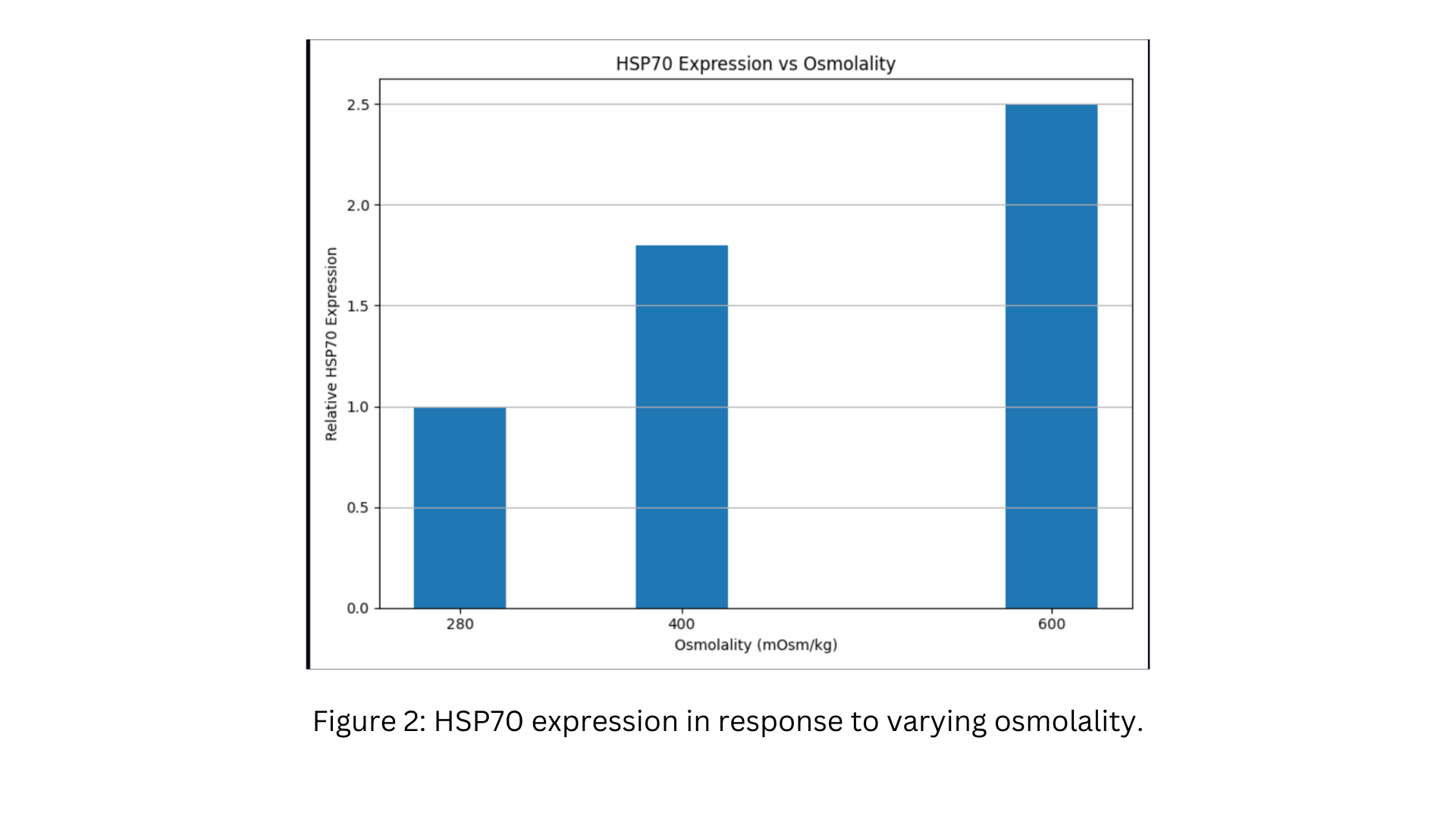
Human renal proximal tubule epithelial cells (HK-2 cells) were cultured in media with varying osmolality (280, 400, and 600 mOsm/kg). Cell volume was measured using Coulter counting, and the expression of aquaporin-1 (AQP1) and heat shock protein 70 (HSP70) was assessed using Western blotting.
Figure 1: Cell volume and AQP1 expression in response to varying osmolality.
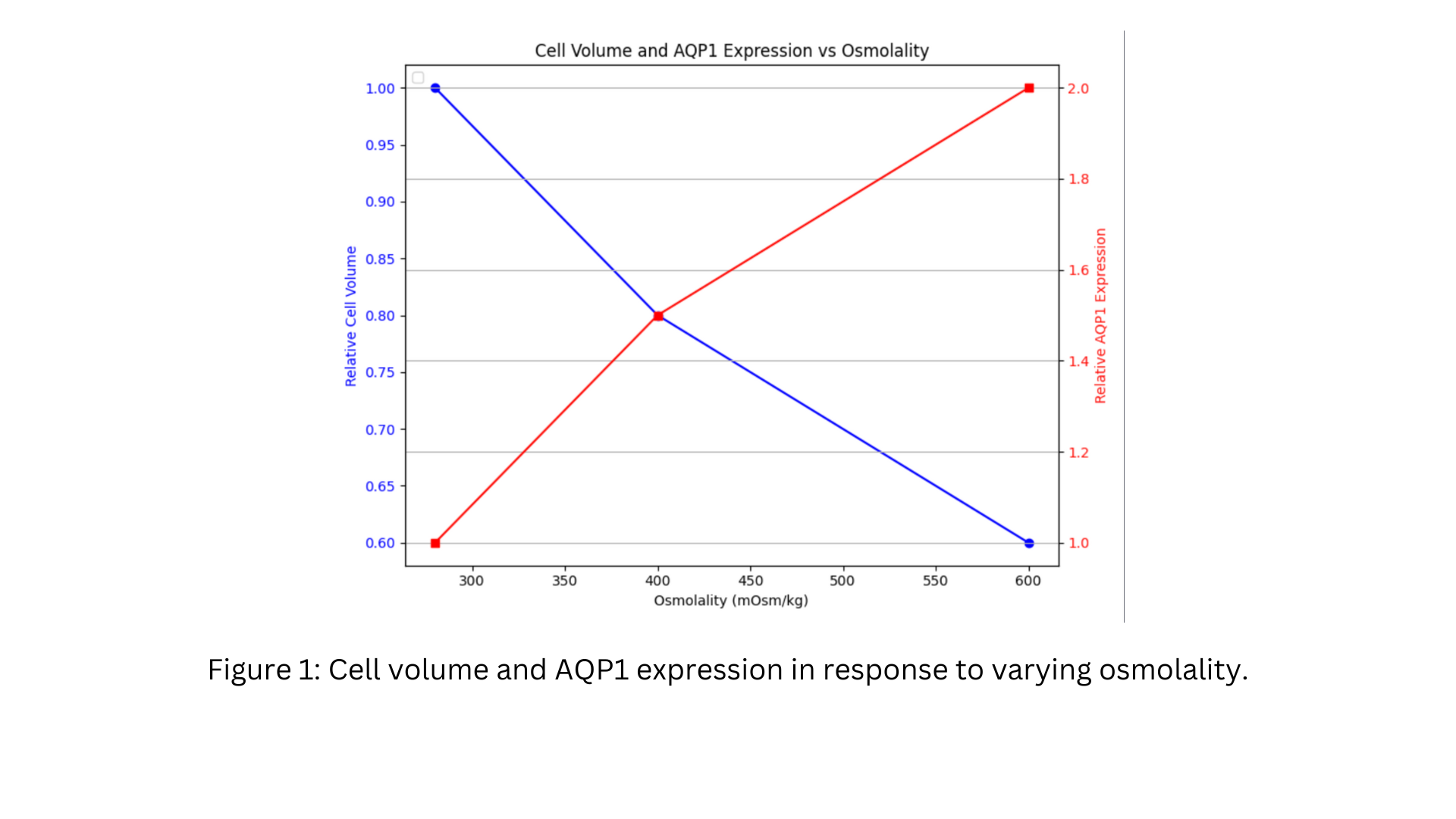
Figure 2: HSP70 expression in response to varying osmolality.
Experiment 2: Inflammatory Response in Connective Tissue
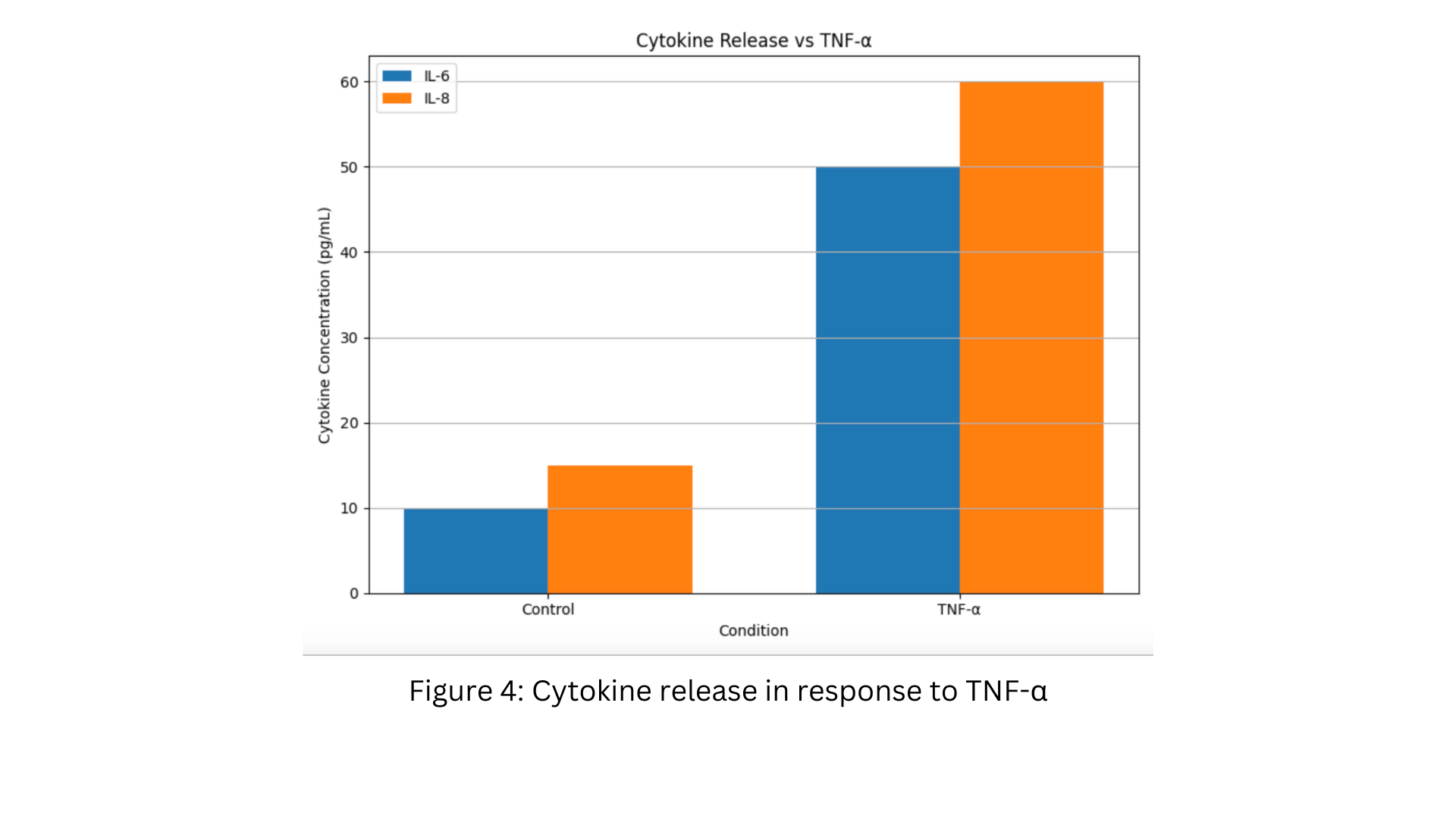
Human dermal fibroblasts were stimulated with tumor necrosis factor-alpha (TNF-, 10 ng/mL) for 24 hours. The expression of collagen type I and matrix metalloproteinase-1 (MMP-1) was measured using qRT-PCR. Cytokine release (IL-6 and IL-8) was quantified using ELISA.
Figure 3: Collagen type I and MMP-1 mRNA expression in response to TNF-.
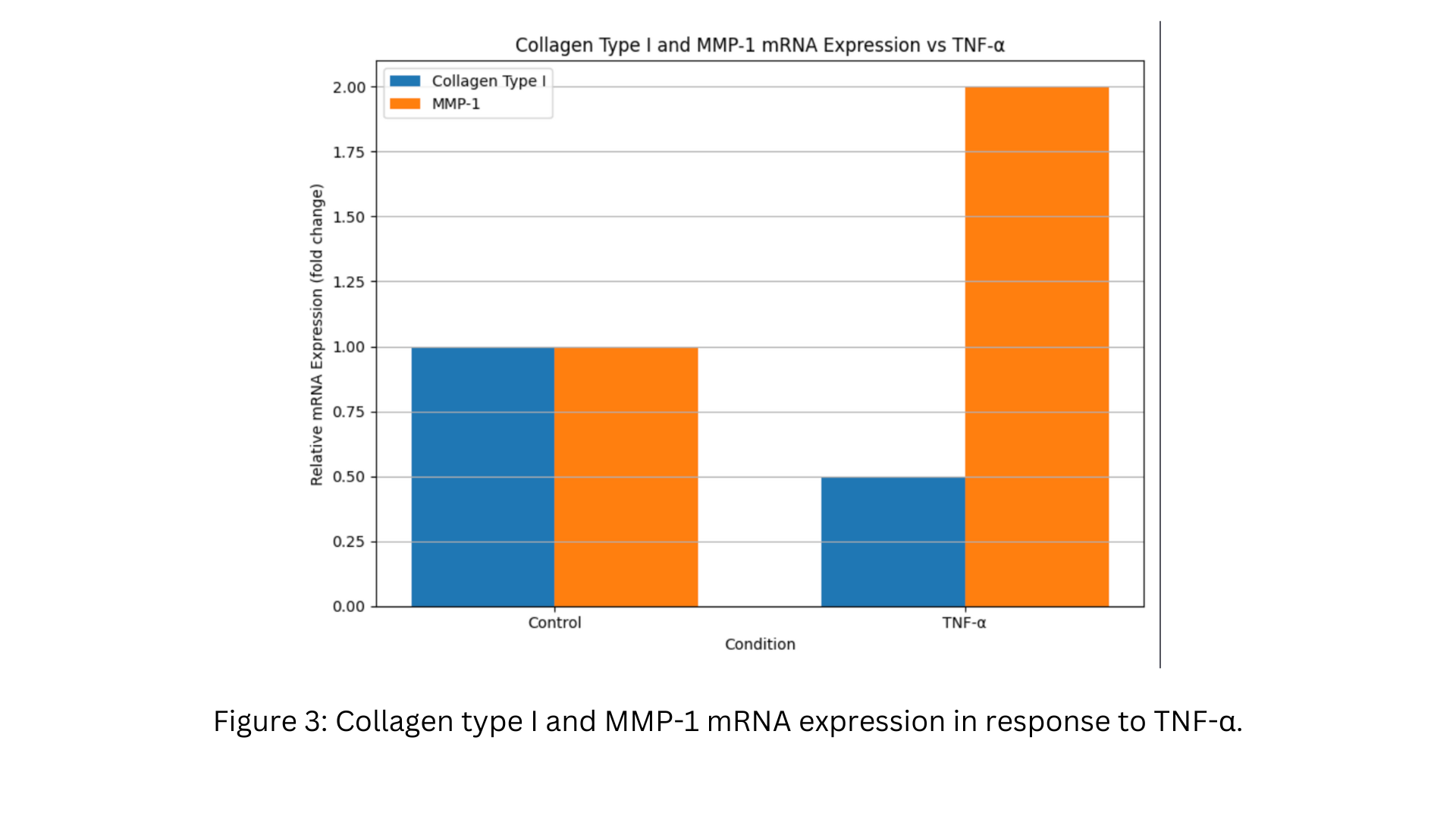
Figure 4: Cytokine release in response to TNF-.
Experiment 3: Neuronal Response to Inflammatory Stimuli
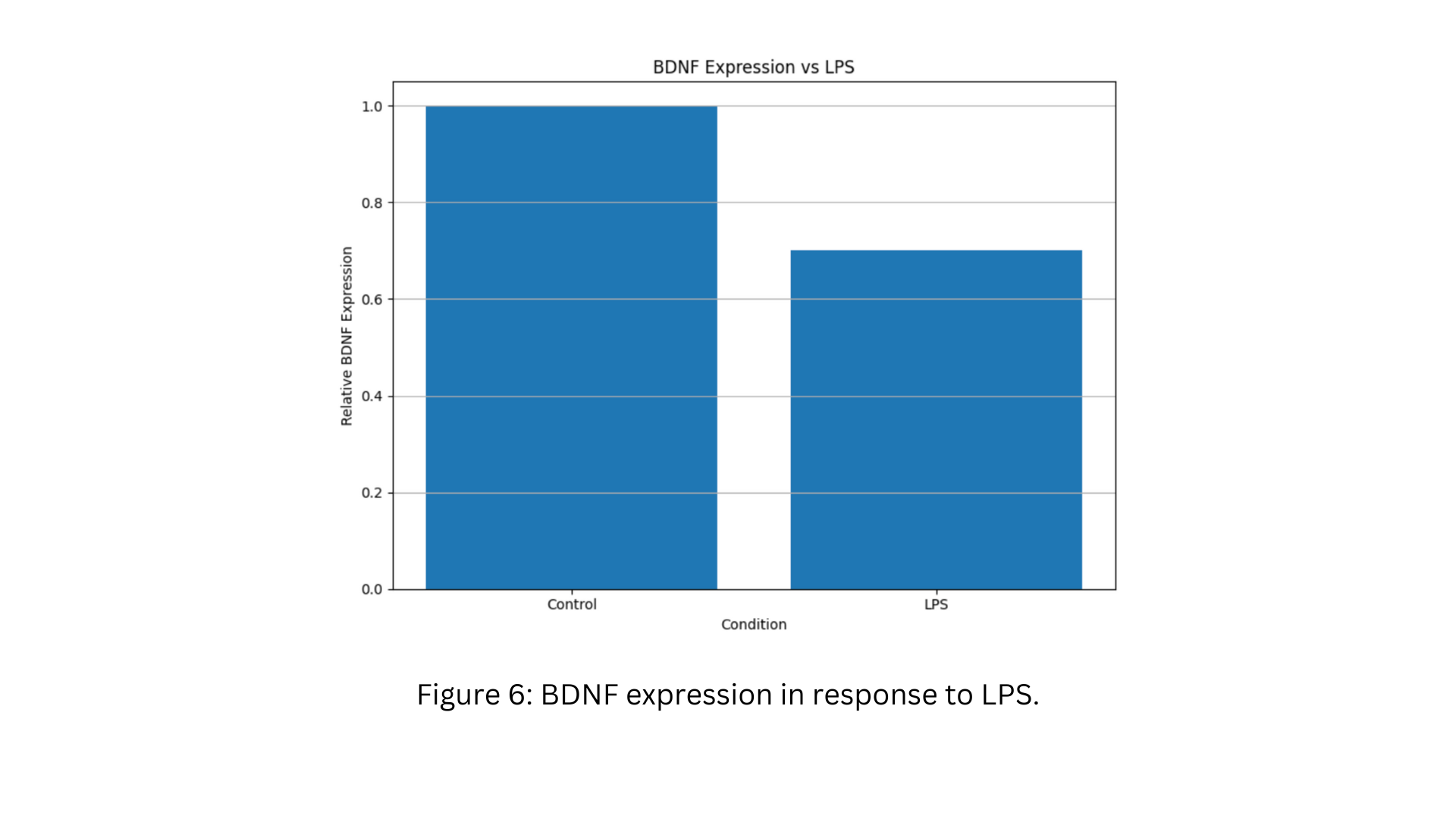
Cultured rat hippocampal neurons were exposed to lipopolysaccharide (LPS, 1 µg/mL) for 24 hours. Neurite outgrowth was measured using image analysis, and the expression of brain-derived neurotrophic factor (BDNF) was assessed using Western blotting.
Figure 5: Neurite outgrowth in response to LPS.
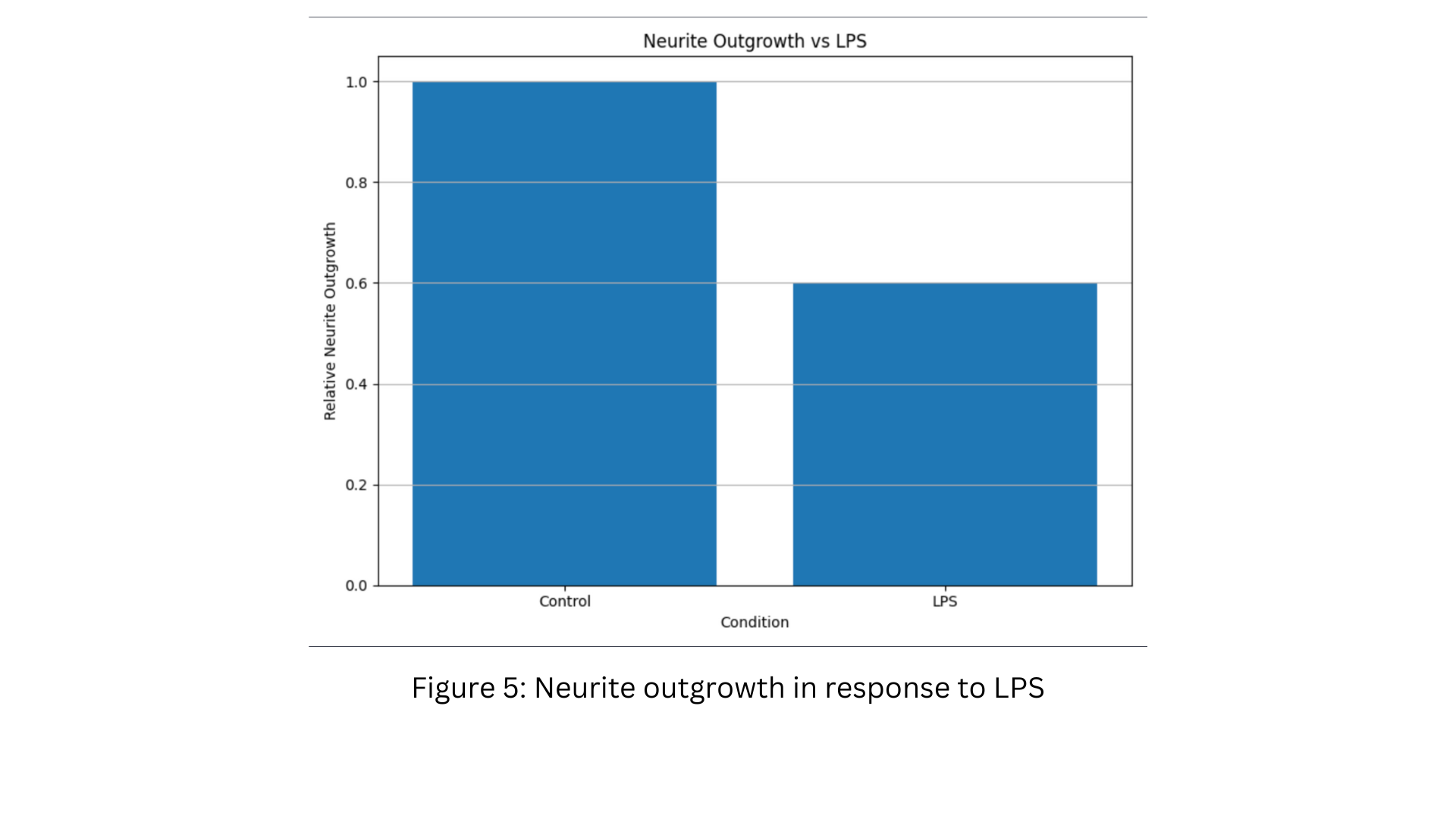
Figure 6: BDNF expression in response to LPS.
Based on Figure 1 and Figure 2, and considering the known function of AQP1 and HSP70, which of the following mechanisms best explains the cellular adaptation of HK-2 cells to hyperosmotic stress?
Researchers investigated the differential responses of various eukaryotic cell types to osmotic stress and inflammatory stimuli. The study focused on epithelial, connective, and nervous tissues, examining changes in cell morphology, protein expression, and cytokine release.
Experiment 1: Osmotic Stress Response in Epithelial Cells
Human renal proximal tubule epithelial cells (HK-2 cells) were cultured in media with varying osmolality (280, 400, and 600 mOsm/kg). Cell volume was measured using Coulter counting, and the expression of aquaporin-1 (AQP1) and heat shock protein 70 (HSP70) was assessed using Western blotting.
Figure 1: Cell volume and AQP1 expression in response to varying osmolality.
Figure 2: HSP70 expression in response to varying osmolality.
Experiment 2: Inflammatory Response in Connective Tissue
Human dermal fibroblasts were stimulated with tumor necrosis factor-alpha (TNF-, 10 ng/mL) for 24 hours. The expression of collagen type I and matrix metalloproteinase-1 (MMP-1) was measured using qRT-PCR. Cytokine release (IL-6 and IL-8) was quantified using ELISA.
Figure 3: Collagen type I and MMP-1 mRNA expression in response to TNF-.
Figure 4: Cytokine release in response to TNF-.
Experiment 3: Neuronal Response to Inflammatory Stimuli
Cultured rat hippocampal neurons were exposed to lipopolysaccharide (LPS, 1 µg/mL) for 24 hours. Neurite outgrowth was measured using image analysis, and the expression of brain-derived neurotrophic factor (BDNF) was assessed using Western blotting.
Figure 5: Neurite outgrowth in response to LPS.
Figure 6: BDNF expression in response to LPS.
Given the observed changes in collagen type I and MMP-1 expression in Figure 3, and considering the role of these proteins in extracellular matrix (ECM) homeostasis, what long-term consequence would chronic exposure to TNF-α likely have on dermal connective tissue?
Researchers investigated the differential responses of various eukaryotic cell types to osmotic stress and inflammatory stimuli. The study focused on epithelial, connective, and nervous tissues, examining changes in cell morphology, protein expression, and cytokine release.
Experiment 1: Osmotic Stress Response in Epithelial Cells
Human renal proximal tubule epithelial cells (HK-2 cells) were cultured in media with varying osmolality (280, 400, and 600 mOsm/kg). Cell volume was measured using Coulter counting, and the expression of aquaporin-1 (AQP1) and heat shock protein 70 (HSP70) was assessed using Western blotting.
Figure 1: Cell volume and AQP1 expression in response to varying osmolality.
Figure 2: HSP70 expression in response to varying osmolality.
Experiment 2: Inflammatory Response in Connective Tissue
Human dermal fibroblasts were stimulated with tumor necrosis factor-alpha (TNF-, 10 ng/mL) for 24 hours. The expression of collagen type I and matrix metalloproteinase-1 (MMP-1) was measured using qRT-PCR. Cytokine release (IL-6 and IL-8) was quantified using ELISA.
Figure 3: Collagen type I and MMP-1 mRNA expression in response to TNF-.
Figure 4: Cytokine release in response to TNF-.
Experiment 3: Neuronal Response to Inflammatory Stimuli
Cultured rat hippocampal neurons were exposed to lipopolysaccharide (LPS, 1 µg/mL) for 24 hours. Neurite outgrowth was measured using image analysis, and the expression of brain-derived neurotrophic factor (BDNF) was assessed using Western blotting.
Figure 5: Neurite outgrowth in response to LPS.
Figure 6: BDNF expression in response to LPS.
Considering the data presented in Figure 4 and the known functions of IL-6 and IL-8, which of the following best describes the potential systemic effects of chronic TNF-α stimulation in dermal fibroblasts?
Researchers investigated the differential responses of various eukaryotic cell types to osmotic stress and inflammatory stimuli. The study focused on epithelial, connective, and nervous tissues, examining changes in cell morphology, protein expression, and cytokine release.
Experiment 1: Osmotic Stress Response in Epithelial Cells
Human renal proximal tubule epithelial cells (HK-2 cells) were cultured in media with varying osmolality (280, 400, and 600 mOsm/kg). Cell volume was measured using Coulter counting, and the expression of aquaporin-1 (AQP1) and heat shock protein 70 (HSP70) was assessed using Western blotting.
Figure 1: Cell volume and AQP1 expression in response to varying osmolality.
Figure 2: HSP70 expression in response to varying osmolality.
Experiment 2: Inflammatory Response in Connective Tissue
Human dermal fibroblasts were stimulated with tumor necrosis factor-alpha (TNF-, 10 ng/mL) for 24 hours. The expression of collagen type I and matrix metalloproteinase-1 (MMP-1) was measured using qRT-PCR. Cytokine release (IL-6 and IL-8) was quantified using ELISA.
Figure 3: Collagen type I and MMP-1 mRNA expression in response to TNF-.
Figure 4: Cytokine release in response to TNF-.
Experiment 3: Neuronal Response to Inflammatory Stimuli
Cultured rat hippocampal neurons were exposed to lipopolysaccharide (LPS, 1 µg/mL) for 24 hours. Neurite outgrowth was measured using image analysis, and the expression of brain-derived neurotrophic factor (BDNF) was assessed using Western blotting.
Figure 5: Neurite outgrowth in response to LPS.
Figure 6: BDNF expression in response to LPS.
Based on the data in Figure 5 and Figure 6, and considering the role of BDNF in neuronal plasticity and survival, which cellular process is most likely impaired in hippocampal neurons exposed to LPS?
Researchers investigated the differential responses of various eukaryotic cell types to osmotic stress and inflammatory stimuli. The study focused on epithelial, connective, and nervous tissues, examining changes in cell morphology, protein expression, and cytokine release.
Experiment 1: Osmotic Stress Response in Epithelial Cells
Human renal proximal tubule epithelial cells (HK-2 cells) were cultured in media with varying osmolality (280, 400, and 600 mOsm/kg). Cell volume was measured using Coulter counting, and the expression of aquaporin-1 (AQP1) and heat shock protein 70 (HSP70) was assessed using Western blotting.
Figure 1: Cell volume and AQP1 expression in response to varying osmolality.
Figure 2: HSP70 expression in response to varying osmolality.
Experiment 2: Inflammatory Response in Connective Tissue
Human dermal fibroblasts were stimulated with tumor necrosis factor-alpha (TNF-, 10 ng/mL) for 24 hours. The expression of collagen type I and matrix metalloproteinase-1 (MMP-1) was measured using qRT-PCR. Cytokine release (IL-6 and IL-8) was quantified using ELISA.
Figure 3: Collagen type I and MMP-1 mRNA expression in response to TNF-.
Figure 4: Cytokine release in response to TNF-.
Experiment 3: Neuronal Response to Inflammatory Stimuli
Cultured rat hippocampal neurons were exposed to lipopolysaccharide (LPS, 1 µg/mL) for 24 hours. Neurite outgrowth was measured using image analysis, and the expression of brain-derived neurotrophic factor (BDNF) was assessed using Western blotting.
Figure 5: Neurite outgrowth in response to LPS.
Figure 6: BDNF expression in response to LPS.
Integrate the findings from all three experiments. If a patient presented with chronic renal disease (affecting epithelial cells), rheumatoid arthritis (affecting connective tissue), and cognitive decline (potentially affecting neurons), which of the following molecular mechanisms would likely be implicated across all three tissue types?
Researchers investigated the effects of various factors on protein synthesis in eukaryotic cells. They focused on the regulation of translation initiation and elongation, examining the synthesis of a specific protein, Protein Z, in response to different stimuli.
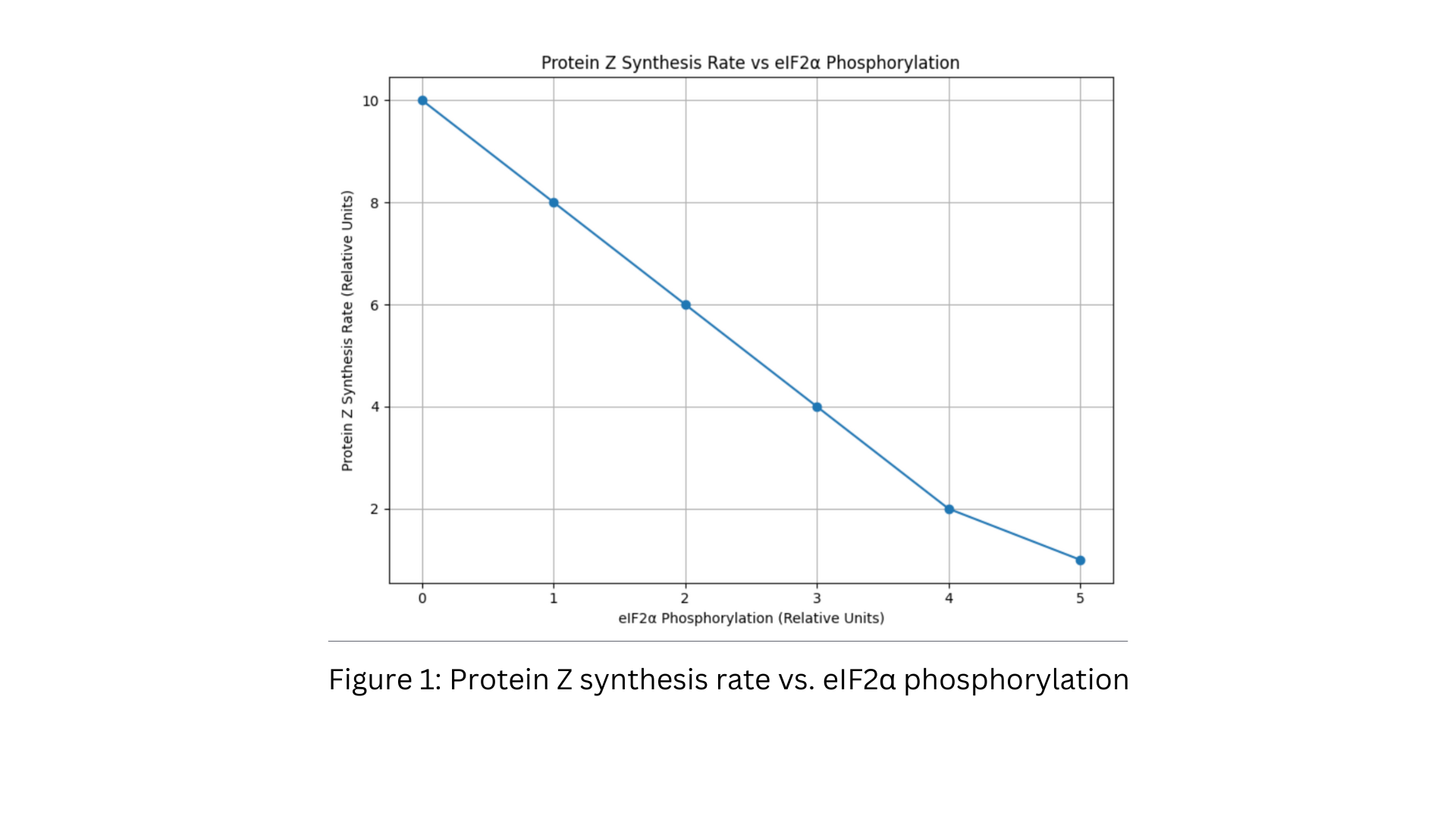
Experiment 1: Effect of eIF2 Phosphorylation
HeLa cells were treated with increasing concentrations of a compound known to induce phosphorylation of eukaryotic initiation factor 2 alpha (eIF2). The rate of Protein Z synthesis was measured using radiolabeled amino acid incorporation.
Experiment 2: Role of mRNA Secondary Structure
Two mRNA constructs, mRNA-A and mRNA-B, were created. mRNA-A had a stable hairpin structure in its 5' untranslated region (UTR), while mRNA-B had a less stable structure. Both mRNAs were introduced into cell-free translation systems, and the rate of Protein Z synthesis was measured.

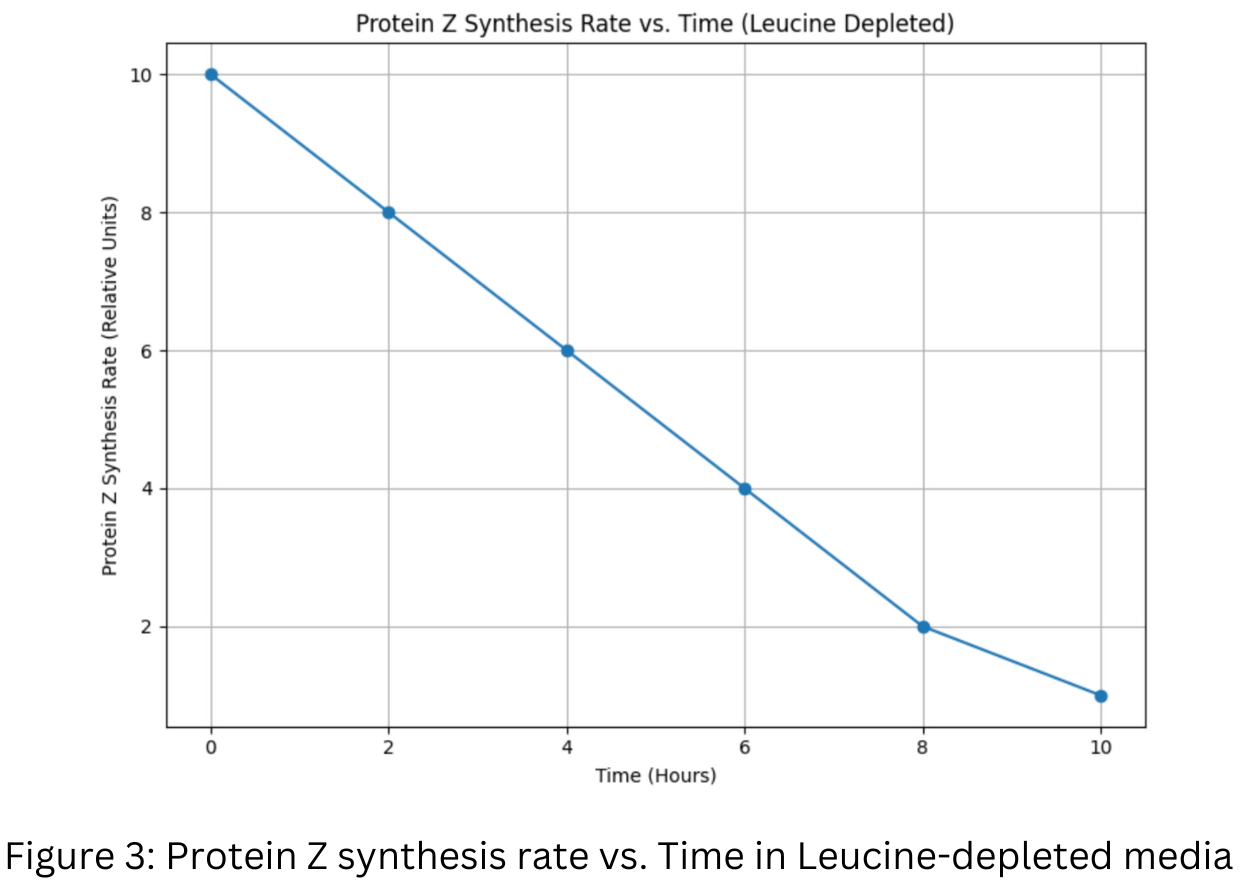
Experiment 3: Effect of tRNA Availability
HeLa cells were cultured in media depleted of a specific amino acid, Leucine. The rate of Protein Z synthesis was measured over time.
Based on Figure 1, which of the following best describes the effect of eIF2 phosphorylation on Protein Z synthesis?
Researchers investigated the effects of various factors on protein synthesis in eukaryotic cells. They focused on the regulation of translation initiation and elongation, examining the synthesis of a specific protein, Protein Z, in response to different stimuli.
Experiment 1: Effect of eIF2 Phosphorylation
HeLa cells were treated with increasing concentrations of a compound known to induce phosphorylation of eukaryotic initiation factor 2 alpha (eIF2). The rate of Protein Z synthesis was measured using radiolabeled amino acid incorporation.
Experiment 2: Role of mRNA Secondary Structure
Two mRNA constructs, mRNA-A and mRNA-B, were created. mRNA-A had a stable hairpin structure in its 5' untranslated region (UTR), while mRNA-B had a less stable structure. Both mRNAs were introduced into cell-free translation systems, and the rate of Protein Z synthesis was measured.
Experiment 3: Effect of tRNA Availability
HeLa cells were cultured in media depleted of a specific amino acid, Leucine. The rate of Protein Z synthesis was measured over time.
Reference Figure 2: What is the most likely mechanism by which the hairpin structure in mRNA-A reduces Protein Z synthesis?
Researchers investigated the effects of various factors on protein synthesis in eukaryotic cells. They focused on the regulation of translation initiation and elongation, examining the synthesis of a specific protein, Protein Z, in response to different stimuli.
Experiment 1: Effect of eIF2 Phosphorylation
HeLa cells were treated with increasing concentrations of a compound known to induce phosphorylation of eukaryotic initiation factor 2 alpha (eIF2). The rate of Protein Z synthesis was measured using radiolabeled amino acid incorporation.
Experiment 2: Role of mRNA Secondary Structure
Two mRNA constructs, mRNA-A and mRNA-B, were created. mRNA-A had a stable hairpin structure in its 5' untranslated region (UTR), while mRNA-B had a less stable structure. Both mRNAs were introduced into cell-free translation systems, and the rate of Protein Z synthesis was measured.
Experiment 3: Effect of tRNA Availability
HeLa cells were cultured in media depleted of a specific amino acid, Leucine. The rate of Protein Z synthesis was measured over time.
Based on Figure 3, what is the most likely reason for the decrease in Protein Z synthesis over time in Leucine-depleted media?
Researchers investigated the effects of various factors on protein synthesis in eukaryotic cells. They focused on the regulation of translation initiation and elongation, examining the synthesis of a specific protein, Protein Z, in response to different stimuli.
Experiment 1: Effect of eIF2 Phosphorylation
HeLa cells were treated with increasing concentrations of a compound known to induce phosphorylation of eukaryotic initiation factor 2 alpha (eIF2). The rate of Protein Z synthesis was measured using radiolabeled amino acid incorporation.
Experiment 2: Role of mRNA Secondary Structure
Two mRNA constructs, mRNA-A and mRNA-B, were created. mRNA-A had a stable hairpin structure in its 5' untranslated region (UTR), while mRNA-B had a less stable structure. Both mRNAs were introduced into cell-free translation systems, and the rate of Protein Z synthesis was measured.
Experiment 3: Effect of tRNA Availability
HeLa cells were cultured in media depleted of a specific amino acid, Leucine. The rate of Protein Z synthesis was measured over time.
If a mutation in mRNA-B disrupted the stability of its secondary structure, how would this affect the rate of Protein Z synthesis compared to the original mRNA-B?
Researchers investigated the effects of various factors on protein synthesis in eukaryotic cells. They focused on the regulation of translation initiation and elongation, examining the synthesis of a specific protein, Protein Z, in response to different stimuli.
Experiment 1: Effect of eIF2 Phosphorylation
HeLa cells were treated with increasing concentrations of a compound known to induce phosphorylation of eukaryotic initiation factor 2 alpha (eIF2). The rate of Protein Z synthesis was measured using radiolabeled amino acid incorporation.
Experiment 2: Role of mRNA Secondary Structure
Two mRNA constructs, mRNA-A and mRNA-B, were created. mRNA-A had a stable hairpin structure in its 5' untranslated region (UTR), while mRNA-B had a less stable structure. Both mRNAs were introduced into cell-free translation systems, and the rate of Protein Z synthesis was measured.
Experiment 3: Effect of tRNA Availability
HeLa cells were cultured in media depleted of a specific amino acid, Leucine. The rate of Protein Z synthesis was measured over time.
Given the data from all three experiments, which of the following scenarios would most likely lead to the most significant and rapid decrease in Protein Z synthesis?
The image depicts key stages in early embryonic development: cleavage, blastulation, gastrulation, and neurulation. These processes are fundamental to the establishment of the basic body plan in vertebrates. Following fertilization, a series of rapid mitotic divisions, known as cleavage, occurs, resulting in the formation of blastomeres. These blastomeres subsequently organize into a hollow sphere called the blastula, characterized by a fluid-filled cavity, the blastocoel. As illustrated in stage 2, the blastula further differentiates into the blastocyst, featuring an inner cell mass (ICM) and an outer layer, the trophoblast.
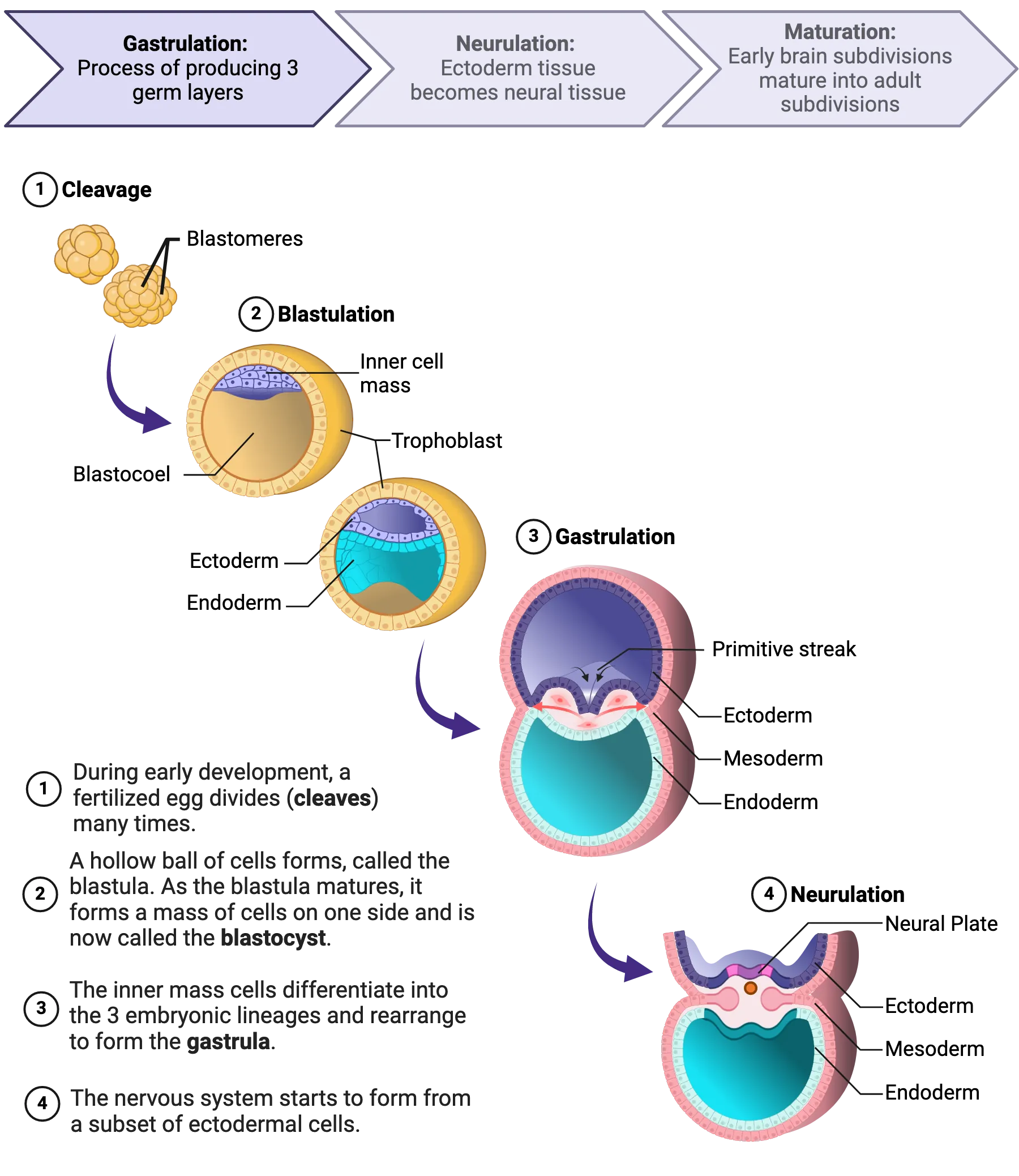
Gastrulation, as shown in stage 3, is a pivotal event during which the ICM undergoes significant cellular rearrangements, leading to the formation of three distinct germ layers: the ectoderm, mesoderm, and endoderm. This process is initiated by the formation of the primitive streak, a crucial organizer that establishes the body axes. The ectoderm, the outermost layer, gives rise to the skin, nervous system, and sensory organs. The mesoderm, the middle layer, forms muscles, bones, the circulatory system, and various internal organs. The endoderm, the innermost layer, develops into the lining of the digestive and respiratory tracts, as well as associated organs.
Following gastrulation, neurulation, depicted in stage 4, commences with the formation of the neural plate from a subset of ectodermal cells. This plate folds inward, eventually forming the neural tube, the precursor to the central nervous system. The proper formation of the neural tube is critical, as defects in this process can lead to severe congenital abnormalities.
The precise orchestration of these events relies on intricate signaling pathways and gene expression patterns. Disruptions in these processes can have profound consequences for embryonic development and subsequent organismal function.
A researcher is studying the effects of a teratogen on early embryonic development. The teratogen is found to specifically disrupt the formation of the primitive streak. Which of the following processes would be most directly affected?
The image depicts key stages in early embryonic development: cleavage, blastulation, gastrulation, and neurulation. These processes are fundamental to the establishment of the basic body plan in vertebrates. Following fertilization, a series of rapid mitotic divisions, known as cleavage, occurs, resulting in the formation of blastomeres. These blastomeres subsequently organize into a hollow sphere called the blastula, characterized by a fluid-filled cavity, the blastocoel. As illustrated in stage 2, the blastula further differentiates into the blastocyst, featuring an inner cell mass (ICM) and an outer layer, the trophoblast.
Gastrulation, as shown in stage 3, is a pivotal event during which the ICM undergoes significant cellular rearrangements, leading to the formation of three distinct germ layers: the ectoderm, mesoderm, and endoderm. This process is initiated by the formation of the primitive streak, a crucial organizer that establishes the body axes. The ectoderm, the outermost layer, gives rise to the skin, nervous system, and sensory organs. The mesoderm, the middle layer, forms muscles, bones, the circulatory system, and various internal organs. The endoderm, the innermost layer, develops into the lining of the digestive and respiratory tracts, as well as associated organs.
Following gastrulation, neurulation, depicted in stage 4, commences with the formation of the neural plate from a subset of ectodermal cells. This plate folds inward, eventually forming the neural tube, the precursor to the central nervous system. The proper formation of the neural tube is critical, as defects in this process can lead to severe congenital abnormalities.
The precise orchestration of these events relies on intricate signaling pathways and gene expression patterns. Disruptions in these processes can have profound consequences for embryonic development and subsequent organismal function.
Which of the following cellular movements is LEAST likely to be involved in the formation of the three germ layers during gastrulation?
The image depicts key stages in early embryonic development: cleavage, blastulation, gastrulation, and neurulation. These processes are fundamental to the establishment of the basic body plan in vertebrates. Following fertilization, a series of rapid mitotic divisions, known as cleavage, occurs, resulting in the formation of blastomeres. These blastomeres subsequently organize into a hollow sphere called the blastula, characterized by a fluid-filled cavity, the blastocoel. As illustrated in stage 2, the blastula further differentiates into the blastocyst, featuring an inner cell mass (ICM) and an outer layer, the trophoblast.
Gastrulation, as shown in stage 3, is a pivotal event during which the ICM undergoes significant cellular rearrangements, leading to the formation of three distinct germ layers: the ectoderm, mesoderm, and endoderm. This process is initiated by the formation of the primitive streak, a crucial organizer that establishes the body axes. The ectoderm, the outermost layer, gives rise to the skin, nervous system, and sensory organs. The mesoderm, the middle layer, forms muscles, bones, the circulatory system, and various internal organs. The endoderm, the innermost layer, develops into the lining of the digestive and respiratory tracts, as well as associated organs.
Following gastrulation, neurulation, depicted in stage 4, commences with the formation of the neural plate from a subset of ectodermal cells. This plate folds inward, eventually forming the neural tube, the precursor to the central nervous system. The proper formation of the neural tube is critical, as defects in this process can lead to severe congenital abnormalities.
The precise orchestration of these events relies on intricate signaling pathways and gene expression patterns. Disruptions in these processes can have profound consequences for embryonic development and subsequent organismal function.
If a mutation occurred that prevented the formation of the neural crest cells, which of the following structures would be most likely affected?
The image depicts key stages in early embryonic development: cleavage, blastulation, gastrulation, and neurulation. These processes are fundamental to the establishment of the basic body plan in vertebrates. Following fertilization, a series of rapid mitotic divisions, known as cleavage, occurs, resulting in the formation of blastomeres. These blastomeres subsequently organize into a hollow sphere called the blastula, characterized by a fluid-filled cavity, the blastocoel. As illustrated in stage 2, the blastula further differentiates into the blastocyst, featuring an inner cell mass (ICM) and an outer layer, the trophoblast.
Gastrulation, as shown in stage 3, is a pivotal event during which the ICM undergoes significant cellular rearrangements, leading to the formation of three distinct germ layers: the ectoderm, mesoderm, and endoderm. This process is initiated by the formation of the primitive streak, a crucial organizer that establishes the body axes. The ectoderm, the outermost layer, gives rise to the skin, nervous system, and sensory organs. The mesoderm, the middle layer, forms muscles, bones, the circulatory system, and various internal organs. The endoderm, the innermost layer, develops into the lining of the digestive and respiratory tracts, as well as associated organs.
Following gastrulation, neurulation, depicted in stage 4, commences with the formation of the neural plate from a subset of ectodermal cells. This plate folds inward, eventually forming the neural tube, the precursor to the central nervous system. The proper formation of the neural tube is critical, as defects in this process can lead to severe congenital abnormalities.
The precise orchestration of these events relies on intricate signaling pathways and gene expression patterns. Disruptions in these processes can have profound consequences for embryonic development and subsequent organismal function.
Which of the following statements accurately describes the relationship between the blastocoel and the formation of the three germ layers?
The image depicts key stages in early embryonic development: cleavage, blastulation, gastrulation, and neurulation. These processes are fundamental to the establishment of the basic body plan in vertebrates. Following fertilization, a series of rapid mitotic divisions, known as cleavage, occurs, resulting in the formation of blastomeres. These blastomeres subsequently organize into a hollow sphere called the blastula, characterized by a fluid-filled cavity, the blastocoel. As illustrated in stage 2, the blastula further differentiates into the blastocyst, featuring an inner cell mass (ICM) and an outer layer, the trophoblast.
Gastrulation, as shown in stage 3, is a pivotal event during which the ICM undergoes significant cellular rearrangements, leading to the formation of three distinct germ layers: the ectoderm, mesoderm, and endoderm. This process is initiated by the formation of the primitive streak, a crucial organizer that establishes the body axes. The ectoderm, the outermost layer, gives rise to the skin, nervous system, and sensory organs. The mesoderm, the middle layer, forms muscles, bones, the circulatory system, and various internal organs. The endoderm, the innermost layer, develops into the lining of the digestive and respiratory tracts, as well as associated organs.
Following gastrulation, neurulation, depicted in stage 4, commences with the formation of the neural plate from a subset of ectodermal cells. This plate folds inward, eventually forming the neural tube, the precursor to the central nervous system. The proper formation of the neural tube is critical, as defects in this process can lead to severe congenital abnormalities.
The precise orchestration of these events relies on intricate signaling pathways and gene expression patterns. Disruptions in these processes can have profound consequences for embryonic development and subsequent organismal function.
A researcher is studying a signaling pathway that is crucial for the proper closure of the neural tube. Which of the following experimental manipulations would most likely disrupt this process and lead to neural tube defects?
The intricate interplay between mechanotransduction and cellular signaling in skeletal muscle and bone remodeling is a subject of ongoing research. To investigate the effects of mechanical stimuli on these tissues, researchers conducted a series of experiments focusing on the modulation of intracellular signaling pathways.
Experiment 1: Calcium Signaling in Muscle Contraction
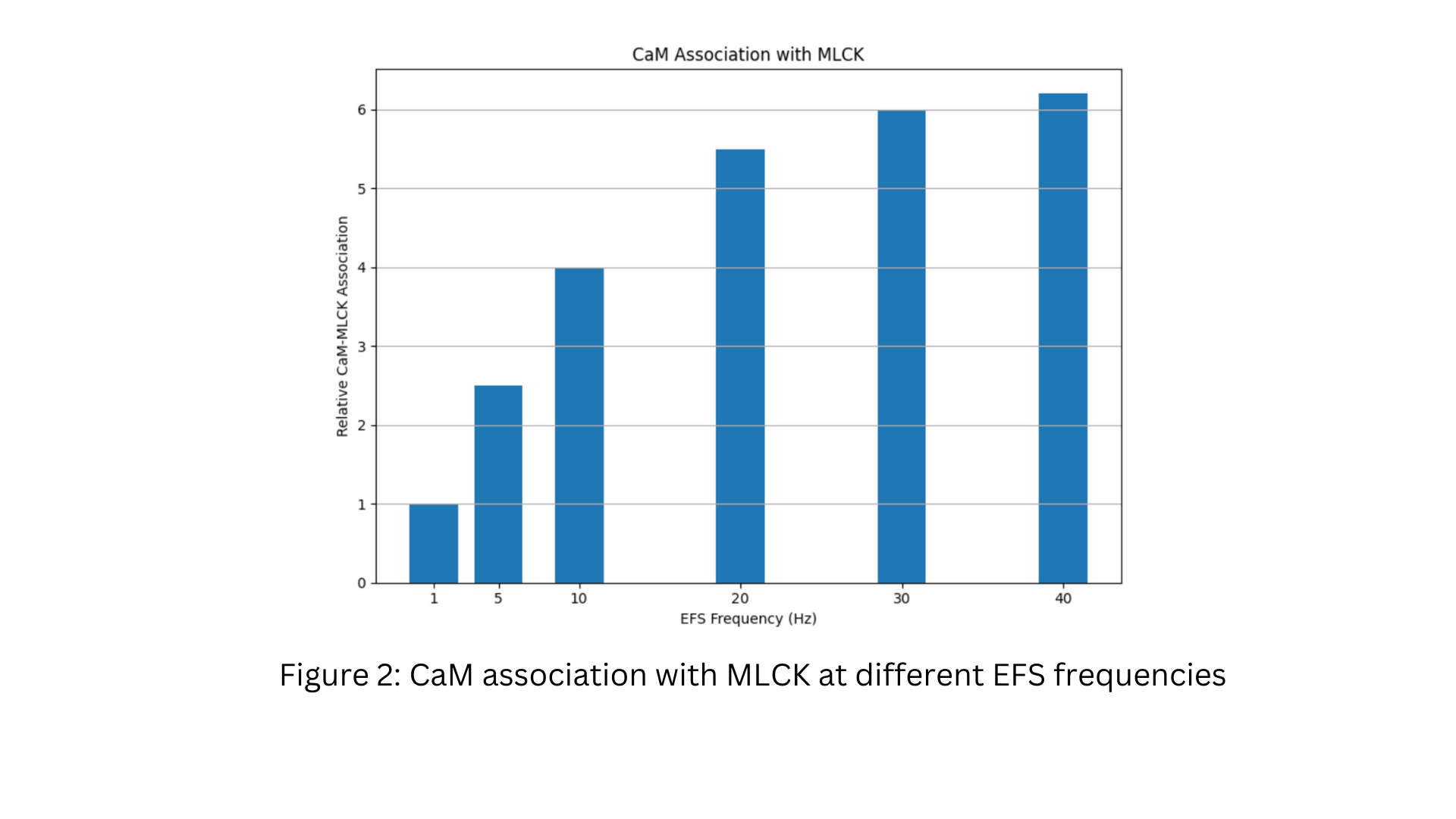
Isolated fast-twitch muscle fibers from the Mus musculus extensor digitorum longus (EDL) were subjected to varying frequencies of electrical field stimulation (EFS). Intracellular calcium transients were measured using Fura-2 AM fluorescence microscopy. Additionally, the phosphorylation status of myosin light chain kinase (MLCK) and the association of calmodulin (CaM) with MLCK were assessed using Western blotting and co-immunoprecipitation, respectively.
Figure 1: Intracellular calcium transients and MLCK phosphorylation in response to varying EFS frequencies.
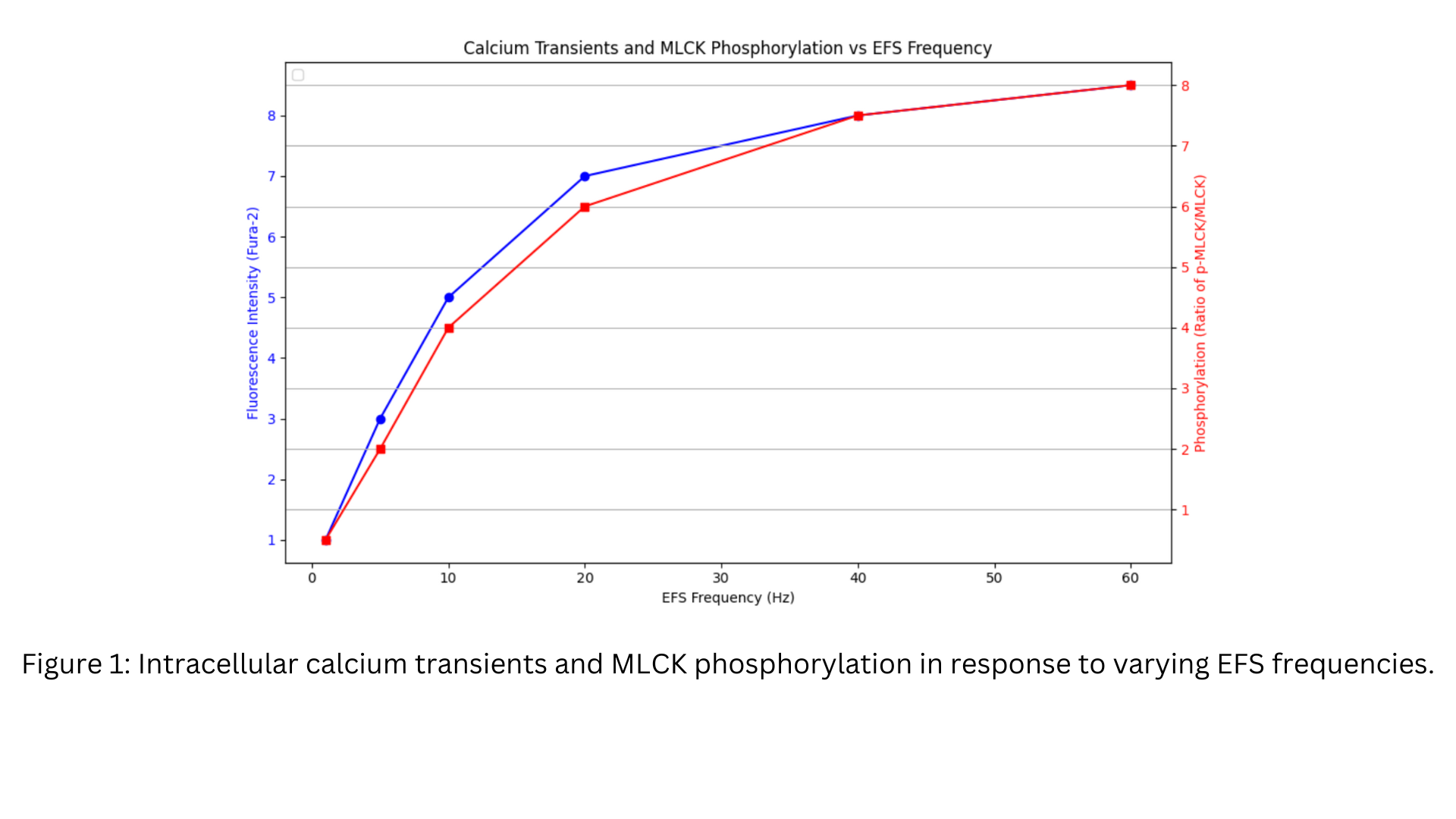
Figure 2: CaM association with MLCK at different EFS frequencies.
Experiment 2: Wnt Signaling in Bone Remodeling
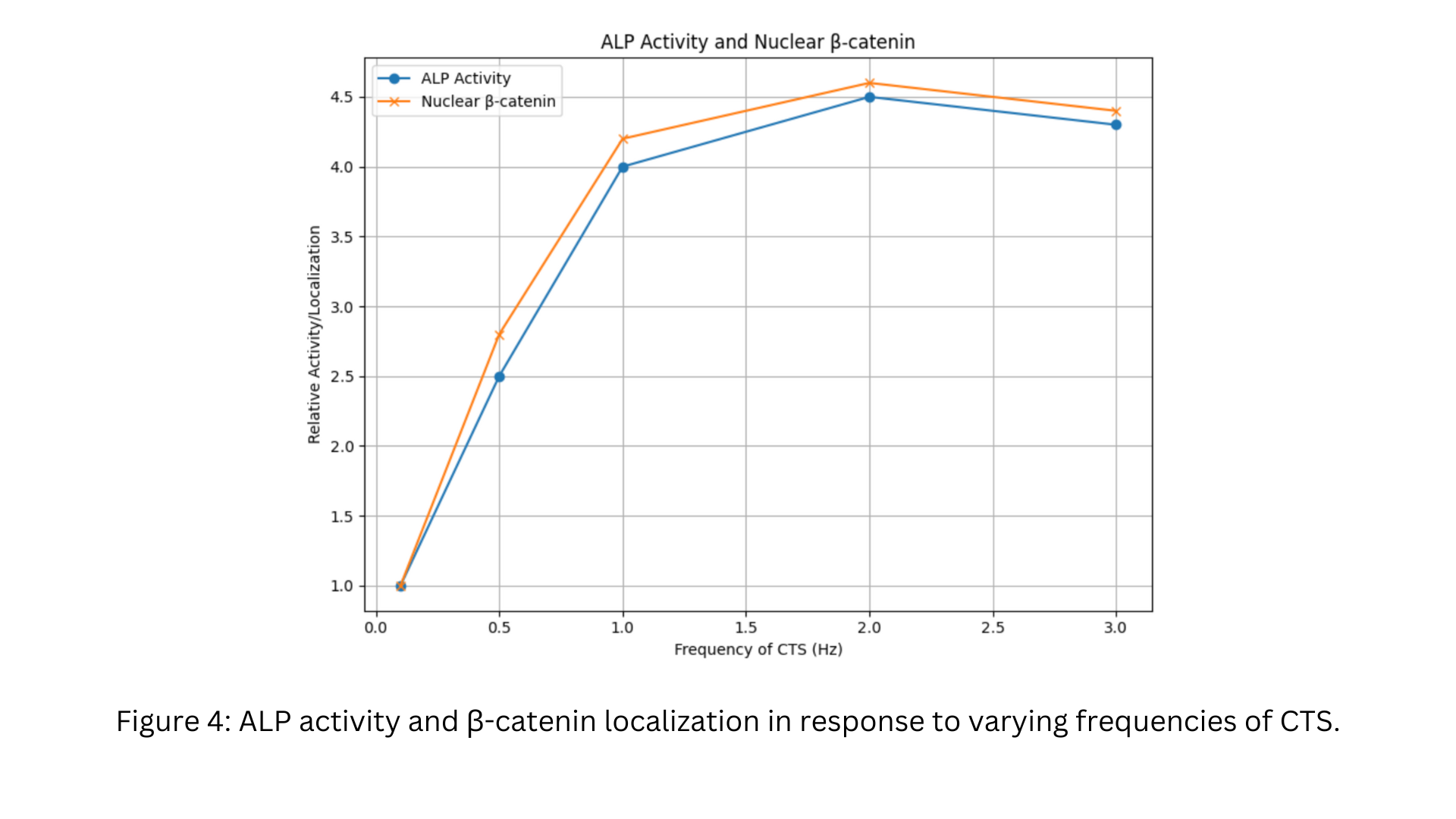
Osteoblast-like MC3T3-E1 cells were subjected to cyclic tensile strain (CTS) at varying magnitudes and frequencies. The expression of Wnt signaling pathway components, including β-catenin, Dvl2, and LRP5, was assessed using quantitative real-time PCR (qRT-PCR) and Western blotting. Additionally, the activity of alkaline phosphatase (ALP), a marker of osteoblast differentiation, was measured.
Figure 3: Expression of Wnt signaling components in response to varying magnitudes of CTS.
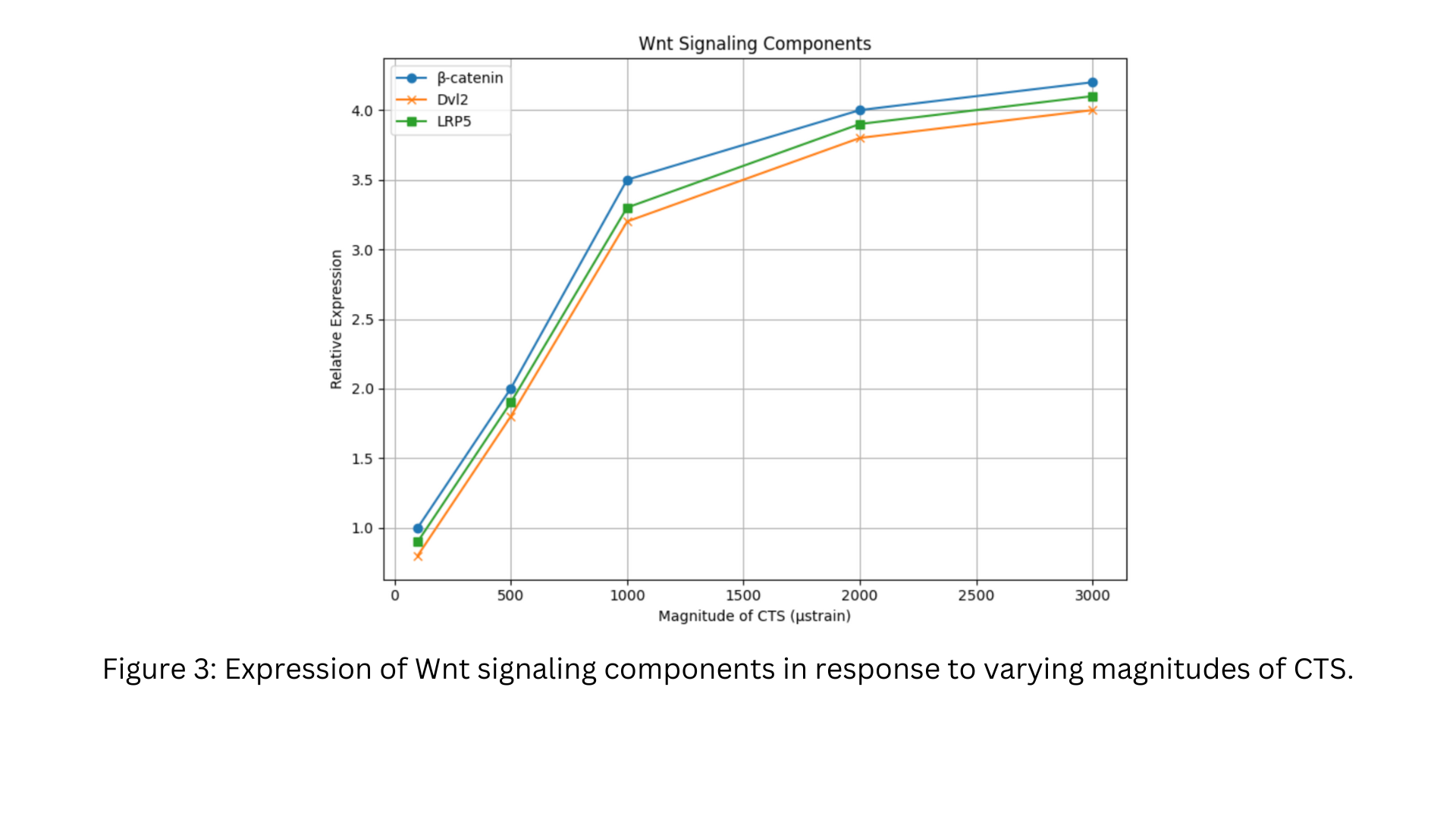
Figure 4: ALP activity and β-catenin localization in response to varying frequencies of CTS.
Based on Figure 1, which of the following best describes the relationship between intracellular calcium transients and MLCK phosphorylation?
The intricate interplay between mechanotransduction and cellular signaling in skeletal muscle and bone remodeling is a subject of ongoing research. To investigate the effects of mechanical stimuli on these tissues, researchers conducted a series of experiments focusing on the modulation of intracellular signaling pathways.
Experiment 1: Calcium Signaling in Muscle Contraction
Isolated fast-twitch muscle fibers from the Mus musculus extensor digitorum longus (EDL) were subjected to varying frequencies of electrical field stimulation (EFS). Intracellular calcium transients were measured using Fura-2 AM fluorescence microscopy. Additionally, the phosphorylation status of myosin light chain kinase (MLCK) and the association of calmodulin (CaM) with MLCK were assessed using Western blotting and co-immunoprecipitation, respectively.
Figure 1: Intracellular calcium transients and MLCK phosphorylation in response to varying EFS frequencies.
Figure 2: CaM association with MLCK at different EFS frequencies.
Experiment 2: Wnt Signaling in Bone Remodeling
Osteoblast-like MC3T3-E1 cells were subjected to cyclic tensile strain (CTS) at varying magnitudes and frequencies. The expression of Wnt signaling pathway components, including β-catenin, Dvl2, and LRP5, was assessed using quantitative real-time PCR (qRT-PCR) and Western blotting. Additionally, the activity of alkaline phosphatase (ALP), a marker of osteoblast differentiation, was measured.
Figure 3: Expression of Wnt signaling components in response to varying magnitudes of CTS.
Figure 4: ALP activity and β-catenin localization in response to varying frequencies of CTS.
Reference Figure 2: What is the most likely mechanism by which increasing EFS frequency enhances CaM-MLCK association?
The intricate interplay between mechanotransduction and cellular signaling in skeletal muscle and bone remodeling is a subject of ongoing research. To investigate the effects of mechanical stimuli on these tissues, researchers conducted a series of experiments focusing on the modulation of intracellular signaling pathways.
Experiment 1: Calcium Signaling in Muscle Contraction
Isolated fast-twitch muscle fibers from the Mus musculus extensor digitorum longus (EDL) were subjected to varying frequencies of electrical field stimulation (EFS). Intracellular calcium transients were measured using Fura-2 AM fluorescence microscopy. Additionally, the phosphorylation status of myosin light chain kinase (MLCK) and the association of calmodulin (CaM) with MLCK were assessed using Western blotting and co-immunoprecipitation, respectively.
Figure 1: Intracellular calcium transients and MLCK phosphorylation in response to varying EFS frequencies.
Figure 2: CaM association with MLCK at different EFS frequencies.
Experiment 2: Wnt Signaling in Bone Remodeling
Osteoblast-like MC3T3-E1 cells were subjected to cyclic tensile strain (CTS) at varying magnitudes and frequencies. The expression of Wnt signaling pathway components, including β-catenin, Dvl2, and LRP5, was assessed using quantitative real-time PCR (qRT-PCR) and Western blotting. Additionally, the activity of alkaline phosphatase (ALP), a marker of osteoblast differentiation, was measured.
Figure 3: Expression of Wnt signaling components in response to varying magnitudes of CTS.
Figure 4: ALP activity and β-catenin localization in response to varying frequencies of CTS.
Which of the following signaling molecules is most directly involved in the observed changes in osteoblast differentiation in Figure 3?
The intricate interplay between mechanotransduction and cellular signaling in skeletal muscle and bone remodeling is a subject of ongoing research. To investigate the effects of mechanical stimuli on these tissues, researchers conducted a series of experiments focusing on the modulation of intracellular signaling pathways.
Experiment 1: Calcium Signaling in Muscle Contraction
Isolated fast-twitch muscle fibers from the Mus musculus extensor digitorum longus (EDL) were subjected to varying frequencies of electrical field stimulation (EFS). Intracellular calcium transients were measured using Fura-2 AM fluorescence microscopy. Additionally, the phosphorylation status of myosin light chain kinase (MLCK) and the association of calmodulin (CaM) with MLCK were assessed using Western blotting and co-immunoprecipitation, respectively.
Figure 1: Intracellular calcium transients and MLCK phosphorylation in response to varying EFS frequencies.
Figure 2: CaM association with MLCK at different EFS frequencies.
Experiment 2: Wnt Signaling in Bone Remodeling
Osteoblast-like MC3T3-E1 cells were subjected to cyclic tensile strain (CTS) at varying magnitudes and frequencies. The expression of Wnt signaling pathway components, including β-catenin, Dvl2, and LRP5, was assessed using quantitative real-time PCR (qRT-PCR) and Western blotting. Additionally, the activity of alkaline phosphatase (ALP), a marker of osteoblast differentiation, was measured.
Figure 3: Expression of Wnt signaling components in response to varying magnitudes of CTS.
Figure 4: ALP activity and β-catenin localization in response to varying frequencies of CTS.
Based on the information provided in Figure 4, which of the following best explains the role of -catenin in mechanotransduction during bone remodeling?
The intricate interplay between mechanotransduction and cellular signaling in skeletal muscle and bone remodeling is a subject of ongoing research. To investigate the effects of mechanical stimuli on these tissues, researchers conducted a series of experiments focusing on the modulation of intracellular signaling pathways.
Experiment 1: Calcium Signaling in Muscle Contraction
Isolated fast-twitch muscle fibers from the Mus musculus extensor digitorum longus (EDL) were subjected to varying frequencies of electrical field stimulation (EFS). Intracellular calcium transients were measured using Fura-2 AM fluorescence microscopy. Additionally, the phosphorylation status of myosin light chain kinase (MLCK) and the association of calmodulin (CaM) with MLCK were assessed using Western blotting and co-immunoprecipitation, respectively.
Figure 1: Intracellular calcium transients and MLCK phosphorylation in response to varying EFS frequencies.
Figure 2: CaM association with MLCK at different EFS frequencies.
Experiment 2: Wnt Signaling in Bone Remodeling
Osteoblast-like MC3T3-E1 cells were subjected to cyclic tensile strain (CTS) at varying magnitudes and frequencies. The expression of Wnt signaling pathway components, including β-catenin, Dvl2, and LRP5, was assessed using quantitative real-time PCR (qRT-PCR) and Western blotting. Additionally, the activity of alkaline phosphatase (ALP), a marker of osteoblast differentiation, was measured.
Figure 3: Expression of Wnt signaling components in response to varying magnitudes of CTS.
Figure 4: ALP activity and β-catenin localization in response to varying frequencies of CTS.
Which of the following best explains the potential significance of the delay observed in MLCK phosphorylation compared to calcium transients in Figure 1?
Fuel Choice and Cell-Cycle Exit in the Newborn Heart
A newborn mouse's cardiomyocytes still divide, but within about two weeks nearly all of them have permanently left the cell cycle. Many of their final cycles end with two nuclei sharing one cytoplasm rather than with two daughter cells, so most cardiomyocytes in the adult mouse ventricle are binucleated. During the same weeks the heart changes fuel. Before birth it relies heavily on glycolysis, whereas after birth, when milk supplies abundant fat, it obtains most of its ATP from mitochondrial β-oxidation of fatty acids.
Researchers hypothesized that the switch to fatty acid oxidation helps drive cardiomyocytes out of the cell cycle. Long-chain fatty acids enter mitochondria only after carnitine palmitoyltransferase 1 (CPT1) transfers their acyl groups to carnitine, so the team injected newborn pups daily from day 1 to day 10 with either a CPT1 inhibitor or the vehicle solution alone. Four hours before the hearts were collected on day 10, each pup received EdU, a thymidine analog that is incorporated into newly synthesized DNA. Cardiomyocytes were then isolated from each heart, counted, and scored for EdU labeling and for number of nuclei (Table 1). Apoptotic cardiomyocytes were rare and equally frequent in both groups.
Table 1. Cardiomyocyte measurements on postnatal day 10
| Measurement | Vehicle | CPT1 inhibitor |
|---|---|---|
| Cardiac fatty acid oxidation (% of vehicle) | 100 | 35 |
| EdU-labeled cardiomyocytes (%) | 3 | 8 |
| Binucleated cardiomyocytes (%) | 62 | 41 |
| Cardiomyocytes per heart (millions) | 1.7 | 2.3 |
Which of the following conclusions about the CPT1 inhibitor are supported by Table 1? I. It increased the fraction of cardiomyocytes that were replicating their DNA. II. It increased the number of cardiomyocytes that completed cytokinesis. III. It increased the fraction of cardiomyocytes that became binucleated.
Fuel Choice and Cell-Cycle Exit in the Newborn Heart
A newborn mouse's cardiomyocytes still divide, but within about two weeks nearly all of them have permanently left the cell cycle. Many of their final cycles end with two nuclei sharing one cytoplasm rather than with two daughter cells, so most cardiomyocytes in the adult mouse ventricle are binucleated. During the same weeks the heart changes fuel. Before birth it relies heavily on glycolysis, whereas after birth, when milk supplies abundant fat, it obtains most of its ATP from mitochondrial β-oxidation of fatty acids.
Researchers hypothesized that the switch to fatty acid oxidation helps drive cardiomyocytes out of the cell cycle. Long-chain fatty acids enter mitochondria only after carnitine palmitoyltransferase 1 (CPT1) transfers their acyl groups to carnitine, so the team injected newborn pups daily from day 1 to day 10 with either a CPT1 inhibitor or the vehicle solution alone. Four hours before the hearts were collected on day 10, each pup received EdU, a thymidine analog that is incorporated into newly synthesized DNA. Cardiomyocytes were then isolated from each heart, counted, and scored for EdU labeling and for number of nuclei (Table 1). Apoptotic cardiomyocytes were rare and equally frequent in both groups.
Table 1. Cardiomyocyte measurements on postnatal day 10
| Measurement | Vehicle | CPT1 inhibitor |
|---|---|---|
| Cardiac fatty acid oxidation (% of vehicle) | 100 | 35 |
| EdU-labeled cardiomyocytes (%) | 3 | 8 |
| Binucleated cardiomyocytes (%) | 62 | 41 |
| Cardiomyocytes per heart (millions) | 1.7 | 2.3 |
A binucleated cardiomyocyte arises when a diploid cardiomyocyte replicates its DNA and divides its nucleus but does not complete cytokinesis. Compared with a mononucleated diploid cardiomyocyte in G1, how much DNA does the binucleated cell contain, and how is it arranged?
Fuel Choice and Cell-Cycle Exit in the Newborn Heart
A newborn mouse's cardiomyocytes still divide, but within about two weeks nearly all of them have permanently left the cell cycle. Many of their final cycles end with two nuclei sharing one cytoplasm rather than with two daughter cells, so most cardiomyocytes in the adult mouse ventricle are binucleated. During the same weeks the heart changes fuel. Before birth it relies heavily on glycolysis, whereas after birth, when milk supplies abundant fat, it obtains most of its ATP from mitochondrial β-oxidation of fatty acids.
Researchers hypothesized that the switch to fatty acid oxidation helps drive cardiomyocytes out of the cell cycle. Long-chain fatty acids enter mitochondria only after carnitine palmitoyltransferase 1 (CPT1) transfers their acyl groups to carnitine, so the team injected newborn pups daily from day 1 to day 10 with either a CPT1 inhibitor or the vehicle solution alone. Four hours before the hearts were collected on day 10, each pup received EdU, a thymidine analog that is incorporated into newly synthesized DNA. Cardiomyocytes were then isolated from each heart, counted, and scored for EdU labeling and for number of nuclei (Table 1). Apoptotic cardiomyocytes were rare and equally frequent in both groups.
Table 1. Cardiomyocyte measurements on postnatal day 10
| Measurement | Vehicle | CPT1 inhibitor |
|---|---|---|
| Cardiac fatty acid oxidation (% of vehicle) | 100 | 35 |
| EdU-labeled cardiomyocytes (%) | 3 | 8 |
| Binucleated cardiomyocytes (%) | 62 | 41 |
| Cardiomyocytes per heart (millions) | 1.7 | 2.3 |
Which additional result would most weaken the researchers' hypothesis that the switch to fatty acid oxidation helps drive cardiomyocytes out of the cell cycle?
Fuel Choice and Cell-Cycle Exit in the Newborn Heart
A newborn mouse's cardiomyocytes still divide, but within about two weeks nearly all of them have permanently left the cell cycle. Many of their final cycles end with two nuclei sharing one cytoplasm rather than with two daughter cells, so most cardiomyocytes in the adult mouse ventricle are binucleated. During the same weeks the heart changes fuel. Before birth it relies heavily on glycolysis, whereas after birth, when milk supplies abundant fat, it obtains most of its ATP from mitochondrial β-oxidation of fatty acids.
Researchers hypothesized that the switch to fatty acid oxidation helps drive cardiomyocytes out of the cell cycle. Long-chain fatty acids enter mitochondria only after carnitine palmitoyltransferase 1 (CPT1) transfers their acyl groups to carnitine, so the team injected newborn pups daily from day 1 to day 10 with either a CPT1 inhibitor or the vehicle solution alone. Four hours before the hearts were collected on day 10, each pup received EdU, a thymidine analog that is incorporated into newly synthesized DNA. Cardiomyocytes were then isolated from each heart, counted, and scored for EdU labeling and for number of nuclei (Table 1). Apoptotic cardiomyocytes were rare and equally frequent in both groups.
Table 1. Cardiomyocyte measurements on postnatal day 10
| Measurement | Vehicle | CPT1 inhibitor |
|---|---|---|
| Cardiac fatty acid oxidation (% of vehicle) | 100 | 35 |
| EdU-labeled cardiomyocytes (%) | 3 | 8 |
| Binucleated cardiomyocytes (%) | 62 | 41 |
| Cardiomyocytes per heart (millions) | 1.7 | 2.3 |
After birth, the heart obtains most of its ATP from fatty acid oxidation. Why does complete oxidation of a fatty acid yield more ATP per carbon atom than complete oxidation of glucose?
Fuel Choice and Cell-Cycle Exit in the Newborn Heart
A newborn mouse's cardiomyocytes still divide, but within about two weeks nearly all of them have permanently left the cell cycle. Many of their final cycles end with two nuclei sharing one cytoplasm rather than with two daughter cells, so most cardiomyocytes in the adult mouse ventricle are binucleated. During the same weeks the heart changes fuel. Before birth it relies heavily on glycolysis, whereas after birth, when milk supplies abundant fat, it obtains most of its ATP from mitochondrial β-oxidation of fatty acids.
Researchers hypothesized that the switch to fatty acid oxidation helps drive cardiomyocytes out of the cell cycle. Long-chain fatty acids enter mitochondria only after carnitine palmitoyltransferase 1 (CPT1) transfers their acyl groups to carnitine, so the team injected newborn pups daily from day 1 to day 10 with either a CPT1 inhibitor or the vehicle solution alone. Four hours before the hearts were collected on day 10, each pup received EdU, a thymidine analog that is incorporated into newly synthesized DNA. Cardiomyocytes were then isolated from each heart, counted, and scored for EdU labeling and for number of nuclei (Table 1). Apoptotic cardiomyocytes were rare and equally frequent in both groups.
Table 1. Cardiomyocyte measurements on postnatal day 10
| Measurement | Vehicle | CPT1 inhibitor |
|---|---|---|
| Cardiac fatty acid oxidation (% of vehicle) | 100 | 35 |
| EdU-labeled cardiomyocytes (%) | 3 | 8 |
| Binucleated cardiomyocytes (%) | 62 | 41 |
| Cardiomyocytes per heart (millions) | 1.7 | 2.3 |
In the cardiomyocytes that became binucleated, which cell-division structure most likely failed to complete its function?
Continue your practice
MCAT: Critical Analysis and Reasoning Skills
MCAT: Psychology and Sociology
MCAT: Chemistry and Physics