Top business schools
The best business schools: From Texas to California

Attending business school has consistently proven to be a valid pathway for accelerating professional growth and transitioning from entry- or mid-level roles into senior or management-level positions across industries. Each year, thousands of ambitious individuals choose to apply to top Master of Business Administration (MBA) programs or pursue other graduate business degrees to enhance their credentials and advance their careers. These programs equip students with comprehensive industry expertise and high-level management skills, which are crucial tools for success in today's fast-paced and competitive job market.
Enrolling in graduate business programs allows students to gain a world-class education while leveraging extensive networking and career placement opportunities. Earning an MBA or similar graduate business credential can also help current professionals pursue upward mobility within their organizations, increase their earning potential, and become more competitive for leadership positions. If you're in the process of researching how to get into business school or deciding which schools are the best fit, our guide simplifies your search by showcasing highly ranked graduate business programs nationwide.
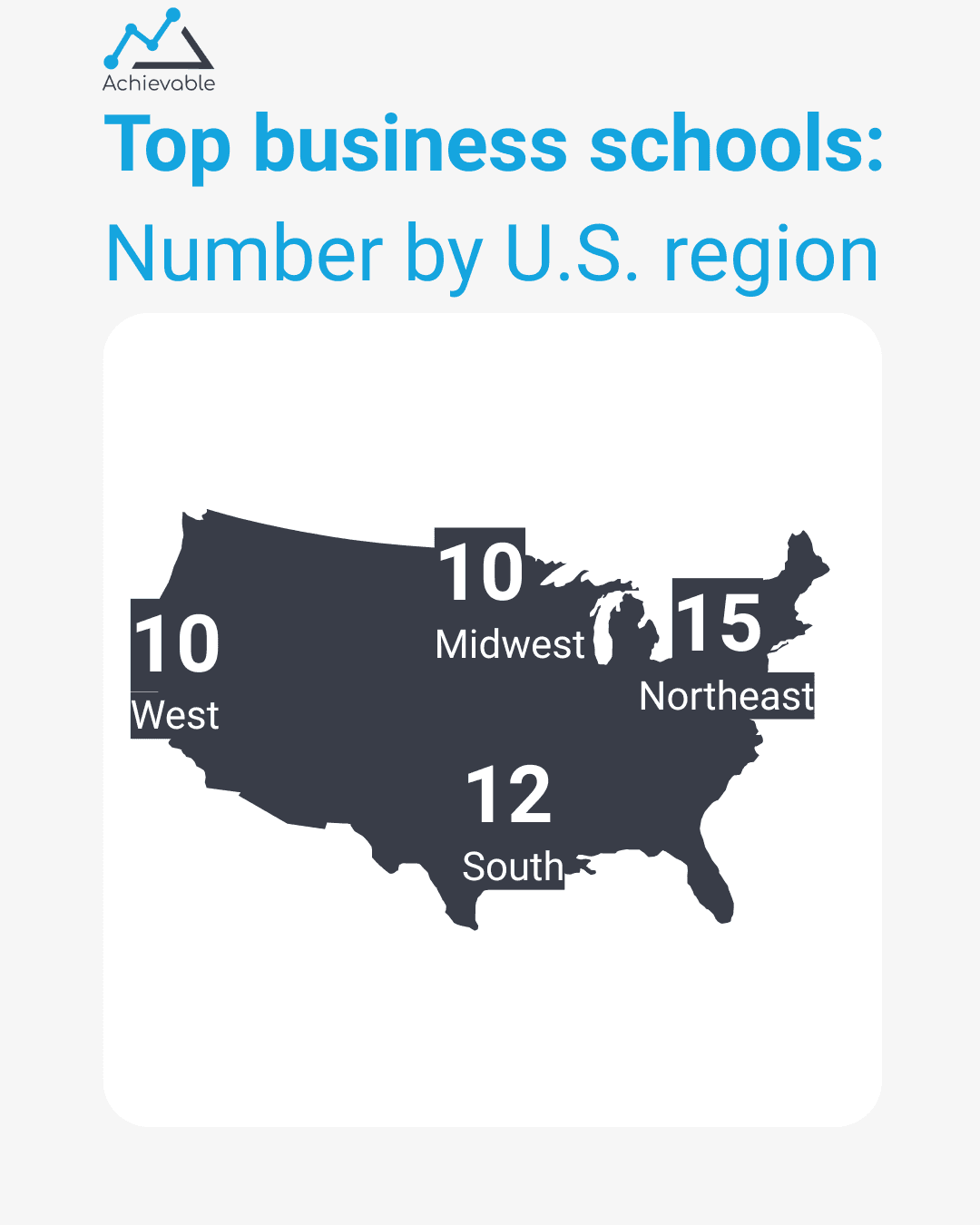
Below, you'll discover our curated list of the top 50 business schools in the U.S., evaluated based on academic offerings, professional opportunities and national reputation, and selectivity. We've included recognizable institutions from around the country, from Rice University, based in Texas, to the University of Chicago, as well as the best schools in New York, the financial capital of the world. While this resource primarily focuses on graduate business education, several of the included schools also offer outstanding undergraduate programs that provide students with foundational business knowledge and prepare them for advanced degrees. The programs offered at these schools at all levels are designed to deliver real-world skills, foster strong professional networks, and ensure you're prepared for lifelong success in the business world.
What are the qualities of a top business program?
Many business schools offer well-rounded curricula taught by knowledgeable faculty members. However, the factors that make a school truly great go beyond academics. Advantageous locations, well-connected alumni networks, and the number of opportunities available to students outside the classroom are what make the top programs in the U.S. stand out from the rest. When deciding which school to apply to, consider the following:
- Academic rigor: Top academic programs help prepare you for the demands of professional roles and supply you with the necessary skills to be a competitive candidate in the job market. Selective programs may also offer smaller class sizes, delivering a more personalized instructional experience.
- Forward-thinking training: Many roles in business and finance require strong technical knowledge, from analyzing data using Excel to leveraging AI techniques for advanced forecasting and modeling. Choose a program that will prepare you for the demands of tomorrow's workforce, not just today's.
- Faculty: Seasoned faculty, in particular those with industry experience, can provide invaluable, practical guidance and challenge you to perform your best in your classes. Industry veterans can also offer insights into the finance and corporate job market, from the skills to emphasize in your resume to tips on impressing recruiters.
- Location: Being near a commercial area makes it easier to find internships, establish connections with industry professionals, and pursue a wider variety of roles both before and after graduation. Try to prioritize schools that are centrally located and have employment pipelines established with leading firms.
- Alumni relations: An impressive alumni community, paired with mentorship programs and intentional networking, unlocks meaningful connections that can help you get ahead in your career.
- Internship and professional opportunities: A school's reputation, location, and relationship with top companies can significantly impact the process of finding and applying for internships and entry-level positions.
- Professional support: Expert advising and career programs can help you translate academic achievement into career success, steering you toward the role of your dreams.
- Diverse student population: Surrounding yourself with students from diverse educational and cultural backgrounds offers an enriching experience that broadens your perspective and fosters personal growth.
- Variety of programs: Business schools are almost synonymous with MBAs, but access to graduate degrees in accounting, business analytics, or a specialized field like supply chain management allows you to match your studies with your intended professional path. Be sure to explore different degrees and MBA concentrations offered by each school.
When making a decision about which schools to apply to or attend, choose institutions that will support you as a student, open doors for you after you graduate, and propel you further in the professional world. Once you've made a list of schools that you're interested in, you can make your admissions prep more systematic by setting score goals for your standardized exams. A well-rounded application, combined with high test scores, can significantly improve your chances of admission to and funding for a top program.
Top business schools in the U.S.
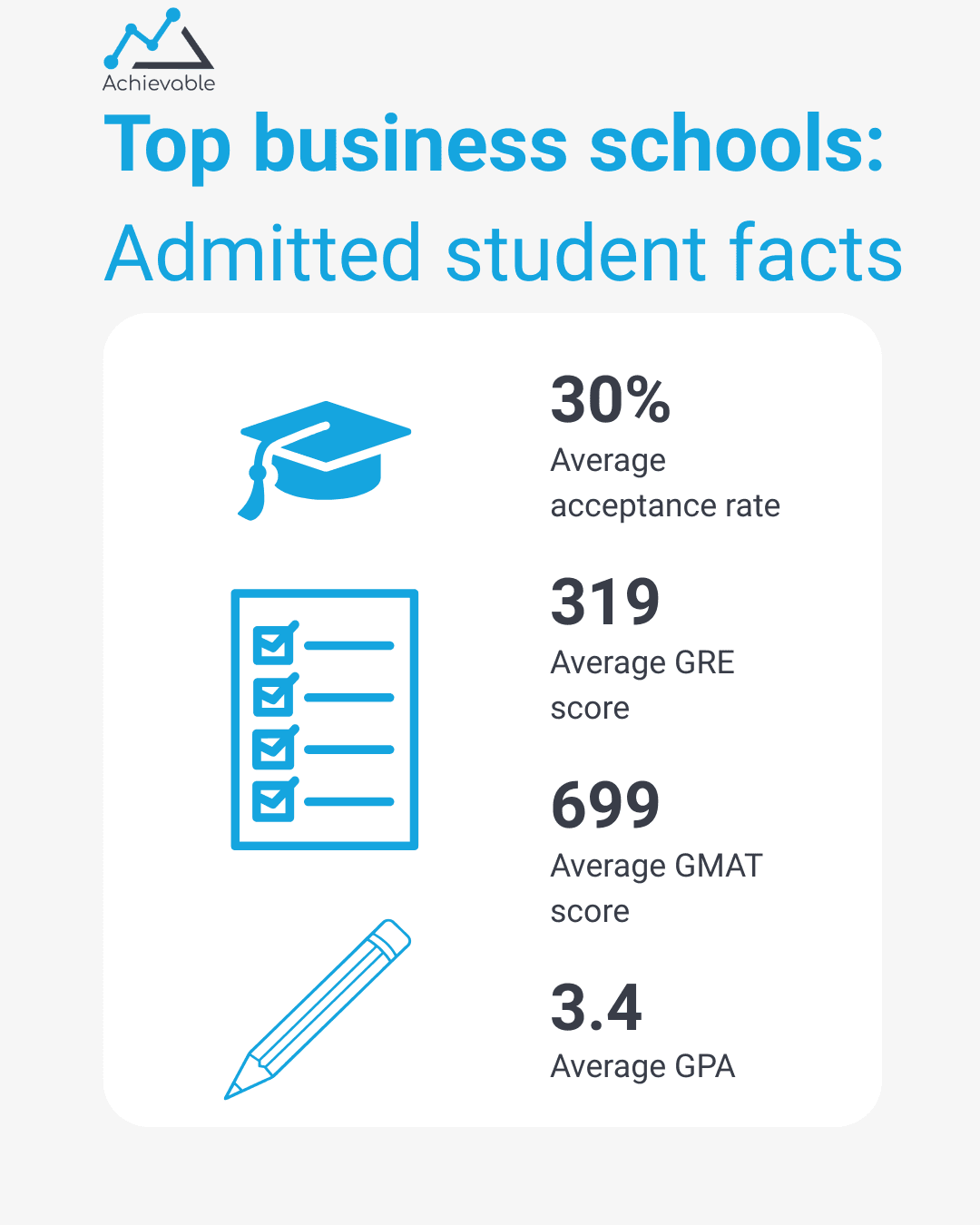
If you're ready to start applying or want to explore your options among the best business schools in the U.S., below is our curated list of programs nationwide, featuring a competitive average acceptance rate of around 30%. Each school stands out for its rigorous academics, distinguished faculty, innovative curricula, modern facilities, and outstanding student and alumni engagement. Our selections highlight top business schools located in major commercial hubs in New York, California, Texas, and beyond, ensuring access to exceptional networking and employment opportunities.
For each listing, you'll find details such as the school's name, acceptance rate, geographic location, and a concise overview that explains how its business programs train students for success. We've also included valuable data on average GPAs, GMAT scores, and GRE scores for admitted students. These insights will help you better prepare your application and understand the caliber of students accepted into these programs:
Arizona State University (W.P. Carey)


- Location: AZ
- Acceptance rate: 18.8%
- Average GPA: 3.57
- Average GRE Verbal score: 157
- Average GRE Quant score: 160
- Average GMAT Quant score: 317
- Average GMAT total score: 698
- Official website: https://wpcarey.asu.edu/
Boston University (BU) Questrom School of Business


- Location: MA
- Acceptance rate: 33.3%
- Average GRE Verbal score: 155
- Average GRE Quant score: 159
- Average GMAT Quant score: 314
- Average GMAT total score: 683
- Official website: http://bu.edu/questrom
Brigham Young University (Marriott) (UT)


- Location: UT
- Acceptance rate: 58.4%
- Average GPA: 3.5
- Average GMAT total score: 668
- Official website: http://marriottschool.byu.edu/
Carnegie Mellon University (Tepper) (PA)


- Location: PA
- Acceptance rate: 26.6%
- Average GPA: 3.26
- Average GRE Verbal score: 159
- Average GRE Quant score: 165
- Average GMAT Quant score: 324
- Average GMAT total score: 705
- Official website: http://www.cmu.edu/tepper
Columbia University


- Location: NY
- Acceptance rate: 20.9%
- Average GPA: 4
- Average GMAT total score: 737
- Official website: https://www.columbia.edu/
Cornell University - Samuel Curtis Johnson Graduate School of Management


- Location: NY
- Acceptance rate: 28.1%
- Average GPA: 3.4
- Average GRE Verbal score: 161
- Average GRE Quant score: 163
- Average GMAT Quant score: 324
- Average GMAT total score: 710
- Official website: http://www.johnson.cornell.edu/
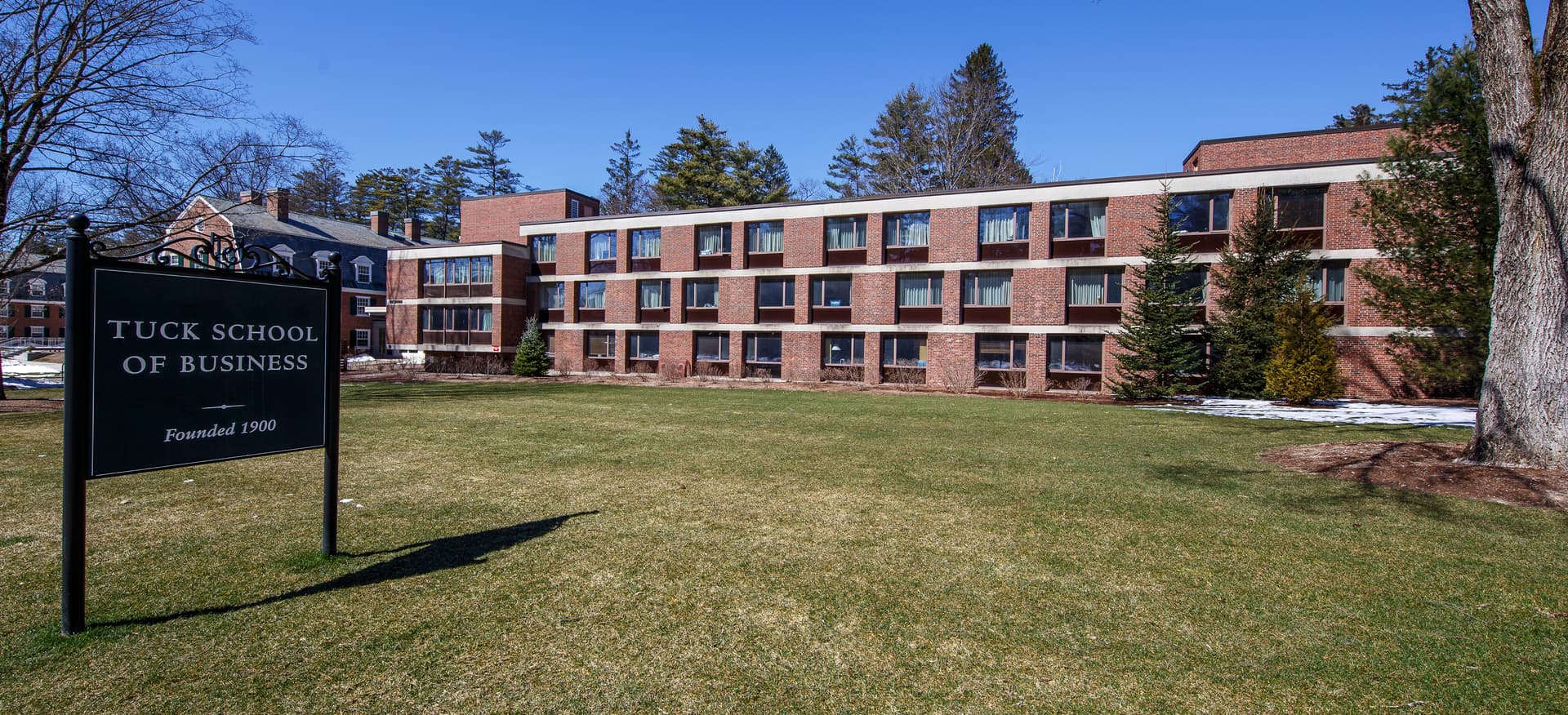
Dartmouth College (Tuck) (NH)

- Location: NH
- Acceptance rate: 31.2%
- Average GPA: 3.6
- Average GMAT total score: 720
- Official website: https://tuck.dartmouth.edu/news/articles/the-remarkable-class-of-2024-embarks-on-its-tuck-journey
Duke University Fuqua School of Business


- Location: NC
- Acceptance rate: 19.5%
- Average GPA: 3.17
- Average GRE Verbal score: 159
- Average GRE Quant score: 159
- Average GMAT Quant score: 318
- Official website: http://www.fuqua.duke.edu/
Emory University - Goizueta Business School


- Location: GA
- Acceptance rate: 36.8%
- Average GPA: 3.35
- Average GMAT total score: 705
- Official website: https://goizueta.emory.edu/
Georgetown University (McDonough) (DC)


- Location: WA
- Acceptance rate: 60.3%
- Average GPA: 3.35
- Average GRE Verbal score: 158
- Average GRE Quant score: 159
- Average GMAT Quant score: 317
- Average GMAT total score: 697
- Official website: http://msb.georgetown.edu/
Georgia Institute of Technology (Scheller)


- Location: GA
- Acceptance rate: 18.2%
- Average GPA: 3
- Average GRE Verbal score: 159
- Average GRE Quant score: 162
- Average GMAT Quant score: 321
- Average GMAT total score: 698
- Official website: http://scheller.gatech.edu/
Harvard Business School (HBS)


- Location: MA
- Acceptance rate: 11.2%
- Average GPA: 3.7
- Average GRE Verbal score: 163
- Average GRE Quant score: 163
- Average GMAT Quant score: 326
- Average GMAT total score: 730
- Official website: https://www.hbs.edu/
Indiana University (Kelley)
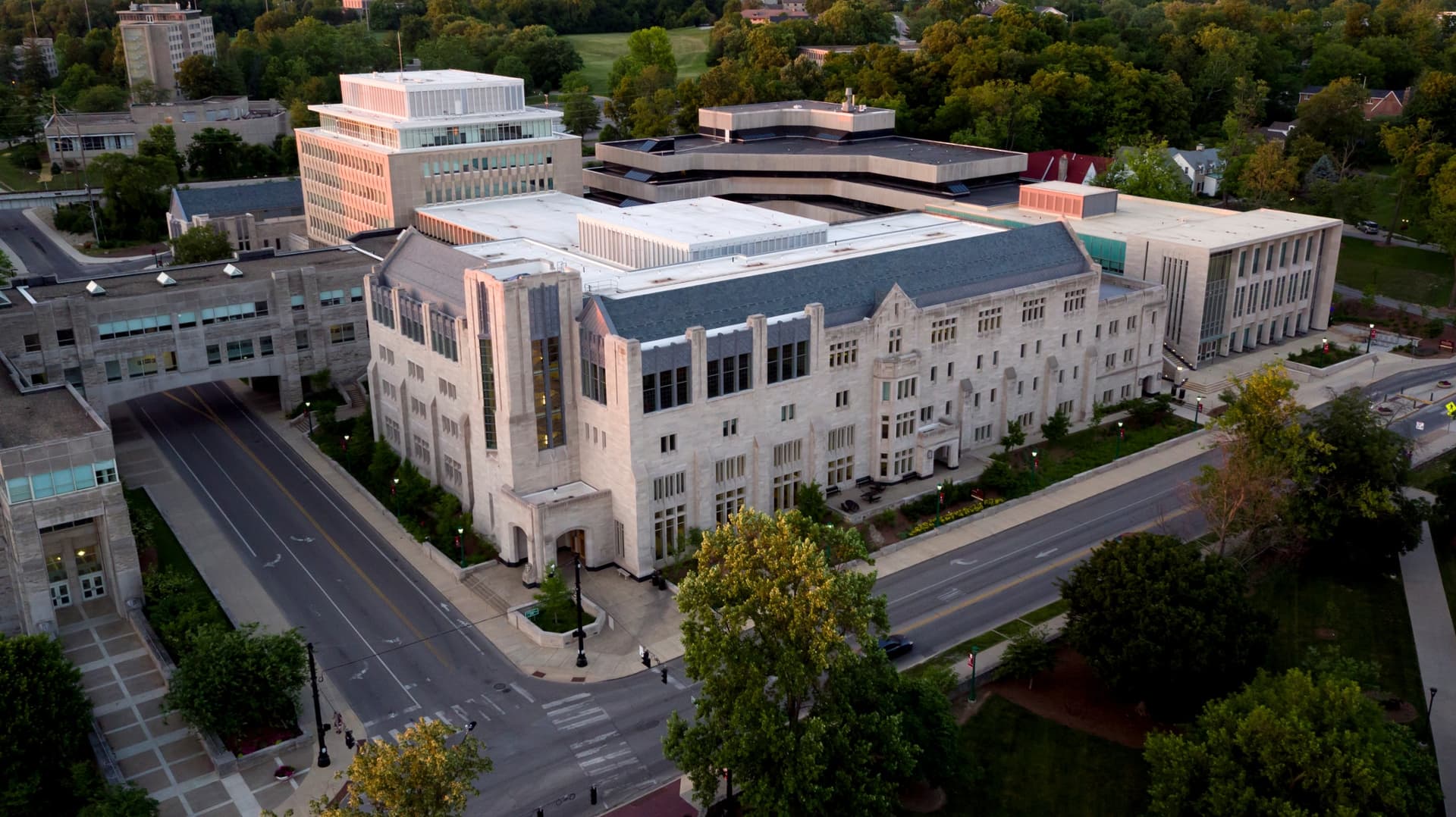

- Location: IN
- Acceptance rate: 29%
- Average GPA: 3.5
- Average GRE Verbal score: 159
- Average GRE Quant score: 159
- Average GMAT Quant score: 318
- Average GMAT total score: 683
- Official website: http://kelley.iu.edu/
Kellogg School of Management, Northwestern University


- Location: IL
- Acceptance rate: 28.6%
- Average GPA: 3.7
- Average GMAT total score: 733
- Official website: https://kellogg.northwestern.edu/
MIT Sloan School of Management, Massachusetts Institute of Technology
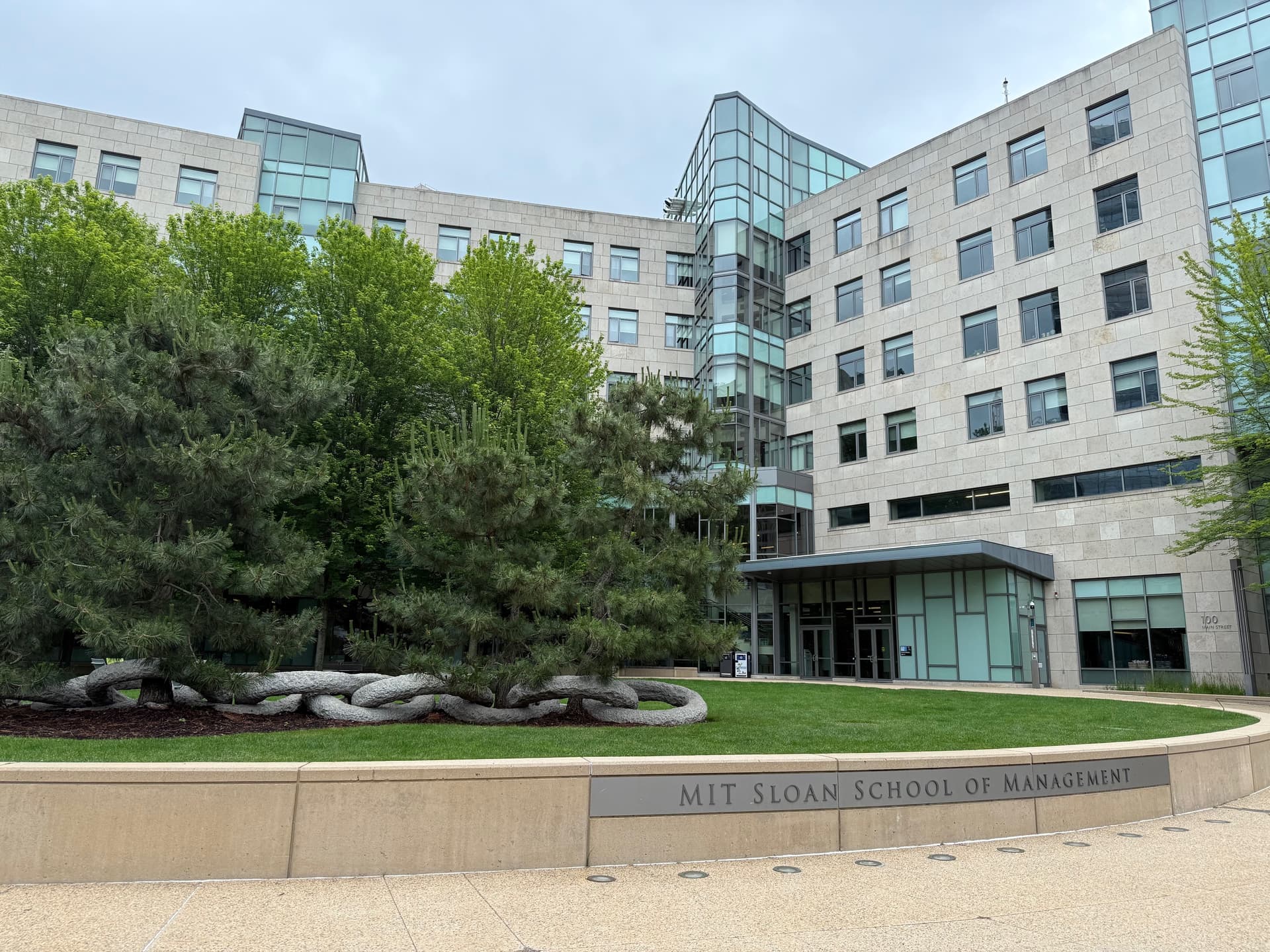

- Location: MA
- Acceptance rate: 14.1%
- Average GRE Verbal score: 168
- Average GRE Quant score: 169
- Average GMAT Quant score: 337
- Average GMAT total score: 720
- Official website: http://mitsloan.mit.edu/
Northeastern University - D'Amore-McKim School of Business


- Location: MA
- Acceptance rate: 37.4%
- Average GMAT total score: 658
- Official website: http://damore-mckim.northeastern.edu/
NYU Stern School of Business, New York University

.jpg)
- Location: NY
- Acceptance rate: 25.1%
- Average GPA: 3.5
- Average GRE Verbal score: 162
- Average GRE Quant score: 163
- Average GMAT Quant score: 325
- Average GMAT total score: 732
- Official website: https://www.stern.nyu.edu/
Ohio State University (Fisher)


- Location: OH
- Acceptance rate: 8.6%
- Average GPA: 3.1
- Average GMAT total score: 690
- Official website: https://fisher.osu.edu/
Rice University (Jones) (TX)
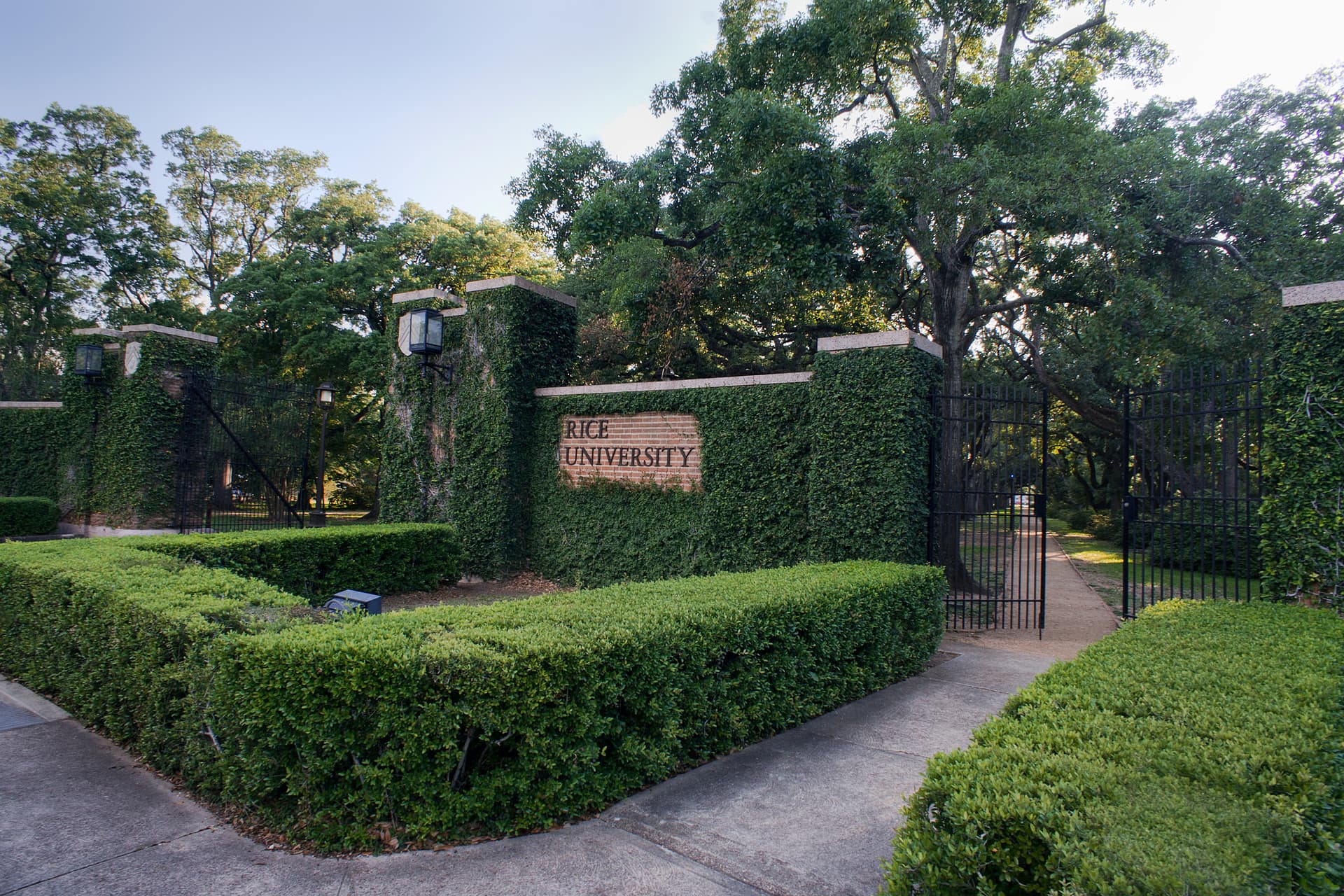

- Location: TX
- Acceptance rate: 34.3%
- Average GPA: 3.5
- Average GRE Verbal score: 156
- Average GRE Quant score: 160
- Average GMAT Quant score: 316
- Average GMAT total score: 698
- Official website: https://rice.edu/
Stanford Univeristy


- Location: CA
- Acceptance rate: 6.8%
- Average GPA: 3.9
- Average GRE Verbal score: 164
- Average GRE Quant score: 163
- Average GMAT Quant score: 327
- Average GMAT total score: 737
- Official website: https://www.stanford.edu/
Suffolk University - Sawyer Business School


- Location: MA
- Acceptance rate: 77.3%
- Average GPA: 3.12
- Official website: https://www.suffolk.edu/business
Texas A&M University--College Station (Mays)


- Location: TX
- Acceptance rate: 35.5%
- Average GPA: 3.5
- Average GRE Verbal score: 156
- Average GRE Quant score: 158
- Average GMAT Quant score: 314
- Average GMAT total score: 649
- Official website: http://mays.tamu.edu/
The University of North Carolina at Chapel Hill - UNC Kenan-Flagler Business School


- Location: NC
- Acceptance rate: 36.9%
- Average GPA: 3.42
- Average GRE Verbal score: 159
- Average GRE Quant score: 159
- Average GMAT Quant score: 318
- Official website: https://kenan-flagler.unc.edu/

The Wharton School of the University of Pennsylvania


- Location: PA
- Acceptance rate: 20.5%
- Average GRE Verbal score: 162
- Average GRE Quant score: 162
- Average GMAT Quant score: 324
- Average GMAT total score: 722
- Official website: https://www.wharton.upenn.edu/
UCLA University of California, Los Angeles - Anderson School of Management


- Location: CA
- Acceptance rate: 30.7%
- Average GPA: 3.5
- Average GRE Verbal score: 162
- Average GRE Quant score: 164
- Average GMAT Quant score: 326
- Average GMAT total score: 709
- Official website: https://www.anderson.ucla.edu/
University of California - Irvine (Merage)
- Location: CA
- Acceptance rate: 26.7%
- Average GPA: 3
- Average GRE Verbal score: 157
- Average GRE Quant score: 154
- Average GMAT Quant score: 311
- Official website: http://merage.uci.edu/
University of California, Berkeley - Haas School of Business


- Location: CA
- Acceptance rate: 25.3%
- Average GPA: 3.9
- Average GRE Verbal score: 161
- Average GRE Quant score: 163
- Average GMAT Quant score: 324
- Average GMAT total score: 727
- Official website: https://haas.berkeley.edu/
University of Chicago Booth School of Business


- Location: IL
- Acceptance rate: 28.7%
- Average GMAT total score: 724
- Official website: https://chicagobooth.edu/
University of Georgia (Terry)


- Location: GA
- Acceptance rate: 39%
- Average GPA: 3.1
- Average GMAT total score: 698
- Official website: http://terry.uga.edu/
University of Maryland--College Park (Smith)
- Location: MD
- Acceptance rate: 45%
- Average GPA: 3.25
- Average GRE Verbal score: 158
- Average GRE Quant score: 157
- Average GMAT Quant score: 315
- Average GMAT total score: 640
- Official website: http://www.rhsmith.umd.edu/
University of Michigan--Ann Arbor (Ross)


- Location: MI
- Acceptance rate: 28.9%
- Average GPA: 3.42
- Average GRE Verbal score: 159
- Average GRE Quant score: 162
- Average GMAT Quant score: 321
- Average GMAT total score: 728
- Official website: https://michiganross.umich.edu/graduate/full-time-mba/admissions/class-profile
University of Minnesota--Twin Cities (Carlson)


- Location: MN
- Acceptance rate: 45.8%
- Average GPA: 3.46
- Average GRE Verbal score: 156
- Average GRE Quant score: 159
- Average GMAT Quant score: 315
- Average GMAT total score: 660
- Official website: http://www.carlsonschool.umn.edu/
University of Notre Dame (Mendoza) (IN)
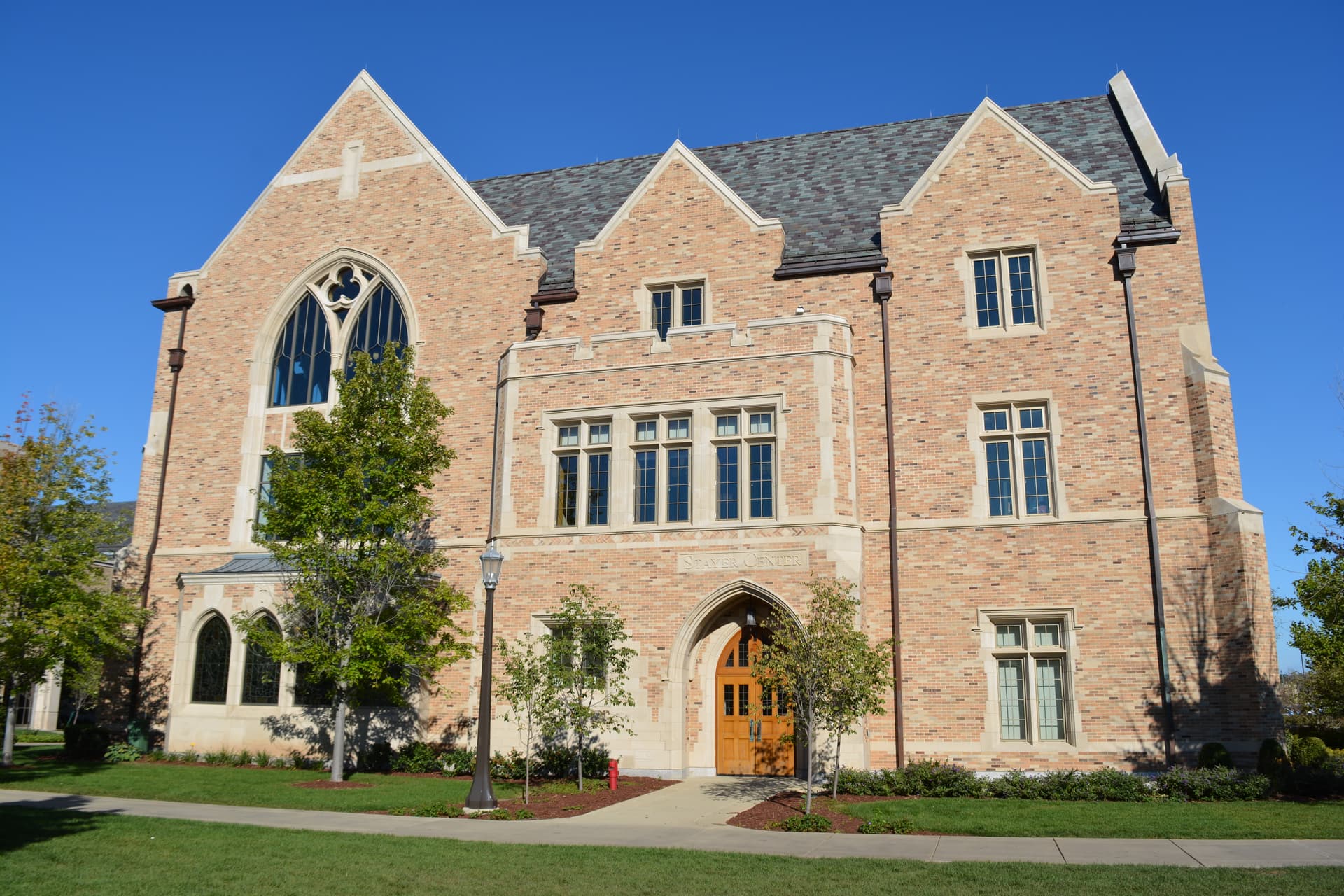

- Location: IN
- Acceptance rate: 33.8%
- Average GRE Verbal score: 156
- Average GRE Quant score: 158
- Average GMAT Quant score: 314
- Average GMAT total score: 680
- Official website: https://business.nd.edu/
University of Pittsburgh (Katz)


- Location: PA
- Acceptance rate: 28.6%
- Average GRE Verbal score: 153
- Average GRE Quant score: 157
- Average GMAT Quant score: 310
- Average GMAT total score: 635
- Official website: http://business.pitt.edu/
University of Rochester - Simon Graduate School of Business Administration


- Location: NY
- Acceptance rate: 14.9%
- Average GPA: 3.54
- Average GRE Verbal score: 156
- Average GRE Quant score: 161
- Average GMAT Quant score: 317
- Official website: http://www.simon.rochester.edu/
University of Southern California (USC) - Marshall School of Business


- Location: CA
- Acceptance rate: 23.1%
- Average GPA: 3
- Average GRE Verbal score: 160
- Average GRE Quant score: 161
- Average GMAT Quant score: 321
- Average GMAT total score: 732
- Official website: http://www.marshall.usc.edu/
University of Texas--Austin (McCombs)

.jpg)
- Location: TX
- Acceptance rate: 37.09%
- Average GPA: 3.46
- Average GRE Verbal score: 160
- Average GRE Quant score: 159
- Average GMAT Quant score: 319
- Average GMAT total score: 704
- Official website: http://www.mccombs.utexas.edu/
University of Texas--Dallas


- Location: TX
- Acceptance rate: 65%
- Average GPA: 3.5
- Average GRE Verbal score: 157
- Average GRE Quant score: 160
- Average GMAT Quant score: 317
- Official website: https://www.utdallas.edu/
University of Virginia (Darden)


- Location: VA
- Acceptance rate: 33.9%
- Average GPA: 3.51
- Average GRE Verbal score: 160
- Average GRE Quant score: 159
- Average GMAT Quant score: 319
- Average GMAT total score: 716
- Official website: https://www.darden.virginia.edu/
University of Washington (Foster)


- Location: WA
- Acceptance rate: 38.5%
- Average GPA: 3
- Average GRE Verbal score: 159
- Average GRE Quant score: 160
- Average GMAT Quant score: 319
- Average GMAT total score: 700
- Official website: https://foster.uw.edu/
University of Wisconsin--Madison


- Location: WI
- Acceptance rate: 43%
- Average GPA: 3.86
- Average GRE Verbal score: 159
- Average GRE Quant score: 157
- Average GMAT Quant score: 316
- Average GMAT total score: 650
- Official website: https://wisc.edu/
University of Wisconsin, Madison - Wisconsin School of Business


- Location: WI
- Acceptance rate: 48.8%
- Average GPA: 3
- Average GRE Verbal score: 159
- Average GRE Quant score: 157
- Average GMAT Quant score: 316
- Average GMAT total score: 651
- Official website: https://business.wisc.edu/
Vanderbilt University (Owen) (TN)


- Location: TN
- Acceptance rate: 38.4%
- Average GPA: 3.4
- Average GRE Verbal score: 157
- Average GRE Quant score: 157
- Average GMAT Quant score: 314
- Average GMAT total score: 687
- Official website: https://business.vanderbilt.edu/
Washington University in St. Louis (Olin)


- Location: MO
- Acceptance rate: 18.3%
- Average GPA: 3.5
- Average GRE Verbal score: 156
- Average GRE Quant score: 158
- Average GMAT Quant score: 314
- Average GMAT total score: 706
- Official website: https://olin.washu.edu/
Yale University (SOM)


- Location: CT
- Acceptance rate: 27.3%
- Average GPA: 3.64
- Average GRE Verbal score: 164
- Average GRE Quant score: 166
- Average GMAT Quant score: 330
- Average GMAT total score: 730
- Official website: https://som.yale.edu/
Earning a degree from any of these schools can significantly enhance your career prospects and professional growth. Whether you're aiming for a strong business foundation or taking a major step forward at your company, it's crucial to approach your applications strategically. Identify your target schools, thoroughly review their requirements, plan how to present your qualifications effectively, and schedule time to prepare for the GMAT or GRE as needed.
Test score requirements
The requirements for graduate-level business schools have undergone significant changes in recent years, particularly as many have introduced test-optional policies in response to the COVID-19 pandemic. Still, submitting strong scores on the Graduate Management Admission Test (GMAT) or Graduate Record Examinations (GRE) remains a key factor for admissions. Understanding the differences between the GRE and GMAT can help you choose the right path to maximize your competitive edge. For most of the top programs highlighted in our list, accepted students boast impressive average GMAT and GRE scores (at a mean of 699 and 320, respectively), placing them comfortably above typical test-takers.
Achieving high GRE or GMAT scores improves your chances of admission and could also make you eligible for better financial aid and scholarship opportunities. Even at test-optional business schools, excellent test scores can help distinguish your application. As previously discussed, a growing number of finance and business graduate programs are now accepting both the GRE and GMAT without preference. The exam you select should match your strengths: quantitatively focused students often lean toward the GMAT, while applicants with interdisciplinary backgrounds may prefer the GRE and its focus on critical reading and analytical thinking skills.
Many career paths in business and finance require further credentials beyond a graduate degree. Excelling on the GRE or GMAT can lay a strong foundation for your success in preparing for professional exams that may play a role in advancing your finance career.
Why business school still matters
For many prospective students, determining whether pursuing a graduate degree is a smart investment often centers around one vital question: "Is an MBA worth it?" The honest answer is that earning an MBA or similar credential can significantly enhance your professional profile, but the career value of a business degree depends on how strategically you leverage it.
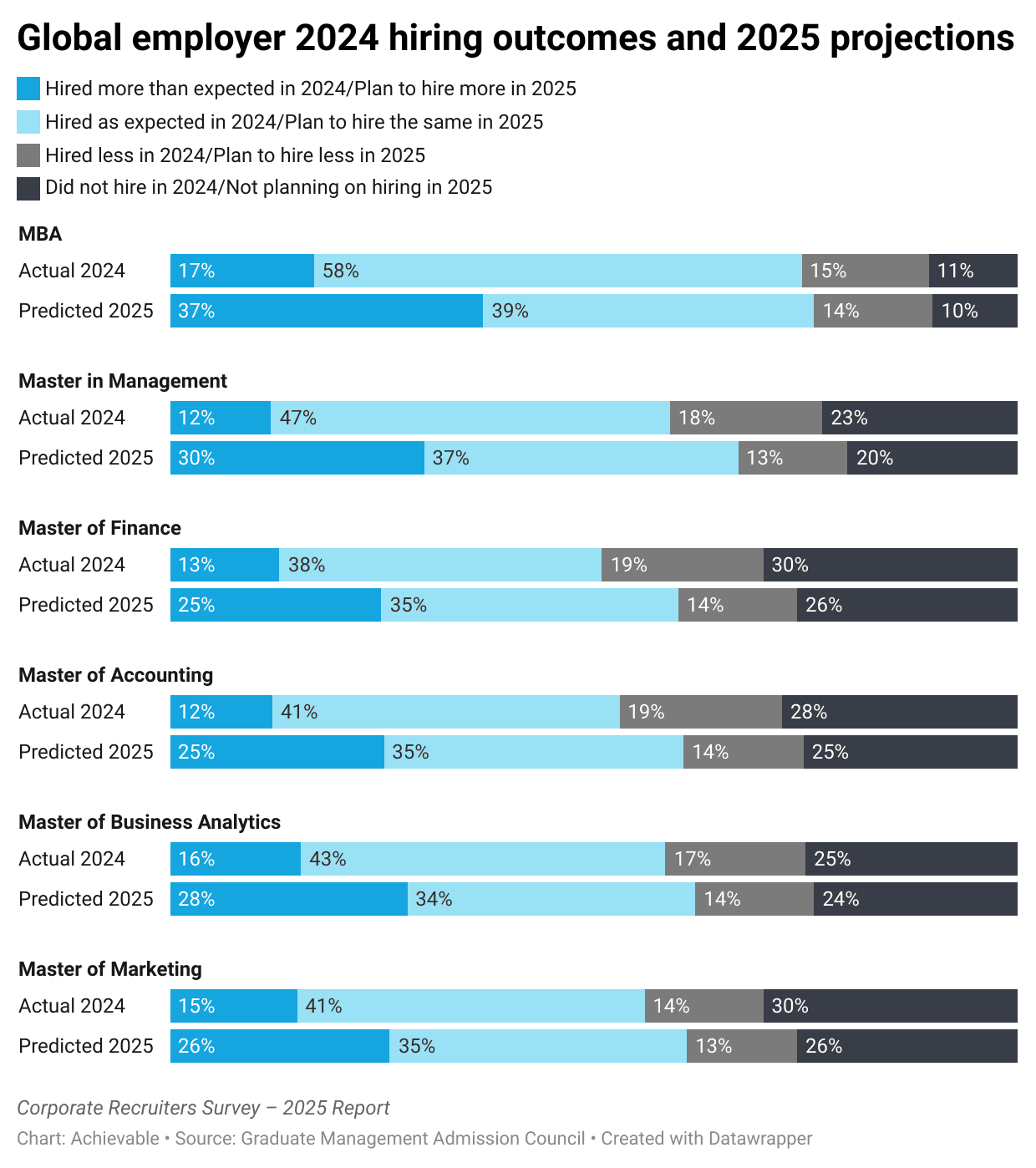
According to the Graduate Management Admission Council (GMAC), demand for MBA graduates is expected to remain high through 2025. As shown on the chart above, 37% of employers planned to recruit more MBAs in 2025, according to this year's Corporate Recruiters Survey. The number of employers seeking candidates with master's degrees in management, finance, accounting, and related specialties continues to climb as well, giving MBA and business degree holders a notable competitive edge in the job market.
The number of MBA applicants is also increasing, showing that more professionals are willing to invest in their future and pursue advanced business education. Despite some recent economic turbulence, the full-time employment rate for MBA graduates remained steady at 85% just three months after graduation between 2024 and 2025. These figures underscore why an MBA remains a powerful credential for leadership, management, and finance positions. Investing in a graduate business education continues to offer substantial returns.
Key advantages that business school graduates possess in today's job market include:
- Strong business acumen and the ability to apply a diverse skill set across various industries and organizations
- The expertise to help organizations navigate financial decisions and drive success during periods of economic uncertainty
- Proficiency in both technical subjects and critical soft skills. MBA alumni excel in vital areas like written and verbal communication.
- Adaptability and awareness of emerging trends, positioning themselves and their teams to respond quickly to market changes and adopt innovative technologies
When evaluating which MBA programs create the most value in the job market, institutional prestige can be beneficial but only to a certain point. Gaining acceptance into an M7 school is an accomplishment in itself, with acceptance rates as low as 7% at these top-tier institutions. The robust alumni networks and recruiting channels at elite business schools often lead graduates to positions in leading companies and investment banks. Still, sustained career growth hinges on building connections, acquiring in-demand skills, and staying abreast of industry shifts, especially as recruiters in fast-moving sectors like tech increasingly prioritize candidates' capabilities over the brand name on their diplomas. Fortunately, most business schools emphasize the importance of networking, which is fundamental to achieving long-term career success.
Before committing to graduate business education, it's important to carefully weigh the cost of an MBA against potential salary growth and career opportunities. Evaluate whether you can dedicate the time and resources necessary to earn an advanced business credential or if it makes more sense to enter or remain in the workforce. For many driven individuals aiming to accelerate their careers, the return on investment for an MBA can be substantial. In 2024, the average annual U.S. MBA salary exceeded $160,000, substantially higher than the national average wage for all occupations.
For additional details about tuition structures and options for employer-sponsored tuition reimbursement, see the subsection below: "How much does an MBA cost?" This will help you make an informed decision about both the expenses associated with business school and ways to ease the financial commitment.

Commonly asked questions
Applying to business school can raise questions on several topics, including costs, MBA admissions requirements, and program duration. We've provided answers to some of the most frequently asked ones below.
How do you get into business school?
To successfully get into a graduate business or finance program, these general steps are often required:
- Earn your bachelor's degree: Most business schools require applicants to have a bachelor's degree from an accredited, four-year university. While majors such as accounting, economics, or finance align well with MBA programs, the admissions requirements are flexible: many schools value a broad range of academic backgrounds during their admissions reviews.
- Take the GRE or GMAT: These standardized tests are a central part of many MBA admissions requirements, and excelling on either exam can distinguish you from other qualified applicants. Check each program to see if it requires GRE, GMAT, or will accept either score.
- Secure letters of recommendation: Recommendation letters play a significant role in MBA admissions requirements. Strong endorsements from supervisors, professors, or professional mentors help strengthen your application narrative and provide valuable insight into your abilities, work ethic, and leadership potential.
- Develop meaningful work experience: One primary MBA admissions requirement is substantial full-time work experience. On average, students applying to business schools have already accumulated years of professional growth before pursuing their MBA or finance degree. Work experience not only enriches your application essays but also demonstrates real-world impact and career progression that the committee values.
- Organize transcripts, application essays, and documentation: Don't forget to submit formal documents required by each program. This often includes official college transcripts, compelling personal essays tailored to business school prompts, and other relevant supporting documents.
Preparation is the key to standing out among MBA applicants. Start your test prep curriculum early and decide between GRE vs. GMAT based on your strengths and the schools' preferences. Draft thoughtful application essays that showcase achievements and aspirations, and request recommendations from individuals who know your strengths best. A high undergraduate GPA is beneficial, but admissions committees at top business schools increasingly value applicants with significant professional experience as part of their MBA admissions requirements. Craft an authentic story across your materials that illustrates why you're interested in business school, your future goals, and how an advanced degree will accelerate your career journey.
What do you learn in business school?
Business schools provide a comprehensive curriculum designed to equip students with the skills and knowledge essential for a successful career in business. Each program and concentration offers unique coursework and areas of emphasis, though the standard subject areas usually explored by business school students include:
- Technical expertise: Mastering the creation of financial statements, utilizing data analysis to evaluate organizational performance, making informed business decisions, and applying advanced statistical tools
- Leadership and management development: Building effective communication skills, understanding how to motivate and guide teams, and strengthening financial literacy to lead organizations successfully
- Analytical thinking and problem solving: Evaluating diverse information sources, navigating challenges or unexpected changes, and expanding global business awareness
Throughout their time in business school, students refine practical skills through advanced courses in accounting, finance, marketing, economics, law, ethics, and management. Experiential opportunities, such as student-managed investment funds, allow students to apply classroom concepts to real-world scenarios. Much of the business school experience is project-driven, providing students with opportunities to practice public speaking, collaborate in teams, and develop creative solutions. Ultimately, the business school curriculum not only develops core technical abilities but also encourages entrepreneurial thinking and innovation.
How long is business school?
Full-time programs commonly cover 18-24 months, while part-time programs can be completed over the course of three to five years. Part-time, face-to-face students make up the largest share of people enrolled in an MBA.
How much does an MBA cost?
In the U.S., the average cost of an MBA program is approximately $63,000, although attending a top-tier business school can increase the cost to over $125,000. Even after accounting for grants, scholarships, and other forms of financial aid, MBA students typically pay approximately $30,000 per year out-of-pocket to pursue their degrees. While the MBA cost is often higher than that of other master's programs, this reflects the greater earning potential and career advancement opportunities that an MBA provides compared to many other graduate degrees.
When calculating the total MBA cost, students should also consider factors such as the local cost of living and the potential financial impact of lost wages during their studies. Online MBA programs can significantly reduce the overall cost of an MBA, with the average online MBA program costing approximately $26,100 per year. Part-time MBA programs also offer flexibility by allowing students to spread out the MBA cost over several years. In some cases, if you are employed by a financial firm, consulting company, or bank, your employer may provide tuition assistance or reimbursement programs to help ease the cost burden of an MBA. Consult your human resources department for details about available educational financial support.
Do top business schools offer online MBA programs?
Yes, there are many prominent business schools that offer hybrid or fully online MBA programs, such as Tepper at Carnegie Mellon, Ross at the University of Michigan, and several well-ranked public institutions. While most M7 schools require some form of in-person instruction, many electives can be taken online, allowing for greater flexibility during the final year of instruction.
What is an executive MBA?
An executive MBA, also known as an EMBA program, is a specialized advanced degree for students who are further along in their careers than the average MBA student. They are designed to accommodate mid- to senior-level employees who wish to continue working full-time while pursuing their education. EMBAs focus less on the business fundamentals and more on the nuances of strategic leadership, decision-making, and innovation. Enrollees are expected to have a solid foundation in the basics of accounting, finance, operations, and marketing. Many top schools, including Wharton at the University of Pennsylvania and Johns Hopkins, offer EMBA programs to seasoned professionals seeking to enhance their leadership effectiveness.
How to choose the right school for you
When deciding which business school to attend, whether pursuing an MBA or a comparable graduate business degree, keep in mind the acronym PLOT as you evaluate your options:
- P = Price: What will the total cost of the business school program be? Consider tuition, fees, and other expenses.
- L = Location: Where is the business school located? Will you need to relocate, and what benefits or challenges come with the school's specific area?
- O = Opportunities: What unique advantages will this program provide compared to others? Review whether specialized courses matching your career goals are offered, if notable faculty are part of the program, and where the alumni community advances after graduation.
- T = Time: How long is business school at each institution on your shortlist? Assess the length of programs, formats available (full-time, part-time, online), and your ability to dedicate time away from your career for studies.
Business school programs stand out from other types of graduate study because many students return to earn their degree after spending time in the workforce. As a result, graduate business students often balance multiple responsibilities beyond their academic work, unlike in their undergraduate years. Prestige and national MBA rankings may look appealing on your resume, but it's important to weigh a broader range of programs beyond just the top-tier business schools.
Assess factors such as total net costs, whether relocating for a business school program is feasible for your lifestyle, and whether your preference leans toward a full-time or part-time MBA program. Evaluate whether the professional opportunities unlocked during and after business school will ultimately justify the academic time investment. If your academic credentials, such as GPA, GRE or GMAT scores, and application materials, are strong, definitely apply to prominent business schools while seeking financial aid or scholarship options. However, due to highly competitive admissions at top institutions, ensure you have backup choices as well, such as respected in-state business schools that offer lower tuition and solid reputations.
As with any graduate pursuit, your success in business school is shaped by how actively you engage: invest in building your network, developing key skills, and enjoying all that your school's location has to offer. No matter how long business school lasts for your chosen path, these experiences contribute greatly to long-term rewards for your career and personal growth.
What comes next
After earning your business degree or nearing the completion of your program, the next steps involve applying for jobs and leveraging any internship experiences into full-time positions. A business school degree can enhance your professional profile, but many financial services or investment roles require recognized industry certifications. The ability to perform certain duties in finance often means passing licensing exams administered by the Financial Industry Regulatory Authority (FINRA) or the North American Securities Administrators Association (NASAA).
While still completing your business education, it's highly beneficial to consider taking the Securities Industry Essentials (SIE) exam. This widely recognized entry-level exam lays important groundwork for aspiring professionals planning to work in investment banking, securities trading, asset management, or related finance careers. Earning a passing score not only demonstrates to potential employers that you are motivated and invested in your finance and business career training, but also prepares you for future credentials like the Series 7. Incorporating the SIE and subsequently the Series 7 license into your educational and career planning can demonstrate a strong commitment to excelling in the financial services industry.

Conclusion: Investing in your future
Taking the plunge into graduate studies comes with many important considerations. For professionals evaluating whether an MBA is worth the money or time, know that a master's degree from a reputable business school can be a truly valuable investment for advancing your career. Pursuing an MBA or a related graduate business program serves as an incubator for developing business acumen and technical expertise, empowering you to enhance your leadership skills, broaden your professional network, and re-enter the workforce with a competitive edge.
The initial steps include deciding between the GRE vs. GMAT for your application, exploring various financing options, selecting your preferred location, and carefully assessing the best-fit programs from there. The schools mentioned above all provide excellent opportunities for your graduate business studies, serving as strong launching pads for careers in management consulting, financial analysis, marketing management, and other senior leadership roles. With the right MBA experience, you may even find yourself prepared to pursue C-suite positions or high-level executive opportunities in the future, further underscoring why so many professionals determine that an MBA is indeed worth it.