How I passed the SIE exam while balancing an internship and graduate school


Michael Boudreau is a graduate student at Michigan State University pursuing a Master of Science in Financial Planning and Wealth Management. He is currently a Branch Summer Associate at Raymond James, where he is gaining hands-on experience in financial planning, investment management, and client service. Passionate about helping individuals and families achieve their financial goals, Michael is committed to developing the knowledge and skills needed to build a successful career in the financial services industry.
When I first decided to become a financial advisor, I knew the SIE exam would be one of my first big milestones. I had just finished my bachelor's degree in Economics at Michigan State University and wanted to build a strong foundation before beginning my career. Passing the exam wasn't just about earning another credential. To me, it was proof that I could take what I had learned in school and start applying it to the financial services industry.
Balancing work, studying, and grad school
The biggest challenge during my preparation was balancing everything else that was going on. At the time, I was working as a Branch Summer Associate at Raymond James while also preparing to start my master's degree in Financial Planning and Wealth Management. Some days, I came home mentally exhausted, and the last thing I wanted to do was open another study chapter. I learned pretty quickly that I couldn't rely on motivation alone. I had to build a routine and stick to it, even on the days I didn't feel like studying.
One thing that helped me was breaking the material into smaller pieces. Instead of looking at the entire exam, I focused on one topic at a time. That made everything feel much more manageable. I also spent a lot of time doing practice questions. If I got something wrong, I didn't just move on. I went back, figured out why I missed it, and made sure I understood the concept before continuing. That probably helped me more than anything else.
Consistency over cramming
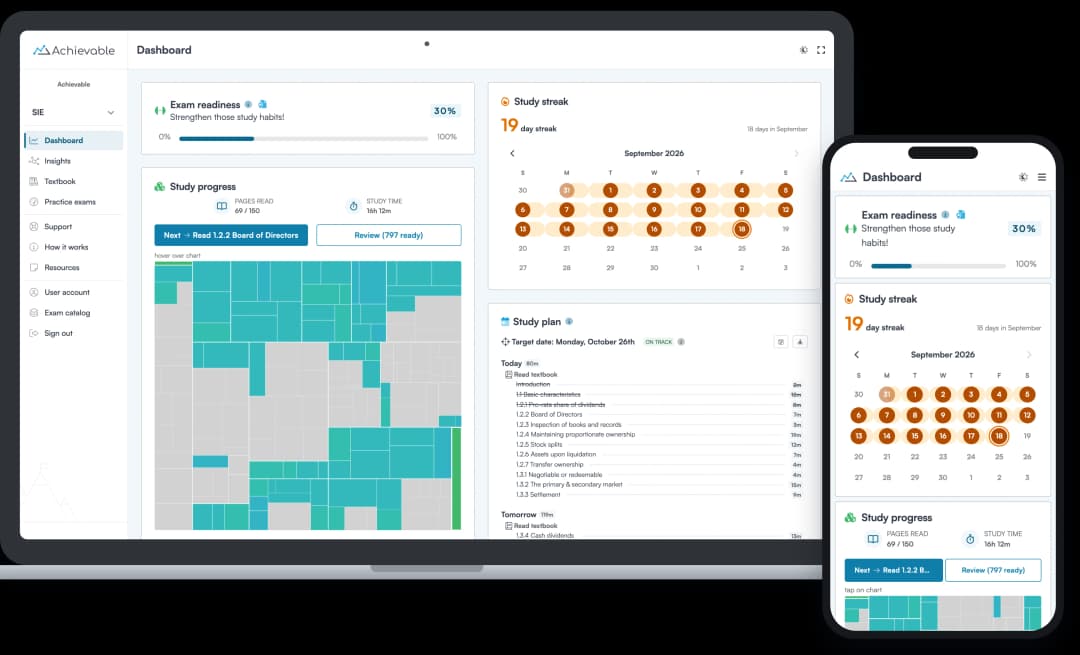
Achievable played a huge role in my preparation. What I liked most was that it didn't feel like I was reading a giant textbook. The lessons were organized in a way that actually made sense, and each section built on the previous one. The quizzes throughout the course kept me engaged and made it easier to remember the material. I also appreciated how the platform adjusted as I studied and kept bringing back concepts that needed more review. It helped me stay focused on the areas where I needed the most improvement.
As the test day got closer, I definitely had some nerves. I think that's normal with any important exam. But I also felt prepared because I knew how much work I had put in over the previous weeks. Instead of worrying about everything I didn't know, I trusted the preparation I'd already done. Once the exam started, I focused on answering one question at a time rather than worrying about the final result.
Looking back, the biggest lesson I learned is that consistency beats cramming every time. You don't have to study for eight hours a day to be successful. Even making steady progress every day adds up over time. There were topics that didn't click right away, but I learned that struggling with something doesn't mean you can't master it. Sometimes it just takes another explanation, a few more practice questions, or another day of reviewing.
Passing the SIE gave me a lot more than a passing score. It gave me confidence. As I continued my internship at Raymond James, I began to recognize many of the concepts I had studied. Conversations about investments, regulations, and financial planning made a lot more sense because I had already built that foundation through preparing for the exam. It reminded me that everything I was studying had real-world applications.
What’s next after passing the SIE exam
Next, I'll be starting my Master of Science in Financial Planning and Wealth Management at Michigan State University while continuing to work toward becoming a financial advisor. The SIE was just one step, but it was an important one. It showed me that with a good plan and consistent effort, I could accomplish goals that once felt intimidating.
If you're getting ready to take the SIE, my advice is simple: don't compare yourself to anyone else. Everyone studies differently, and everyone has topics they struggle with. Focus on understanding the material instead of just memorizing it, stay consistent, and trust the process. There will be days when studying feels frustrating, but those small efforts add up. Before you know it, you'll be walking into the testing center knowing you've done everything you could to prepare.