

Health Insurance
study guide
Every chapter of the course summarized, with each section linked to its lesson.
Pass the first time
Try Achievable Health Insurance
No credit card required
This free Health Insurance study guide summarizes all 17 chapters of Achievable's Health Insurance course: what each covers, the points to remember, and its 26 sections in order. Read each chapter after you study it, or work through the whole guide before exam day.
Each section links to its full lesson in Achievable, with the review quizzes and full-length practice exams.
Chapter 1: General Insurance Concepts
6 sections
Free chapter
- Insurance purpose: Insurance spreads financial risk across policyholders via pooled premiums and helps predict and pay claims while maintaining insurer stability.
- Risk fundamentals: Risk is uncertainty of possible loss, and insurance covers pure risk by transferring it through the most common transfer method.
- Core principles: Law of large numbers supports prediction, indemnity restores pre-loss condition, insurable interest requires financial hardship, and utmost good faith requires honest disclosure.
- Contracts and lines: Declarations, insuring agreement, conditions, and exclusions shape coverage, while property, casualty, life, and accident & health each use distinct terms and protections.
In this chapter
Start this chapter free
Chapter 2: Producer Roles and Receipt Types
- Producer duties: Producers must collect and submit premiums under the prudent person rule and fiduciary responsibility, while gathering financial data, comparing policies, and delivering policies with explanation.
- Receipt rules: A binding receipt can require payment during underwriting even if the applicant is later found uninsurable, while a conditional receipt pays only if the applicant would have been insurable.
- Payment timing: Physical or electronic premium collection must be submitted promptly, since no premium paid means no coverage during underwriting, and more frequent premium modes cost more annually.
Study this chapter in Achievable
Chapter 3: Underwriting
- Underwriting basics: Insurers must reject excess bad risks to avoid insolvency, classify applicants as standard, substandard, preferred, or uninsurable, and guard against adverse selection.
- Information sources: Application data, signed authorization, notice of insurance information practices, MIB, medical exam, HIV testing consent, field underwriting, and investigative consumer reports support underwriting decisions.
- Rating and premiums: Rated policies use flat extra premium, extra percentage premium, rated-up age, or an impairment rider; premiums reflect mortality, expenses, and interest, with gross premium equal to net premium plus loading.
Study this chapter in Achievable
Chapter 4: Health Insurance Basics
- Insurance sources: Three main sources are commercial insurers, service organizations (HMOs/PPOs), and government, and the health insurance umbrella includes medical expense, AD&D, dental, LTC, and disability income insurance.
- Underwriting rules: Underwriters assess insurability and rate from age, gender, financial status, occupation, medical condition, and moral/morale hazards, but ACA medical expense premiums may vary only by age, tobacco use, family size, and geographic rating area.
- Claims basics: Claims are more variable than life claims, the principle of indemnity prevents profit, and coordination of benefits makes one policy primary while others pay only enough to reach but not exceed 100% of total costs.
Study this chapter in Achievable
Chapter 5: Required Policy Provisions
- Required provisions: 12 required provisions protect the insured, 11 optional provisions protect the insurer, and wording changes must be as favorable to insured and approved by insurance director.
- Claim deadlines: The policy remains in force during the grace period, notice of claim is due within 20 days, claim forms within 15 days, and proof of loss within 90 days.
- Payment and limits: Claims are paid immediately on due written proof of loss, legal action begins 60 days after proof of loss, and the insurer cannot contest after 2 years except for fraud.
Study this chapter in Achievable
Chapter 6: Optional Policy Provisions
- Occupation and age: Change of occupation adjusts benefits and premiums for job risk changes, and misstatement of age makes benefits reflect correct age and premium.
- Coverage limits: Other insurance clauses can void coverage beyond a stated maximum or elected policy, while unpaid premiums, cancellation, and illegal occupation or intoxicants and narcotics can reduce or bar claims.
- Policy terms: Free look is 10–30 days, the insuring clause defines coverage and the insurer’s promise to pay, and waiver of premium applies if the insured is totally/permanently disabled.
Study this chapter in Achievable
Chapter 7: Medical Expense Insurance
2 sections
- Basic and major medical: Basic medical expense insurance is first dollar coverage, while major medical covers catastrophic medical expenses with a deductible and co-insurance, often with family deductible and stop-loss provisions.
- Managed care plans: HMOs use a gatekeeper and capitation, PPOs offer greater provider flexibility, and POS plans combine HMO coordination with out-of-network care at higher cost.
- Exclusions and controls: ACA-compliant Medical Expense Insurance excludes custodial care, certain injuries, cosmetic surgery, and government facilities, while coordination of benefits and utilization management help control costs.
In this chapter
Study this chapter in Achievable
Chapter 8: Group Health Insurance
2 sections
- Group coverage basics: A single master policy covers multiple people through a legitimate group, and participants receive certificates of coverage rather than the actual policy.
- Underwriting rules: Group underwriting reviews the entire group’s risk, and participation rules may require 100% enrollment for noncontributory plans or at least 75% for contributory plans.
- Continuation rights: HIPAA, conversion privilege, and COBRA can protect coverage after qualifying events, with COBRA generally lasting 18 months and 36 months for certain events.
In this chapter
Study this chapter in Achievable
Chapter 9: The Affordable Care Act (ACA)
- ACA purpose: The ACA expanded access to health insurance nationwide, added consumer protections, and standardized and regulated individual and small group policies.
- Core reforms: It banned preexisting condition exclusions and health-based premium differences, required guaranteed issue and guaranteed renewability, dependent coverage to age 26, and no annual or lifetime dollar limits on EHBs.
- Coverage rules: Individual and small group plans cover 10 EHB categories, employers with 50+ full-time equivalent employees must offer minimum essential coverage and affordable coverage, and Marketplace plans use OEP, SEP, and subsidies.
Study this chapter in Achievable
Achievable Health Insurance
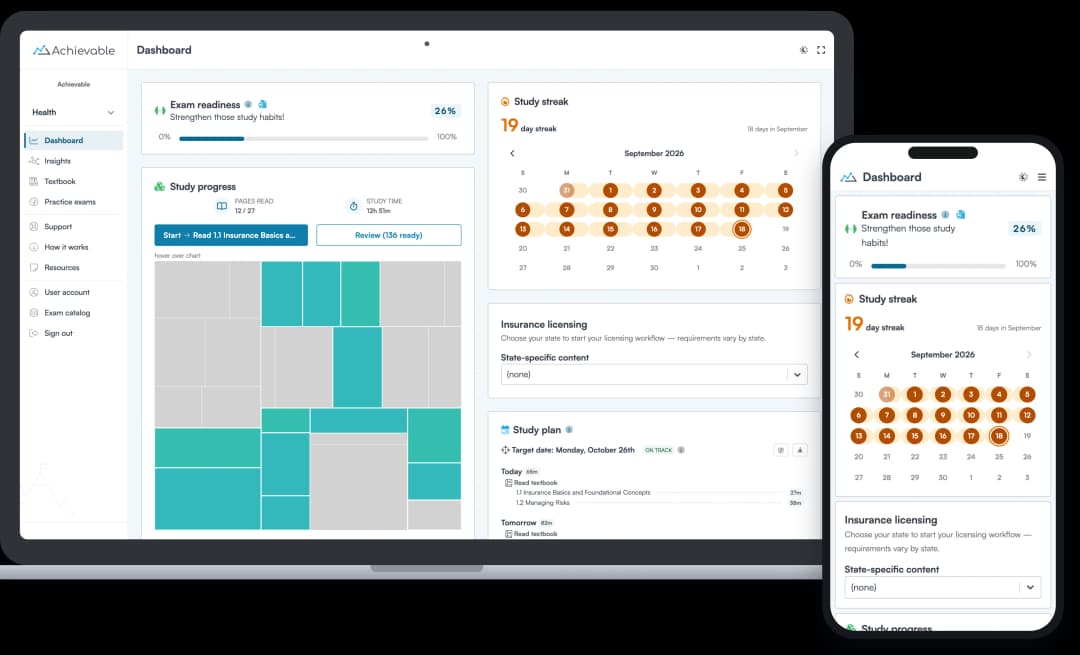
Pass the Health Insurance license exam on your first try with Achievable's interactive online license exam prep course. Includes everything you need: easy-to-understand online textbook, 980+ practice questions, and 5 full-length practice exams.
5 full-length practice exams for your state
980+ practice questions with explanations
State law questions for 49 states and DC
Pass guaranteed, or your money back
Chapter 10: Disability Income Insurance
2 sections
- Income and limits: Disability income insurance provides monthly income if unable to work due to sickness or injury, and benefits are limited to less than 100% of gross income, usually max 70%.
- Waiting and duration: The elimination period works like a deductible, and the benefit period states how long benefits are paid, commonly until age 65.
- Coverage and riders: Total disability, partial disability, residual disability, recurrent disability, and accident clauses define when benefits apply, while optional riders and business policies add protection and renewability or exclusions shape the contract.
Study this chapter in Achievable
Chapter 11: Accidental Death and Dismemberment Insurance
- AD&D basics: AD&D pays a lump-sum benefit only for accidental death or dismemberment, and it supplements, not replaces, life insurance; it has no cash value.
- Benefit and claims: Principal sum pays 100% for death or severe loss, capital sum pays a partial percentage under a schedule of loss, and a named beneficiary is required.
- Exclusions and travel: Exclusions can include felony, intoxication, narcotic use without a physician's advice, war, suicide, illness, hazardous activities, and scheduled commercial flight coverage applies only to one specific trip.
Study this chapter in Achievable
Chapter 12: Long Term Care Insurance
- Policy basics: LTC insurance provides a fixed-dollar benefit for long-term/convalescent care costs and is triggered by inability to perform ADLs at home or in assisted living.
- ADL requirement: The six standard ADLs are feeding, bathing, continence, transferring, dressing, and toileting, and most policies require inability to perform at least 2 of 6 ADLs.
- Underwriting rules: New policies have a maximum 6-month pre-existing condition probationary period, all individual LTC policies must be guaranteed renewable, and the Outline of Coverage and Buyer's Guide are required.
Study this chapter in Achievable
Chapter 13: Dental Insurance
- Group coverage: Dental insurance is primarily sold on a group basis due to adverse selection, and insurers avoid individual coverage to limit high, delayed claims.
- Benefits and deductibles: Benefits are based on UCR charges, charges above UCR, deductibles, and coinsurance are the insured's responsibility, and maximums may apply per year, per procedure, per family member, or lifetime; integrated deductible applies to medical and dental, while separate deductible applies only to dental.
- Policy types: Scheduled policies cover routine visits, cleanings, and preventive care, comprehensive policies cover restorative, endodontics, periodontics, prosthodontics, oral pathology, orthodontics, nearly all plans pay 100% for routine cleanings and checkups, and prepaid dental plans operate like HMOs on capitation with the provider assuming full financial risk for contracted services.
Study this chapter in Achievable
Chapter 14: Section 125 Plans and Limited Policies
- Cafeteria plans: Employer-established Section 125 plans allow pre-tax income for qualified expenses and reduce taxable income for employees.
- Flexible and health savings: FSAs use pre-tax contributions for health or dependent care expenses with a “use it or lose it” rule, while HSAs are available to those with high-deductible health plans and have tax-deferred growth.
- Other limited policies: Prescription coverage, vision care, specific disease, and hospital confinement are limited policies that pay defined benefits for named services or conditions.
Study this chapter in Achievable
Chapter 15: Federal Government Programs
2 sections
- Federal insurance basics: OASDI provides disability income benefits, and OASDHI adds Health Insurance with Medicare, funded by payroll taxes from employers and employees up to the maximum taxable wage base.
- Coverage and Medicare: Disability income requires fully insured status plus strict disability criteria, while Medicare covers most people age 65+, under 65 with 24 months of Social Security disability benefits, or individuals with End-Stage Renal Disease.
- Medicare and TRICARE: Medicare has four parts with enrollment rules, penalties, and cost-sharing, and TRICARE and Veterans Health Administration are separate military health programs.
Study this chapter in Achievable
Chapter 16: Medigap and Medicaid
- Medigap basics: Medigap is sold by private insurers/producers, not the federal government, and insurers that sell any Medigap must offer Plan A.
- Medigap rules: Medigap policies are guaranteed renewable, have a minimum 30-day free look period, and the 6-month open enrollment period after Part B bars denial for health reasons.
- Medicaid and workers' comp: Medicaid is a state-administered, federally assisted welfare program for low-income/low-asset individuals, while workers' compensation is liability without fault and health insurance is typically non-occupational.
Study this chapter in Achievable
Chapter 17: Health Insurance Taxation
- Individual premiums: Individual health insurance premiums generally not tax deductible, except for amounts over 7.5% of AGI and for sole proprietors/partners with qualifying medical/hospital insurance.
- Disability income taxability: Disability income insurance premiums are not deductible as health insurance expenses, and benefits are tax-free only if paid with after-tax dollars.
- Business policies: Premiums for key person, executive bonus, and buy/sell agreement life insurance are not deductible, but business overhead expense insurance premiums are deductible and group health insurance employer premiums are deductible.
Study this chapter in Achievable
More on the Health Insurance license exam
- Health Insurance license exam prep courseAchievable's course: online textbook, review quizzes and full-length practice exams.
- Health Insurance license exam format, content and scoringWhat's tested, how long it takes, what it costs, and the score you need to pass.
- Health Insurance FAQThe questions asked most about the exam and preparing for it, answered.
- Health Insurance study resourcesGuides and study advice from Achievable's instructors.
Pass the Health Insurance exam.
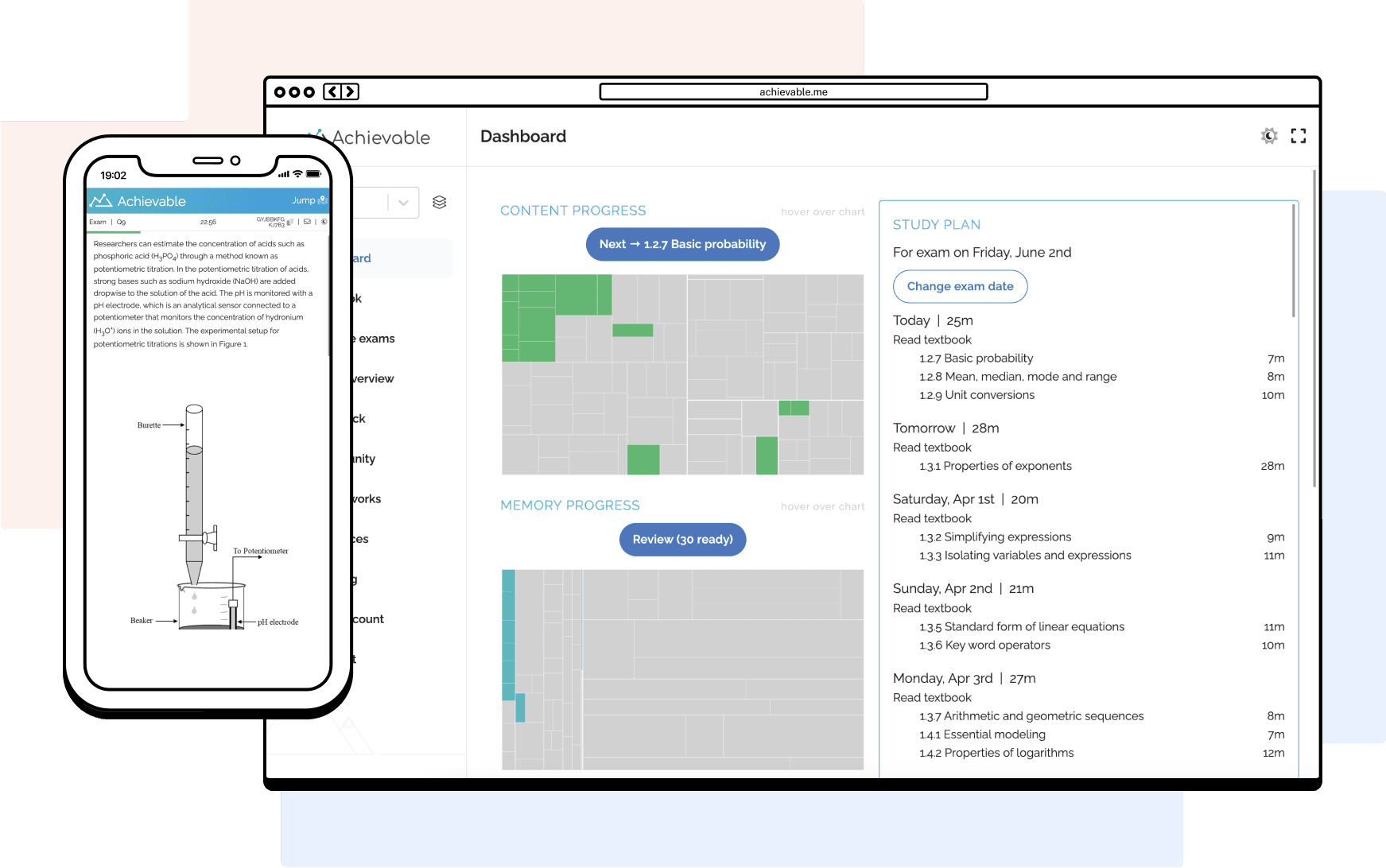
Guaranteed.Achievable is the best Health Insurance exam prep course: effective, personalized, and convenient. With Achievable, you'll spend less time studying and pass your exam the first time, or your money back.