How to become an insurance broker


Table of contents
- Understanding the client’s needs
- Shopping the market
- Explaining coverage and policy terms
- Advocating during claims
- Staying up-to-date and offering ongoing support
- Licensing, compliance, and expertise
- How to become an insurance broker
- California insurance broker license requirements
- New York insurance broker license requirements
- How to start an insurance brokerage
- Why use an insurance broker?
- Key takeaways
Navigating the world of insurance as a consumer or as a young professional interested in entering the field can feel confusing and overwhelming. Amid the fine print and policy jargon, you’ll likely encounter two key positions: insurance agents and insurance brokers. Though they may seem similar, their roles and loyalties differ in key ways. Agents typically represent a specific insurance company, while brokers work directly with clients, helping individuals and businesses find the best coverage tailored to their unique needs.
This article will guide you through the basic duties and responsibilities of an insurance broker and provide information on how to get your insurance license.

Understanding the client’s needs
At the heart of what an insurance broker does is a strong commitment to understanding your unique insurance needs and circumstances. The primary role of an insurance broker centers on providing comprehensive support and expert advice throughout the insurance selection process. This professional approach involves:
- Conducting risk assessments: A key part of what an insurance broker does is evaluating individual or business risks to determine the most suitable coverage. For example, a small business may require general liability, commercial auto, and cybersecurity insurance, whereas a homeowner might need specialized protection like flood insurance that is not covered by standard policies.
- Personalizing recommendations: Rather than presenting generic solutions, an insurance broker tailors insurance options to fit specific lifestyles, budget constraints, industry requirements, and geographic location. This ensures clients receive personalized insurance coverage that is aligned with their needs.
By focusing on your unique profile, what an insurance broker does best is ensure that you are offered the right combination of protection and value.
Shopping the market
Unlike captive agents, who represent only a single insurance company, insurance brokers provide clients with access to coverage options from multiple insurance companies. Acting as independent representatives, insurance brokers leverage this access to:
- Compare quotes and policy features from various insurance providers
- Carefully review the fine print of each plan to identify any hidden exclusions or limitations
- Recommend the most advantageous combination of premium, benefits, and protection to suit individual client needs
Because insurance brokers' work centers on industry expertise and impartiality, they can recognize truly dependable insurance carriers and policies, going beyond just surface-level marketing tactics. This deep understanding allows brokers to deliver genuinely competitive and trustworthy solutions for their clients.
Explaining coverage and policy terms
Insurance contracts can be challenging to interpret, making the expertise of a broker invaluable. Insurance brokers are able to clarify complex policy terms and industry jargon, ensuring clients fully understand:
- What is and isn’t covered by different insurance policies
- How deductibles, premiums, and coverage limits impact overall costs
- The financial implications of selecting one policy over another
This educational support allows clients to make informed choices, focusing on the best value rather than simply opting for the lowest price. By demystifying insurance details, brokers help clients find optimal coverage solutions.

Advocating during claims
One of the most valuable services brokers provide is support during the claims process. If you suffer a loss, your broker can:
- Help you file a claim correctly and quickly
- Communicate with the insurance company on your behalf
- Negotiate settlements if disputes arise
Because brokers are independent, they prioritize your interests, not the insurer’s.
Staying up-to-date and offering ongoing support
Insurance isn’t static. Life events like buying a new home, having children, or launching a business can dramatically change your coverage needs. Brokers often offer annual policy reviews to ensure coverage remains appropriate, updates on industry trends, regulatory changes, or new products, and proactive recommendations when better coverage becomes available. This long-term relationship builds trust and ensures clients are continuously protected.
Licensing, compliance, and expertise
Insurance brokers are licensed professionals required to meet comprehensive insurance broker license requirements. Fulfilling these regulatory standards is essential before pursuing a competitive insurance broker salary. Many brokers also enhance their credentials by earning highly regarded designations such as:
- CPCU (Chartered Property Casualty Underwriter)
- CIP (Chartered Insurance Professional), the Insurance Institute of Canada’s designation, for brokers working in Canada
Adhering to insurance broker license requirements ensures that brokers are qualified and legally permitted to act for clients. Brokers generally represent their clients rather than an insurer, though whether a broker owes a legal fiduciary duty depends on the state and the situation. This commitment to ethical conduct positively influences their reputation and earning potential, as insurance brokers typically earn commissions on the policies they place.

How to become an insurance broker
The path to becoming an insurance broker closely aligns with becoming an insurance agent. A high school diploma is typically the minimum education for insurance sales roles. A bachelor’s degree isn’t required to take the insurance license exam, but some employers prefer one, in fields such as business, economics, or finance.
Each state administers its own insurance license exam for different lines of insurance, including life, health, property, and casualty insurance. Many states don’t issue a separate broker license: agents and brokers both hold an insurance producer license, and the difference lies in whom they represent. Others, such as New York, license brokers separately. To fulfill insurance broker license requirements, certain states mandate an approved prelicensing course before allowing candidates to sit for the licensing exam.
After successfully passing the necessary exams, aspiring brokers must formally submit their license application through their state’s regulatory body. Ongoing continuing education is necessary in most states to renew and maintain your active broker license. For more detailed information on insurance prelicensing requirements, the insurance license exam process, and associated fees by state, visit our comprehensive guide on getting an insurance license in your state.
California insurance broker license requirements
California issues property and casualty licenses as “broker-agent” licenses. Applicants must be at least 18 years old and complete 12 hours of study on ethics and the California Insurance Code before the license is issued; since January 1, 2026, the state no longer requires the separate 20-hour prelicensing course. After passing the state exam, applicants submit fingerprints and then apply. To maintain an active license, you must complete 24 hours of approved continuing education every two years, including three hours of ethics. This ensures that licensed brokers remain compliant and up to date with evolving industry standards.
New York insurance broker license requirements
To obtain a New York insurance broker license, you must be at least 18 years old, have the required prelicensing education, and have successfully passed the insurance license exam. Once you have passed the exam, you need to submit your completed application for an insurance license to the New York Department of Financial Services within two years.
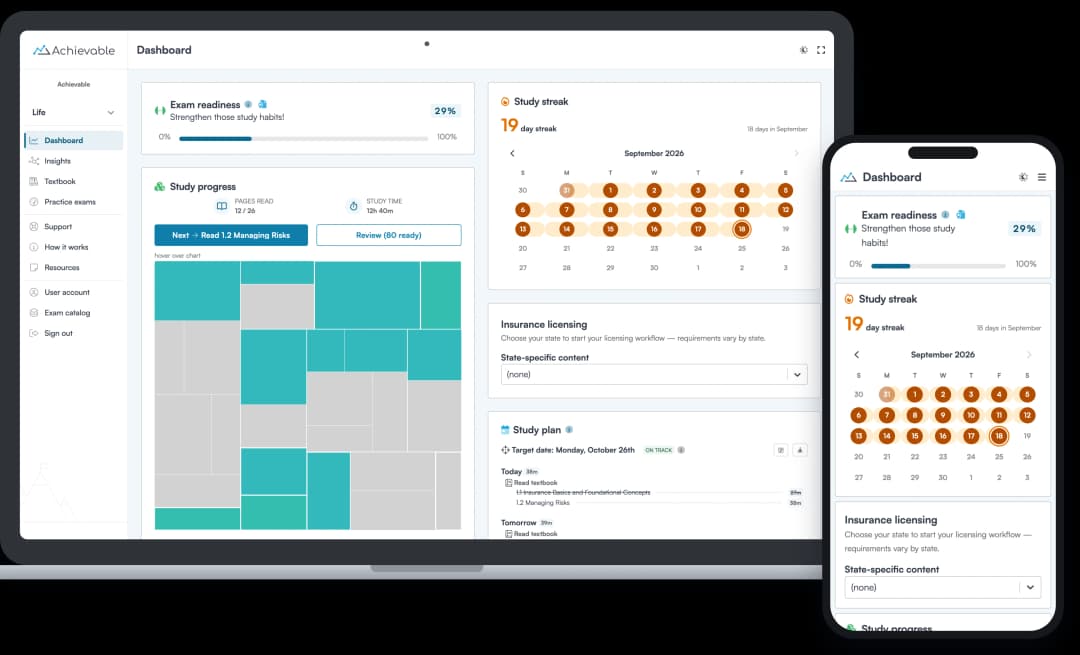
If you are preparing for your insurance license exam in New York or another state, explore Achievable’s Life and Health and Property and Casualty insurance licensing courses. These courses cover all state-specific topics needed for your insurance license.
How to start an insurance brokerage
Opening an insurance brokerage follows the same steps needed to open any business:
- The initial step is gathering the startup capital needed to support your business based on structure, location, the kinds of insurance policies offered, and potential client base.
- Drafting a solid business plan that covers main responsibilities, services offered, marketing strategies, and risks is crucial.
- An independent firm should also have licensed, experienced insurance professionals with esteemed reputations to bolster the firm’s credibility.
- Finally, there are a series of operational requirements to complete, including registering the business's name, establishing a tax identification number, registering with the state, and obtaining necessary business permits, licenses, and requisite insurance policies.
Brokerages generate revenue through two main channels: commissions on completed transactions and broker fees. Setting and sticking to revenue goals, generating new leads, developing an in-demand niche, and deploying new insurance broker technology efficiently can help make your business profitable.
The nature of insurance transactions has changed rapidly over the last few decades largely due to the Internet, but many clients still prefer seeking out expert advice from a trusted insurance professional over shopping for policies on their own.
Why use an insurance broker?
In an era where you can buy almost anything online, some may wonder if insurance brokers are still necessary. But for those who want:
- Expert guidance
- Objective comparisons
- Long-term protection
- Personalized service
…an insurance broker is an invaluable ally.
Whether you’re a first-time homebuyer confused about mortgage insurance, a startup looking to manage risk, or a seasoned professional trying to lower premiums without sacrificing coverage, a broker’s expertise can save you time, money, and stress.

Key takeaways
An insurance broker does far more than simply sell policies; their role encompasses being trusted advisors, educators, and advocates in the often-complex world of insurance. When considering what an insurance broker does, it’s important to recognize that they represent their clients’ interests by ensuring coverage is tailored to their unique needs. As financial risks continue to evolve in today’s world, having an experienced insurance broker can make a significant difference in securing the right protection and maximizing the value of an investment. Additionally, being a broker offers an exciting career path for insurance professionals interested in working independently.