

Personal Lines
study guide
Every chapter of the course summarized, with each section linked to its lesson.
Pass the first time
Try Achievable Personal Lines Insurance
No credit card required
This free Personal Lines study guide summarizes all 13 chapters of Achievable's Personal Lines course: what each covers, the points to remember, and its 19 sections in order. Read each chapter after you study it, or work through the whole guide before exam day.
Each section links to its full lesson in Achievable, with the review quizzes and full-length practice exams.
Chapter 1: General Insurance Concepts
7 sections
Free chapter
- Insurance purpose: Insurance transfers financial risk to the insurer through pooled premiums, helps predict losses, pays claims, and promotes financial recovery and economic stability.
- Risk management basics: Pure risk is insurable and speculative risk is not, and the four risk management methods are avoidance, retention, reduction, and transfer.
- Core principles: Law of Large Numbers makes losses more predictable, indemnity restores pre-loss financial condition without profit, insurable interest is required, and utmost good faith demands full disclosure.
- Policy structure: Declarations, Insuring Agreement, Conditions, and Exclusions define the contract, with conditions requiring duties like paying premiums and notifying loss, while exclusions remove specified losses.
- Insurance market: Agents represent the insurer, brokers represent the applicant, private insurers may be stock, mutual, reciprocal, or fraternal, and state regulation includes admitted and non-admitted classifications.
Start this chapter free
Chapter 2: Personal Lines Insurance Basics
- Loss classifications: Direct loss is physical damage from a covered peril, and indirect/resultant loss is additional loss stemming from direct loss.
- Proximate cause: Coverage depends on whether the first cause is covered, not later events in the chain, and policies often exclude flood or earth movement regardless of sequence.
- Indemnity and liability: The principle of indemnity restores the insured to pre-loss financial position, supported by insurable interest, subrogation, other insurance clauses, depreciation, ACV, negligence defenses, and cancellation, vacancy, appraisal, assignment, and salvage rules.
Study this chapter in Achievable
Chapter 3: Legal Liability Concepts
- Contract interpretation: The policy is a contract of adhesion, ambiguities are construed against the insurer, and the reasonable expectations doctrine may apply.
- Torts and damages: A tort is a civil wrong; intentional torts are excluded from liability policies, unintentional torts are based on negligence, and compensatory damages differ from punitive damages.
- Liability and limits: Absolute liability, strict liability, and vicarious liability differ, and accident versus occurrence affects coverage and limits such as per person, aggregate, split limits, and combined single limit.
Study this chapter in Achievable
Chapter 4: Common Policy Provisions
- Policy period rules: Policy period runs from inception to expiration, typically 12:01 a.m. at the named insured's address; occurrence policies follow when injury or damage happens, while claims-made follow first made claims.
- Deductibles and sharing: Deductibles lower premium by shifting the first portion to the insured, while SIR means the insurer's duty begins only above that amount; primary pays first and excess after exhaustion.
- Named insured terms: First named insured controls premiums, cancellation, and changes; rights and duties need written consent to assign, waiver needs insurer-issued endorsement, and the insurer may settle, defend, subrogate, and use specific, scheduled, blanket, or third-party clauses.
Study this chapter in Achievable
Chapter 5: Underwriting
- Underwriting basics: Insurers can refuse applications to avoid insolvency, and underwriting aims for equity among risk classes with premiums matching risk level.
- Risk classification: Applicants are classified as standard, substandard, preferred, or uninsurable, and statistical-based discrimination is legal while unfair discrimination based on protected classes is prohibited.
- Application and reports: The application is the most important underwriting information source, field underwriting and inspections help assess risk, consumer reports need authorization, and waiver and estoppel generally apply after the policy is in force.
Study this chapter in Achievable
Chapter 6: Claims Settlement
- Valuation methods: Policies pay “up to specified limits,” and methods include Market Value, Valued Policy, Agreed Value, Stated Amount, and Functional Replacement Cost.
- ACV and replacement: ACV prevents profiting from a loss and is replacement cost minus depreciation, while Replacement Cost pays like kind/quality with no depreciation deduction and is capped by the policy limit.
- Coinsurance rule: The Coinsurance Clause requires insurance of at least the specified % to avoid underinsurance penalty, and the amount paid is .
Study this chapter in Achievable
Chapter 7: Dwelling Policies (DP)
- Eligibility and forms: Dwelling forms are monoline policies for residential property, including under construction, but farms, structures with 4+ units, and commercial/business use structures are ineligible; Dwelling '02 has DP1, DP2, and DP3.
- Coverages and perils: DP1 covers hostile fire, lightning, and internal explosion, while DP2 adds named perils and collapse; DP3 is all-risk/open-peril for Coverage A and B, with Coverage C remaining named peril.
- Exclusions and liability: General exclusions apply to all three forms, DP2/DP3 give back limited ordinance/law coverage, and liability or medical payments are added separately through Coverage L and M or a separate CPL policy.
Study this chapter in Achievable
Achievable Personal Lines Insurance
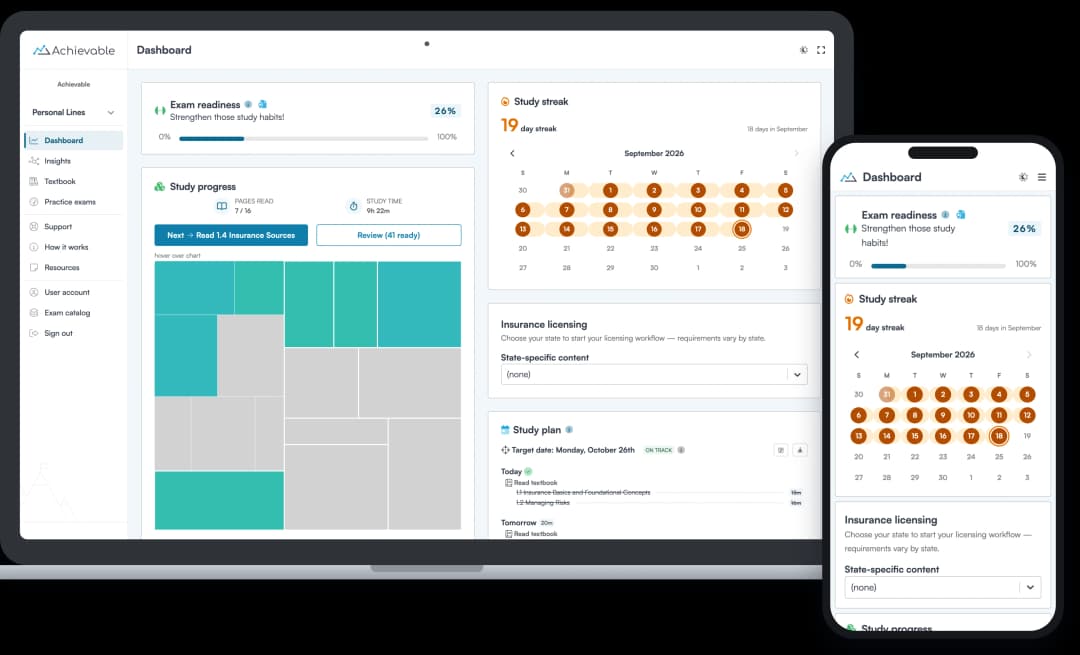
Pass the Personal Lines Insurance license exam on your first try with Achievable's interactive online license exam prep course. Includes everything you need: easy-to-understand online textbook, 1,000+ practice questions, and 7 full-length practice exams.
7 full-length practice exams for your state
1,000+ practice questions, explained in depth
State law questions for 49 states
Pass guaranteed, or your money back
Chapter 8: Dwelling Policy Conditions
- Other coverages: All dwelling forms include Other Coverages subject to deductible except Fire Department Service Charge, and some pay within existing limits while others add additional insurance.
- Common and added extensions: The common 8 extensions apply to all forms, DP-2/DP-3 add 4 more, and VMM is a covered peril that is automatic in DP-2/DP-3 and optional on DP-1.
- Conditions and endorsements: Proof of loss is due 60 days after request, suit is within 2 years, and endorsements can add coverage such as theft, incidental occupancies, ordinance or law, and sinkhole collapse.
Study this chapter in Achievable
Chapter 9: Home Owners Policies (HO)
- Policy basics: Homeowners insurance is a multi-line policy that combines property and liability coverage, evolved from dwelling policies, and is based on ISO 2011 forms.
- Eligibility and forms: HO-2, HO-3, HO-5, and HO-8 cover owner-occupants of 1-4 family dwellings, HO-4 covers tenants, and HO-6 covers condo/co-op unit owners.
- Coverages and exclusions: Section I and Section II coverages, additional coverages, limits, definitions, and exclusions determine what the policy pays and what it does not.
Study this chapter in Achievable
Chapter 10: Homeowners Policy Definitions and Conditions
- Key definitions: “You” and “your” mean the named insured and resident spouse, while “insured” also includes resident relatives, certain residents under 21, and qualifying full-time students.
- Residence and loss terms: Residence premises and insured location define covered places, while bodily injury, property damage, occurrence, business, and Section II liability terms set the policy’s scope and exclusions.
- Conditions and deadlines: Duties after loss, 60-day proof of loss, 80% replacement cost, appraisal, two-year suit limit, standard mortgage clause, concealment rules, and cancellation notice periods control how claims are handled.
Study this chapter in Achievable
Chapter 11: Endorsements and Scheduled Property
- Inflation guard: It automatically raises Coverages A, B, C, D limits yearly by stated %, applied pro rata, to keep pace with rising replacement costs.
- Liability endorsements: Business pursuits, permitted incidental occupancies, home day care, personal injury, earthquake, unit owners coverage, and water back-up/sump overflow all add or change liability or loss protection under stated limits and exclusions.
- Property endorsements: Mobile homes, watercraft, personal property replacement cost, ordinance or law, scheduled personal property, and personal articles floater adjust property coverage, deductibles, valuation, and whether coverage depends on the homeowners policy.
Study this chapter in Achievable
Chapter 12: Personal Auto Insurance (PAP)
- PAP basics: Personal Auto Policy (PAP) is a package policy covering property, liability, and injury to insured/family, with four coverage parts: A, B, C, and D.
- Liability and medical: Part A pays damages insured is legally responsible for, and Part B pays medical/funeral expenses for BI to insured or guest occupants incurred within 3 years of accident.
- Uninsured and damage: Part C pays compensatory damages for BI caused by uninsured driver, and Part D covers Collision and Other-Than-Collision/Comprehensive subject to deductible, exclusions, and insured's duties.
Study this chapter in Achievable
Chapter 13: Flood and Other Limited Policies
- Flood coverage rules: Flood is excluded from standard property policies, and NFIP makes coverage available in participating communities, regardless of flood zone risk level, with a 30-day waiting period for new policies or increases.
- Mobile home and watercraft: Mobile Home Policy covers direct physical loss to a mobile home and liability/medical payments, while homeowners liability excludes certain larger boats and still covers small craft.
- Earthquake and liability: Earthquake endorsement adds coverage for direct physical loss from earthquake, while Inland Marine, CPL, and umbrella policies each apply their own transportation, liability, and excess coverage rules.
Study this chapter in Achievable
Personal Lines license exam at a glance
- Questions
- ~100 multiple-choice questions (varies by state)
- Time
- 2 hours (varies by state)
- Passing score
- 70%
- Exam fee
- $40-$150
More on the Personal Lines license exam
- Personal Lines license exam prep courseAchievable's course: online textbook, review quizzes and full-length practice exams.
- Personal Lines license exam format, content and scoringWhat's tested, how long it takes, what it costs, and the score you need to pass.
- Personal Lines FAQThe questions asked most about the exam and preparing for it, answered.
- Best Personal Lines license exam prep coursesHow the leading providers compare on content, format and price.
- Personal Lines study resourcesGuides and study advice from Achievable's instructors.
Pass the Personal Lines Insurance exam.
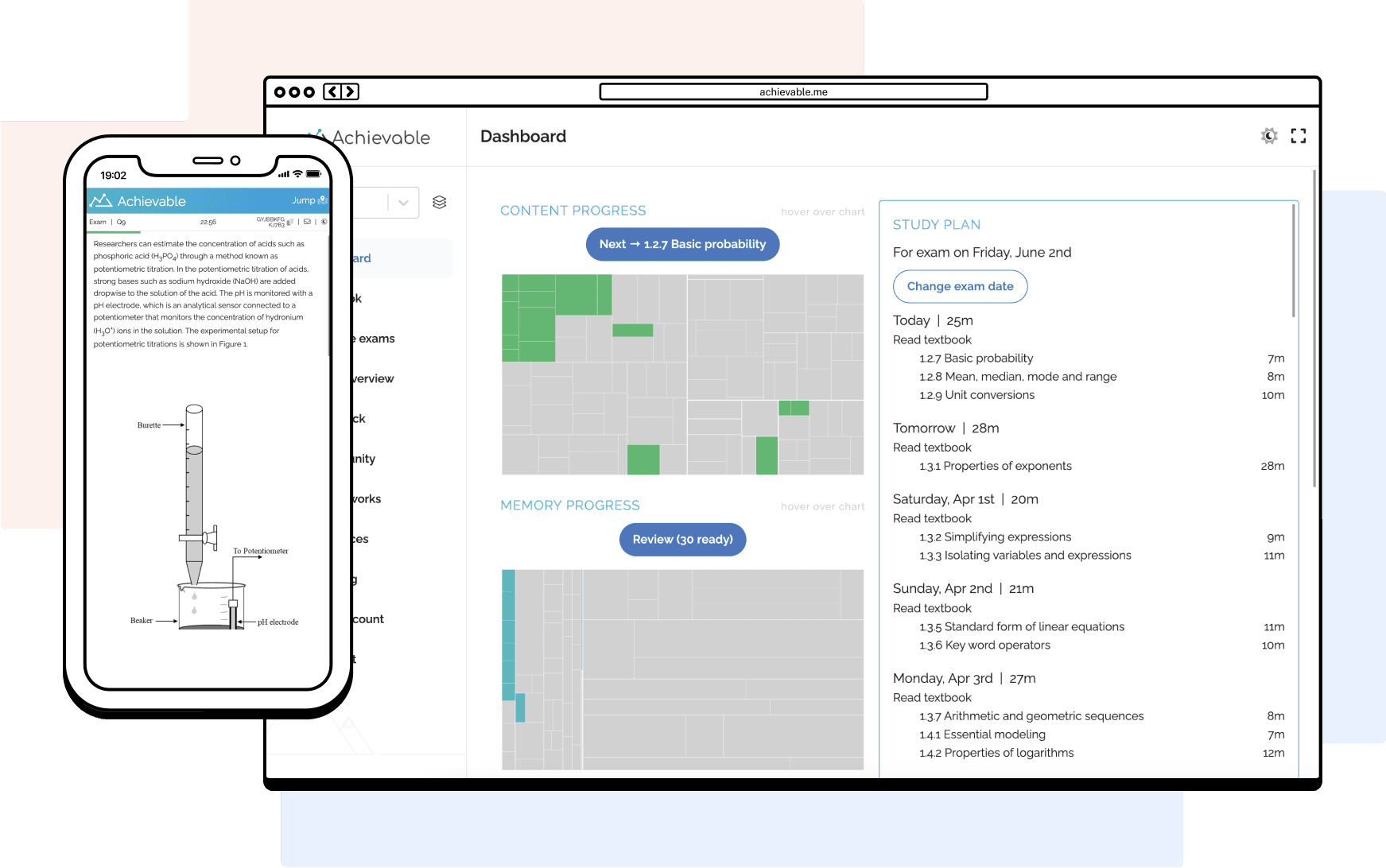
Guaranteed.Achievable is the best Personal Lines Insurance exam prep course: effective, personalized, and convenient. With Achievable, you'll spend less time studying and pass your exam the first time, or your money back.