

NCLEX FAQ
Answers to the most common questions about the NCLEX-RN (National Council Licensure Examination).
What is the difference between the NCLEX-RN and the NCLEX-PN?
The NCLEX-RN and NCLEX-PN are both nursing licensure exams. The NCLEX-RN is for registered nurses (RNs), while the NCLEX-PN is for practical nurses (PNs), Licensed Practical Nurses (LPNs), and Licensed Vocational Nurses (LVNs). PNs are trained to assist with care plans, provide treatment to stable patients, and work under RN supervision, while RNs are often relied upon for independent clinical judgment, care planning, and staff delegation.
The NCLEX-RN exam has a broader scope and covers clinical and diagnostic aspects of nursing, while the NCLEX-PN exam focuses on foundational care, bedside manner, vital sign monitoring, and medication administration. Both exams are computer-adaptive and have a time limit of five hours, though the maximum number of questions differs (150 for RNs, 205 for PNs).
How many times can you take the NCLEX?
The NCLEX can be taken up to eight times in a single year, though candidates must wait at least 45 days between attempts. There is no lifetime limit to the number of times you can take the exam.
Is the NCLEX a hard exam?
The NCLEX is considered a challenging exam for its scope, clinical-heavy content, and unconventional format. Nursing graduates are expected to apply medical knowledge effectively in real-world situations, requiring test-takers to go beyond mere memorization. What also makes the exam challenging is that all questions must be answered in order: candidates cannot skip questions they don't know, and the exam automatically shuts off if the software detects that a candidate has a low chance of passing.
That being said, succeeding on the test is well within reach. Test-takers educated in the U.S. have a notable advantage, with first-time candidates demonstrating a strong pass rate of approximately 90% compared to an overall pass rate of about 70% for all candidates (NCSBN). While there is no definitive NCLEX passing score, the best way to practice is to use exam-style questions and practice tests, and to become familiar with the test's unique wording and formatting.
How do you know if you've passed the NCLEX?
The NCLEX does not have a fixed number of questions that each test-taker answers; instead, the test automatically ends if the computerized format detects that a candidate is 95% likely to pass or fail, or if the five-hour time limit is reached. If an examinee answers all 150 available questions within five hours, pass or fail results will be determined based on their overall performance.
The only definitive way to know if you've passed the NCLEX is to wait for your official exam results, which are usually made available within a few weeks of your testing date. You can also check your state's Board of Nursing (BON) registry, which will publish active RN license numbers for NCLEX candidates who passed the test. Candidates who fail the exam will receive a Candidate Performance Report (CPR), which allows them to assess their performance and pinpoint areas for improvement.
How long does it take to get NCLEX results?
According to the NCLEX website, official results are sent to candidates within six weeks after the exam by their jurisdiction's nursing regulatory body (NRB). However, candidates in the U.S. can access unofficial results for about $8 within 2 business days after the exam via Pearson's NCLEX Quick Result Service. These score reports are preliminary and cannot be used to certify an individual as a nurse.
Can you take the NCLEX at home?
Currently, the NCLEX can only be taken at designated testing centers for security purposes. However, the NCSBN is currently developing a home-based version of the NCLEX that maintains high standards of security and fairness. Test-takers are encouraged to follow updates directly from the NCSBN.
What should I bring to the NCLEX exam?
On the test day, candidates are advised to:
- Wear comfortable clothing
- Arrive early, at least 30 minutes before the testing time
- Bring a government-issued, physical ID that includes a recent photograph and signature
At the test center, candidates will need to provide biometrics and complete security scanning protocols. An on-screen calculator, erasable board, and marker will be provided.
Is the NCLEX-RN the same across jurisdictions?
Yes: the exam is the same across U.S. states, Canada, and Australia, effectively measuring baseline competencies for safe nursing practice. Canadian candidates can choose to take the exam in French, which is translated using a thorough review process to ensure accuracy.

My NCLEX stopped at 85 questions. Does this mean I failed?
Not necessarily: 85 is the minimum number of questions the NCLEX algorithm needs to determine if an examinee is likely to pass or fail the exam. The exam ending at 85 questions either means that a candidate performed well enough to pass with the minimum number of questions, or there was enough information for the testing platform to determine that an examinee will not pass. The only way to know if you passed with 100% is to wait for your official test results.
What is the Next Generation NCLEX (NGN)?
The Next Generation NCLEX (NGN) is the most recent version of the NCLEX exam. The primary difference between the NGN and previous versions is its inclusion of case studies and a greater emphasis on clinical judgment.
Additionally, the NGN introduces new question types, such as drop-down menus, matrix questions, and grid questions, among other features. This exam was designed to more effectively assess the decision-making abilities of nurses who are about to enter the field.
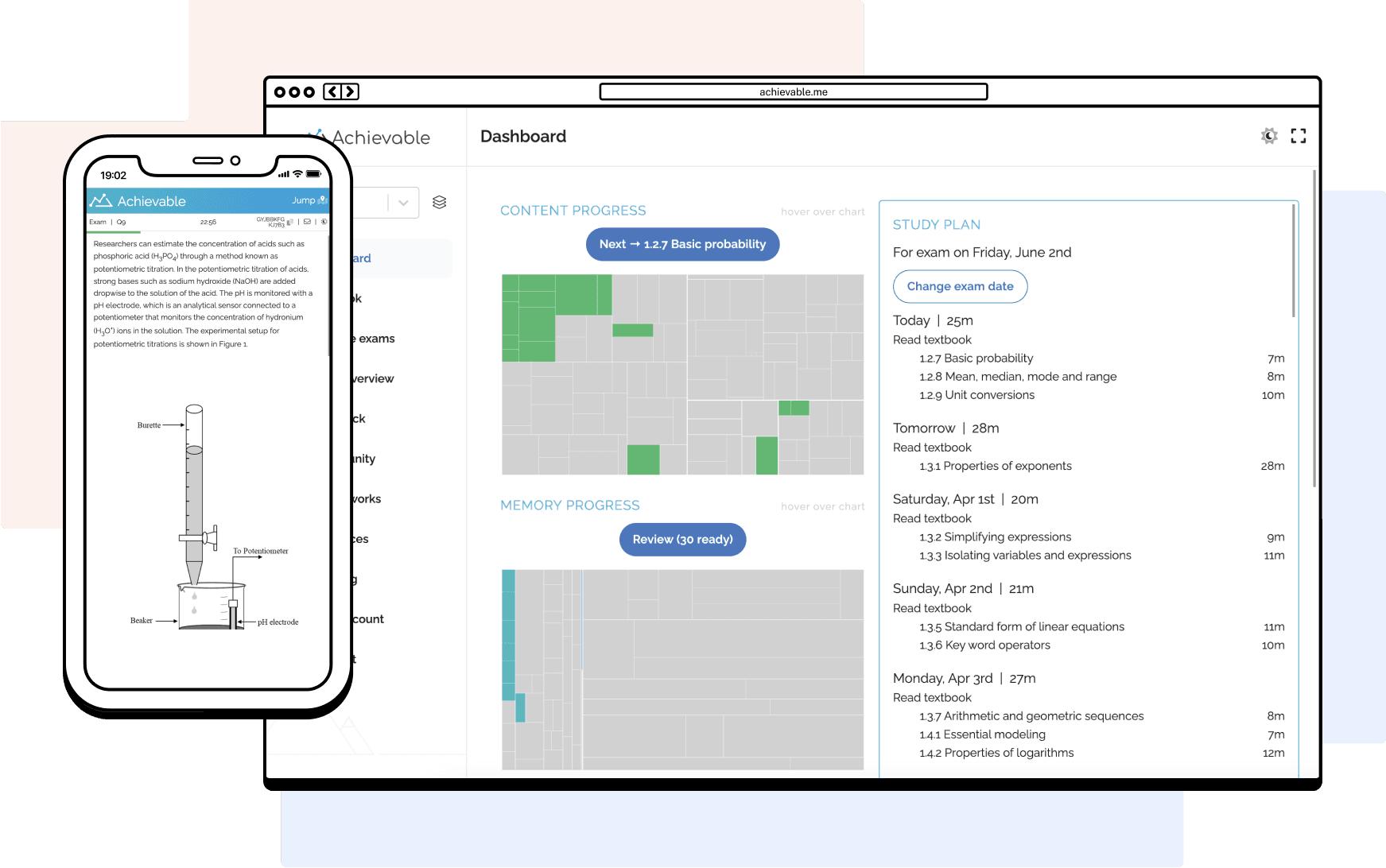
Pass the NCLEX-RN. Guaranteed.
Achievable is the best NCLEX-RN prep course: effective, personalized, and convenient. With Achievable, you'll spend less time studying and pass your exam the first time, or your money back.