

USMLE Step 1
study guide
Every chapter of the course summarized, with each section linked to its lesson.
Pass the first time
Try Achievable USMLE Step 1
No credit card required
This free USMLE Step 1 study guide summarizes all 11 chapters of Achievable's USMLE Step 1 course: what each covers, the points to remember, and its 384 sections in order. Read each chapter after you study it, or work through the whole guide before exam day.
Each section links to its full lesson in Achievable, with the review quizzes and full-length practice exams.
Chapter 1: Anatomy
48 sections
- Lymphoid anatomy: Lymph nodes, spleen, thymus, and MALT are the major lymphoreticular structures, and lymph enters via afferent and exits via efferent lymphatics at the hilum.
- Lymph drainage: Sentinel nodes, inguinal nodes, thoracic duct, right lymphatic duct, and lymphocyte homing determine drainage patterns, with thoracic duct rupture causing chylothorax.
- Spinal cord basics: The spinal cord begins at foramen magnum and ends at L1/L2 in adults, with dorsal roots sensory, ventral roots motor, and epidural and subarachnoid spaces used for anesthesia and spinal taps.
- Spinal tracts: Corticospinal, spinothalamic, and dorsal column pathways carry voluntary motor control, pain and temperature, and fine touch and proprioception, with decussation location determining contralateral or ipsilateral deficits.
- Brain and cranial nerves: The cerebrum, thalamus, hypothalamus, basal nuclei, cerebellum, brainstem, and cranial nerves I–XII each have defined relay, motor, sensory, and autonomic roles.
- Body wall and limbs: Skin layers, brachial plexus lesions, lower limb nerves, deep tendon reflexes, and skeletal muscle histology explain sensation, movement, and common entrapment and fracture patterns.
- Cardiorespiratory and renal anatomy: The heart, great vessels, lungs, pleura, kidney, nephron, and urinary tract are organized by fixed surface landmarks, vascular supply, and drainage pathways.
- GI, endocrine, and reproduction: The esophagus through liver, placenta, and reproductive organs follow precise developmental, histologic, vascular, lymphatic, and embryologic patterns that underlie common congenital and acquired disorders.
In this chapter
- Immune system, blood and lymphoreticular system
- Nervous system and special senses
- Skin and subcutaneous tissue
- Musculoskeletal system
- Anatomy of the cardiovascular system
- Respiratory system
- Respiratory system additional information
- Renal and urinary system
- Renal system additional information
- Gastrointestinal system
- Gastrointestinal system additional information
- Duodenum
- Liver
- Female reproductive system and breast
- Female reproductive system additional information
- Fallopian tubes
- Male reproductive system
- Male reproductive system additional information
- Prostate
- Endocrine system
- Embryology
- Additional information
Start this chapter free
Chapter 2: Microbiology
88 sections
- Bacterial structure: Mycoplasma lacks a cell wall, gram-positive bacteria have thick peptidoglycan, and gram-negative bacteria have thin peptidoglycan with outer membrane, LPS, porins, and periplasmic space.
- Appendages and survival: Capsule protects from phagocytosis, flagella drive ATP-driven movement, pili mediate adhesion and conjugation, and spores resist heat, chemicals, dehydration, and antibiotics.
- Virulence factors: Adherence factors, invasion enzymes, biofilms, endotoxin, exotoxins, and intracellular survival mechanisms determine pathogenesis and specific toxin effects.
- Growth and genetics: Bacteria divide by binary fission, require specific oxygen conditions and iron acquisition, and exchange genes by transposons, conjugation, transduction, and transformation.
- DNA replication and drugs: Replication is semiconservative with helicases, primase, polymerases, and ligase, while bactericidal and bacteriostatic antibiotics target cell wall, ribosomes, DNA, folate, RNA, or membranes.
- Gram-positive cocci: Staphylococci, streptococci, and enterococci are distinguished by morphology and lab tests, and they cause toxin-mediated, invasive, and device-associated infections.
- Gram-negative bacteria: Neisseria, Moraxella, enteric bacilli, Vibrio, Pseudomonas, Salmonella, Shigella, and other gram-negative rods are identified by shape, fermentation, motility, oxidase, capsule, and colony features.
- Other microbes: Atypical bacteria, viruses, parasites, and fungi are distinguished by their characteristic morphology, transmission, diagnosis, and disease patterns.
In this chapter
- General bacteriology
- Structure of bacteria and appendages
- Virulence factors, extracellular products, and toxins
- Bacterial growth and metabolism
- Bacterial genetics
- Bacterial replication
- Mechanism of action of antibiotics
- Antibiotics inhibiting bacterial protein synthesis
- Mechanism of antibacterial resistance in bacteria
- Additional information
- Introduction to systemic bacteriology
- Gram positive cocci
- Gram negative cocci
- Gram positive bacilli
- Gram negative bacilli
- Other important bacteria
- Virology
- Parasitology
- Mycology
Study this chapter in Achievable
Chapter 3: Physiology
43 sections
- Autonomic organization: Sympathetic preganglionic neurons release acetylcholine and postganglionic mostly release norepinephrine, while parasympathetic neurons release acetylcholine at both synapses.
- Sensory signaling: Receptor types, adaptation, and nerve fibre classes determine stimulus transduction, with rods, cones, mechanoreceptors, nociceptors, and special senses using distinct pathways.
- Brainstem sleep control: The reticular activating system regulates arousal, sleep cycles alternate NREM and REM every 90 minutes, and cerebrospinal fluid has lower K⁺, Ca²⁺, glucose, and amino acids than blood.
- Cardiovascular mechanics: Blood flow depends on pressure gradients and resistance, cardiac output equals stroke volume × heart rate, and MAP ≈ Cardiac Output × Total Peripheral Resistance.
- Respiratory exchange: Conducting airways differ from respiratory airways, surfactant reduces surface tension, and gas exchange depends on partial pressure gradients, surface area, and membrane thickness.
- Gastrointestinal function: GIT hormones, motility, secretion, and absorption are coordinated by endocrine and neural control, with bile salts, pancreatic enzymes, and intrinsic factor supporting digestion.
- Renal regulation: GFR, tubular transport, urine concentration, and fluid compartments are governed by Starling forces, countercurrent mechanisms, ADH, aldosterone, and renal autoregulation.
- Endocrine and reproduction: Pituitary, thyroid, pancreatic, adrenal, calcium, erythropoietin, and gonadal hormones regulate metabolism, growth, water balance, and the menstrual and testicular cycles.
In this chapter
- Nervous system and special senses
- Cardiovascular system
- Respiratory system
- Gastrointestinal system
- Renal and urinary system
- Endocrine system
- Reproductive system
Study this chapter in Achievable
Chapter 4: Pathology
112 sections
- Cell adaptations: Cellular adaptations include hypertrophy, hyperplasia, atrophy, metaplasia, and dysplasia, and persistent stimuli may lead to apoptosis or cell death.
- Cell injury: Reversible cell injury shows swelling and ATP loss, irreversible injury shows membrane disruption and nuclear changes, and necrosis versus apoptosis differ by inflammation and DNA pattern.
- Inflammation repair: Acute inflammation shows neutrophils and vascular permeability, chronic inflammation shows macrophages and lymphocytes, and healing occurs by regeneration or repair with granulation tissue.
- Nervous system: CNS pathology includes stroke, hemorrhage, herniation, dementia, seizures, headache, neuropathies, sleep disorders, movement disorders, demyelination, tumors, and congenital defects.
- Cardiovascular system: Cardiovascular pathology includes endocarditis, myocarditis, pericarditis, cardiomyopathies, ischemic heart disease, heart failure, valvular disease, arrhythmias, vascular disorders, and hypertension.
- Respiratory and GI: Respiratory pathology includes tumors, obstructive and restrictive disease, respiratory failure, pleural disease, and airway obstruction, while GI pathology includes esophageal, gastric, intestinal, colonic, liver, biliary, and pancreatic disorders.
- Renal and endocrine: Renal pathology includes hematuria, proteinuria, UTI, glomerular disease, tubular disease, renal failure, stones, cysts, tumors, and bladder cancer, while endocrine pathology includes diabetes, thyroid, parathyroid, and adrenal disorders.
- Musculoskeletal and blood: Musculoskeletal pathology includes infection, arthritis, crystal disease, bone degeneration, and muscle disorders, while hematology includes anemia, coagulation defects, thrombophilia, platelet disorders, leukemias, lymphomas, and plasma cell neoplasms.
In this chapter
- General pathology
- Central and peripheral nervous system
- Cerebrovascular disorders
- Pathophysiology
- Trauma to the CNS
- Increased intracranial pressure
- Neurodegenerative disorders and dementia
- Seizure disorders
- Disorders associated with headache
- Neuropathies
- Sleep disorders
- Movement disorders
- Metabolic and demyelinating disorders
- Neoplasms
- Congenital disorders
- Spinal cord disorders
- Additional information
- Cardiovascular system
- Endocarditis, myocarditis and pericarditis
- Cardiomyopathies
- Hypertrophy of the heart
- Atherosclerosis and arteriosclerosis
- Ischemic heart disease (IHD)
- Diagnosis of AMI/ ACS
- Heart failure
- Valvular heart disease
- Arrhythmias
- Vascular disorders
- Common types of emboli
- Vasculitis
- Diseases of the veins
- Additional information
- Respiratory system
- Hematology and oncology
- Coagulation cascade
- Blood cell lineages
- Anemia fundamentals
- Thalassemia
- Sideroblastic anemia
- Macrocytic anemias
- Hemolytic anemias
- Sickle cell disease (SCD)
- Hereditary spherocytosis (HS)
- Disorders of coagulation
- Hypercoagulable disorders (Thrombophilias)
- Platelet disorders
- Leukemias
- Lymphomas
- Polycythemia vera
- Miscellaneous disorders
- Additional information
- Gastrointestinal pathology
- Salivary gland pathology
- Esophageal disorders
- Diverticula of the esophagus
- Stomach
- Small intestine
- Mesenteric ischemia
- Large intestine
- Ischemic colitis
- Benign and malignant growths of the colon
- Rectum and anal canal
- Disorders of the liver
- Cirrhosis and portal hypertension (PHT)
- Benign masses in the liver
- Disorders of the gallbladder and bile ducts
- Cholangitis
- Cholangiocarcinoma
- Disorders of the pancreas
- Additional information
- Renal, endocrine and reproductive system
- Musculoskeletal system
Study this chapter in Achievable
Chapter 5: Pharmacology
24 sections
- Pharmacokinetics basics: Pharmacokinetics is the study of absorption, distribution, metabolism, excretion, and elimination, or “what the body does to the drug.”
- Absorption and distribution: Drug absorption depends on route and properties, bioavailability is the fraction reaching systemic circulation, and volume of distribution is .
- Metabolism and excretion: Drug metabolism occurs mainly in the liver, Phase 1 reactions make drugs more polar or reactive, Phase 2 reactions make drugs inactive and water soluble, and most drugs are eliminated by the kidneys.
- Clearance and dosing: Clearance equals rate of elimination divided by plasma concentration, half-life depends on , and loading dose and maintenance dose use Vd and clearance differently.
- Pharmacodynamics and receptors: Pharmacodynamics studies drug effects on the body, agonists produce a response, antagonists block agonists, and receptor families include catalytic, nuclear, GPCR, ionotropic, and soluble receptors.
- Chemotherapy and toxicities: Anti-neoplastic drugs include alkylating agents, antimetabolites, plant alkaloids, antitumor antibiotics, and newer targeted drugs, and their toxicities include myelosuppression, mucositis, cardiotoxicity, pulmonary fibrosis, and tumor lysis syndrome.
- Cardiovascular drugs: Cardiovascular pharmacology includes antiplatelet drugs, anticoagulants, thrombolytics, antihypertensives, anti-anginals, antiarrhythmics, lipid-lowering drugs, and vasoactive agents such as dopamine, norepinephrine, epinephrine, and phenylephrine.
- Antimicrobials and other drugs: Antimicrobials include antibiotics, antifungals, antivirals, and HAART, while renal, respiratory, gastrointestinal, antidiabetic, gout, NSAID, osteoporosis, and antidote drugs each have distinct mechanisms, uses, and adverse effects.
In this chapter
- Pharmacokinetics
- Pharmacodynamics
- Receptors, agonists and antagonists
- Types of drug receptors
- Anti-neoplastic drugs
- Adverse effects of chemotherapeutic drugs
- Newer chemotherapeutic drugs
- Important drugs of the cardiovascular system
- Antimicrobials
- Drugs acting on the renal system
- Drugs acting on the respiratory system
- Drugs acting on the gastrointestinal system
- Antidiabetics and insulin
- Miscellaneous
- Additional information
Study this chapter in Achievable
Chapter 6: Immunology
11 sections
- Lymphocyte origin: Both T and B lymphocytes arise from common lymphoid progenitor in bone marrow, with T cells maturing in thymus and B cells in bone marrow or liver in fetus.
- T cell maturation: Alpha, beta T cells become CD4 helper or CD8 cytotoxic based on MHC recognition, and positive selection preserves self MHC recognition while negative selection removes self-reactive cells.
- B cells and antibodies: Immature B cells express surface IgM, mature B cells express surface IgM and IgD, and immunoglobulins have 2 heavy and 2 light chains with Fab and Fc fragments.
- Rearrangement and activation: Antibody and TCR diversity come from somatic recombination, TdT-mediated nucleotide addition, and class switching, while T cell activation requires TCR-MHC plus CD28-B7 co-stimulation.
- Antigen and hypersensitivity: MHC I presents endogenous antigens to CD8 T cells, MHC II presents exogenous antigens to CD4 T cells, and hypersensitivity types I-IV reflect exaggerated immune responses.
- Innate and defects: Innate immunity is immediate and nonspecific, vaccines may be live attenuated, inactivated, subunit, or toxoid, and immunodeficiency, complement deficiency, transplant rejection, and transfusion reactions each have defined patterns.
Study this chapter in Achievable
Achievable USMLE Step 1
Reach your USMLE Step 1 target score on the first try with Achievable's interactive online exam preparation course. Includes an easy-to-understand online textbook and 1,400+ practice questions.
Pass guaranteed, or your money back
1,400+ practice questions with explanations
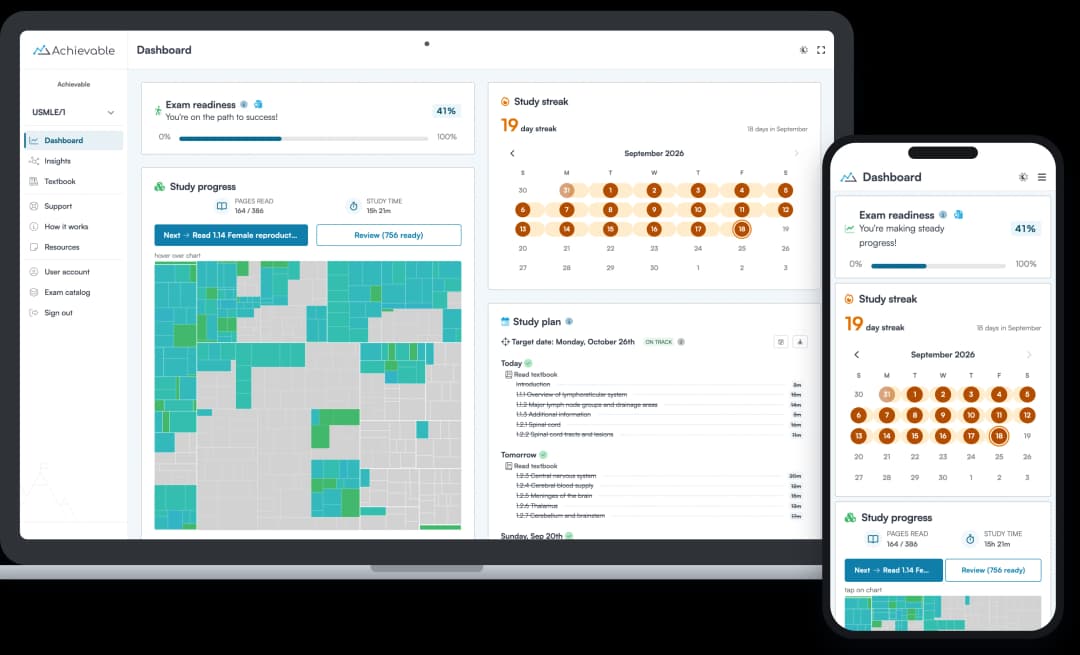
Adaptive study planner
Exam readiness score, updated as you study
Chapter 7: Biochemistry
14 sections
- Enzyme basics: Enzymes are protein catalysts that lower activation energy, active sites bind substrate, kcat is turnover number, and ribozymes are catalytic RNAs.
- Enzyme kinetics: Michaelis-Menten enzymes show a hyperbolic V vs. [S] curve, allosteric enzymes show a sigmoidal V vs. [S] curve, and reaction velocity is proportional to enzyme concentration.
- Enzyme regulation: Small Km means high affinity, competitive inhibition leaves Vmax unchanged while increasing Km, noncompetitive inhibition decreases Vmax while leaving Km unchanged, and enzymes do not change Delta G.
- Mitochondrial energy: The inner mitochondrial membrane is impermeable to most small ions and molecules, the ETC is in this membrane, and protons pumped by Complexes I, III, IV drive ATP synthase.
- Glycolysis and TCA: Glycolysis is a cytosolic universal pathway, PFK 1 is the rate-limiting step, pyruvate can form lactate or acetyl CoA, and the TCA cycle yields 12 ATP per acetyl CoA.
- Glycogen and gluconeogenesis: Glycogen synthesis and degradation occur in the cytosol, glucagon favors glycogenolysis and gluconeogenesis, and glucose 6-phosphatase is only in liver and kidney.
- Lipid and amino acid disorders: Lipoprotein, lysosomal, urea cycle, porphyria, and amino acid disorders are defined by specific enzyme defects that cause substrate accumulation and characteristic clinical findings.
Study this chapter in Achievable
Chapter 8: Cell and molecular biology
9 sections
- Cell structure: The human cell is composed of nucleus, cytoplasm with organelles, and cell membrane, and the membrane’s phospholipid bilayer controls passage while maintaining integrity and ion gradients.
- Protein synthesis: Ribosomes, rough endoplasmic reticulum, smooth endoplasmic reticulum, Golgi apparatus, lysosomes, peroxisomes, and mitochondria each have distinct roles in translation, processing, detoxification, and ATP synthesis.
- Nuclear gene control: Euchromatin is transcriptionally active, RNA polymerase II binds promoter regions to make hnRNA, and capping, polyadenylation, splicing, and alternative splicing process the transcript.
- Genetic and cell cycle changes: The genetic code is nonoverlapping, contiguous, unambiguous, degenerate, and universal, while mutations, cyclins and CDKs, checkpoints, Rb, p53, ATM, and ATR regulate division and cancer.
- Signaling and trafficking: Signal transduction uses GPCRs, catalytic receptors, MAP kinase, ligand gated ion channels, and steroid receptors, while signal sequences, chaperones, ubiquitin-proteasome, and vesicle sorting direct proteins to their destinations.
Study this chapter in Achievable
Chapter 9: Biostatistics and epidemiology
13 sections
- Disease frequency: Incidence measures new cases in a specified time interval with the population at risk, while prevalence measures total cases at a point or over a period and equals Incidence rate × duration of disease.
- Health status measures: Birth rate, mortality rates, fertility rate, case fatality rate, and proportional mortality rate use mid-year population or specific groups, and herd immunity protects even unvaccinated individuals.
- Variables and distributions: Qualitative variables are nominal or ordinal, quantitative variables are interval or ratio, and normal data have Mean = median = mode with the central tendency at the 50th percentile.
- Spread and association: Standard deviation describes variability around the mean, CI = Mean ± Z × SEM, and RR, OR, hazard ratio, ARR, NNT, RRR, and NNH compare exposed and unexposed groups.
- Study design and bias: Observational studies include case-control, cross-sectional, and cohort designs, experimental studies include RCTs, and bias can arise from selection, attrition, measurement, recall, confounding, lead time, observer, Hawthorne, and ascertainment effects.
- Hypothesis and testing: H0 states no difference, Type I error equals alpha, power = 1 − β, and sensitivity, specificity, predictive values, likelihood ratios, ROC curves, and cut-off values guide test selection and interpretation.
- Drug phases and ethics: Phase I through Phase V track drug development, and patient autonomy, informed consent, advance directives, confidentiality, mandatory reporting, and duty to warn govern doctor-patient relationships and decision-making capacity.
In this chapter
- Measure of disease frequency
- Measures of health status
- Reportable diseases
- Variables and distributions
- Standard deviation and confidence intervals
- Measures of association
- Types of study design
- Bias
- Hypothesis testing
- Sensitivity, specificity and predictive values
- Phases of drug approval
- Doctor patient relationships, ethics and decision-making capacity
- Additional information
Study this chapter in Achievable
Chapter 10: Genetics
6 sections
- Genes and alleles: Genes are the basic units of heredity, made of DNA, and alleles are different forms of the same gene at a locus.
- Inheritance patterns: Autosomal, X linked, codominant, mitochondrial, and Y linked inheritance each have distinct transmission rules, and anticipation, imprinting, and mosaicism alter phenotype.
- Chromosomal disorders: Karyotyping detects numerical and large structural abnormalities, while aneuploidy, translocations, inversions, ring chromosomes, and isochromosomes produce characteristic syndromes.
- Population genetics: Hardy-Weinberg frequencies use and , while heritability, LOD score, and linkage disequilibrium quantify genetic contribution and linkage.
Study this chapter in Achievable
Chapter 11: Behavioral science
16 sections
- Unconscious coping: Defense mechanisms are unconscious coping strategies by the ego for internal conflict/stress, and mature defenses are healthier conscious or adaptive ways to manage emotions/impulses.
- Relationship projections: Transference is patient projection of past feelings onto the provider, and countertransference is provider projection onto the patient, so both can affect therapeutic relationships and care quality.
- Personality patterns: Personality traits are long-lasting and not disruptive to daily life, while personality disorders are ego-syntonic, maladaptive, and cause significant impairment.
- Psychosis features: Psychosis causes delusions and hallucinations with ↑ dopamine & glutamate, ↓ GABA, and schizophrenia symptoms last ≥ 6 months with positive, negative, and cognitive symptoms.
- Antipsychotic effects: Typical antipsychotics block D2 dopamine receptors and treat positive symptoms only, while atypical agents block D2 and 5HT2A receptors and treat both positive and negative symptoms.
- Anxiety and stress: GAD, panic disorder, specific phobia, OCD, separation anxiety disorder, ASD, PTSD, and adjustment disorder are defined by their duration, triggers, symptoms, and functional impairment.
- Mood and grief: MDD requires depressed mood or anhedonia plus ≥5 SIGECAPS symptoms for ≥2 weeks, bipolar disorders center on manic or hypomanic episodes, and grief becomes complicated when it lasts >1 year and impairs function.
- Other major topics: Serotonin syndrome, somatic symptom and eating disorders, childhood disorders, ADHD treatment, substance use disorders, and developmental milestones are organized by their characteristic symptoms, causes, and treatments.
In this chapter
- Defense mechanisms
- Personality traits and disorders
- Psychotic disorders
- Antipsychotic drugs
- Anxiety disorders
- Stress disorders
- Mood disorders
- Grief or bereavement
- Serotonin syndrome
- Somatic symptom disorder
- Eating disorders
- Disorders originating in infancy/childhood
- Drugs used in the treatment of ADHD
- Autism spectrum disorder (ASD)
- Developmental milestones in children
- Substance use disorders
Study this chapter in Achievable
USMLE Step 1 exam at a glance
- Questions
- Approximately 280 multiple-choice questions
- Time
- 8 hours (14x30min)
- Exam fee
- $695
More on the USMLE Step 1 exam
- USMLE Step 1 exam prep courseAchievable's course: online textbook, review quizzes and full-length practice exams.
- USMLE Step 1 exam format, content and scoringWhat's tested, how long it takes, what it costs, and the score you need to pass.
- USMLE Step 1 FAQThe questions asked most about the exam and preparing for it, answered.
- Best USMLE Step 1 exam prep coursesHow the leading providers compare on content, format and price.
- USMLE Step 1 study resourcesGuides and study advice from Achievable's instructors.
Pass the USMLE/1. Guaranteed.
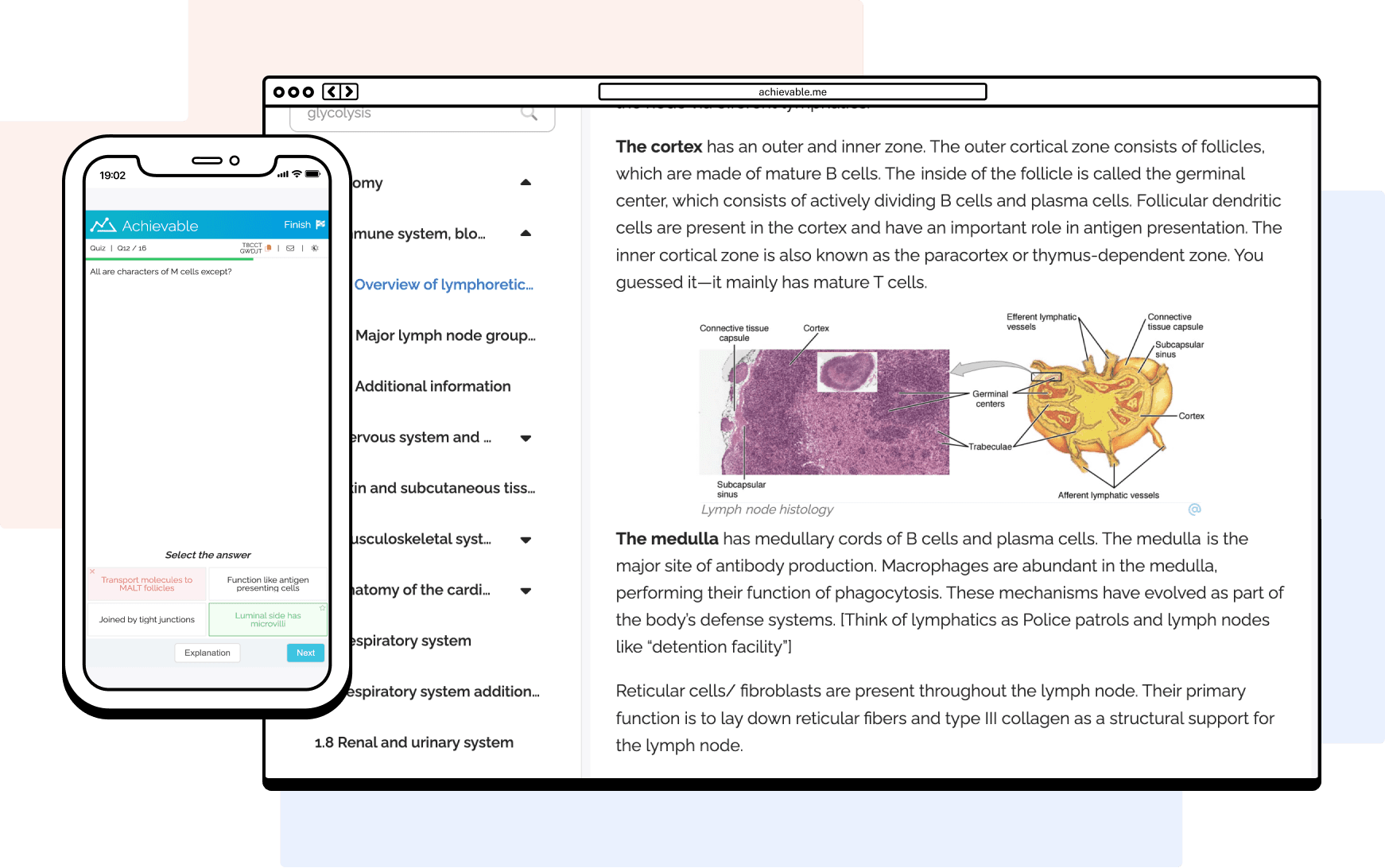
Achievable is the best online USMLE Step 1 exam prep course: effective, personalized, and convenient. With Achievable, you'll spend less time studying and pass your exam the first time, or your money back.