Wealth management: Your first 90 days


Table of contents
- What exactly is wealth management?
- What does a typical workday look like?
- The first step: Scoring your first role
- What do financial advisors earn?
- Preparing for future financial licensing
- What is the SIE exam?
- How to prepare for your first day
- Month #1: Establishing your foundation
- Month #2: Building up your skills
- Month #3: Assuming your full duties
- What are the most common mistakes new advisors make?
- Final thoughts: Start your career today
In your first 90 days as a financial advisor, you’ll make progress on your licensing exams, learn your firm’s products inside and out, and start building a client base. These early months are crucial for building expertise and developing deep knowledge of financial products. When executed well, they lay the groundwork for future success by helping you grow your client base and foster lasting relationships. Conversely, poor performance and failure to prioritize requirements such as licensing can cause setbacks.
With commitment, a collaborative spirit, and a genuine desire to work with people, you can establish a strong foundation as you launch your career in the industry.

What exactly is wealth management?
Wealth management is a comprehensive advisory service that integrates financial planning, investment portfolio management, tax mitigation, and estate planning. Though typically associated with affluent clients, many wealth management and financial advising professionals work with people from a variety of income levels and backgrounds. Variety is one of the main draws of this field: you may be advising a client on a high-stakes investment one hour, compiling a portfolio that maximizes social and climate impact the next, and helping a family plan how they’ll pay for their child’s college education after that. A commitment to helping people achieve their financial goals is a must for this role.
What does a typical workday look like?
Financial advisors perform various tasks daily, with one of the most frequent and crucial being face-to-face meetings with prospective clients. During these meetings, an advisor typically:
- Conducts a thorough review of the prospective client’s financial position before providing advice. Advisors are required to understand a client’s goals and needs before progressing to the advice phase of the meeting.
- Informs clients about available investment options and transparently explains any risks.
- Recommends the investment options that best align with their needs and risk thresholds.
Advisors also conduct review meetings with existing clients where they might:
- Help clients develop ambitious but attainable financial plans.
- Review clients’ financial situations, considering major life events like having children or getting married, which may alter their goals and needs.
- Analyzing cash flow, asset inventory, debt, insurance, and tax situations for growth and savings opportunities.
- Evaluate the performance of the current investment portfolio and suggest modifications to enhance or diversify it.
- Keep clients informed about macroeconomic market changes and provide insights into future expectations.
Many tasks of a financial advisor or wealth manager involve some level of investigative research. Advisors must ask a LOT of questions to get a full financial picture, so you must be able to establish a solid, respectful rapport with customers and enjoy working closely with people. This will make the process smoother for all parties involved.
To ensure these meetings are productive, advisors dedicate considerable time to preparing and managing administrative and back-office tasks, such as:
- Preparing reports on investment performance for clients
- Filling in paperwork relating to clients’ accounts
- Arranging transfers of money between funds or arranging withdrawals for clients
- Checking their accounts for compliance with regulatory requirements
- Researching market trends and following industry news
They also dedicate significant time to training, also called ongoing professional development. This involves tasks such as:
- Researching the investment market
- Identifying new opportunities or risks that could help or hinder their clients’ financial goals
- Keeping up to date with industry trends
- Keeping up to date with regulatory changes
- Attending provider training about specific products
- Developing and improving sales techniques
It takes strong time management and organizational skills to keep up with all the tasks required for success in this field. It also requires sensitivity and patience: finances can be a delicate subject for many people, even those with ample resources. Clients place a lot of trust in their advisors to provide sound advice and recommendations, a trust that is built over time and demonstrated through results.
Luckily, many companies, both large and small, have dedicated training programs for new advisors, portfolio managers, stockbrokers, and others to help them become well acquainted with the demands of the field.
The first step: Scoring your first role
First things first: finding a job in the securities industry as a financial advisor, wealth manager, private wealth associate, trading representative, or stockbroker, or entering a specialized development program. Three main types of firms early-career financial advisors tend to work in:
- Large retail and corporate banks
- Brokerages, wirehouses, and insurance firms
- Boutique wealth management and Registered Investment Adviser (RIA) firms
Typically, you’ll have a wider range of products to recommend to clients at brokerages than in-house at a retail bank, though both experiences provide excellent exposure to the field.
Your starting salary will likely be in the range of $70,000 to $75,000, depending on your level of experience and geographic location. However, where you work, the kinds of clients you work with, and the services you offer can impact your future earnings.
What do financial advisors earn?

According to the Bureau of Labor Statistics (BLS), personal financial advisors had a median salary of $105,070 in May 2025, with those focused directly on securities, commodity contracts, and other financial investments typically earning more than $120,000 a year. Those in credit intermediation or at insurance carriers tended to earn less but still earned competitive wages. Financial analysts, who are classified differently by the BLS, made similarly high wages, with a median pay of $103,570 in May 2025. Remember that advisory roles are often paid with a combination of base salary AND commission: the more sales you make and services you provide, the higher your income.
If you’re aiming to maximize your earning potential in wealth management, prioritize working at a large or boutique firm that specializes in high-net-worth individuals. If you’re looking to expand your reach as a financial professional, you can work with commercial clients at a bank or start your own RIA (Registered Investment Adviser) firm that focuses on client niches. Although financial advising allows you to practice independently, you must begin with a FINRA-member firm to complete your licensing, perform certain activities, and provide financial advice.
Preparing for future financial licensing
Finance is a tightly regulated industry that requires professionals to pass exams before they can engage in securities sales, advisory services, and other financial activities. This helps ensure that expertise and high standards are upheld across the industry, and provides clients with peace of mind that the financial professionals they work with know what they’re doing. Without employment at a Financial Industry Regulatory Authority (FINRA) member firm, you will be unable to earn sponsorship, take important licensing exams, and fully register with the organization.
Current college and master’s students have ample time to build their portfolios before entering the job market. Here’s how you can begin developing your finance career early, even while still in undergraduate or graduate school:
- Apply for and complete internships in financial advising, insurance, banking, or related fields.
- Think about joining a student-managed investment fund to get hands-on experience in portfolio management.
- Attend career fairs and networking events for students.
- Choose your courses wisely; even if you’re not pursuing a finance degree, you can still build relevant skills through classes like economics and statistics.
- Pass the Securities Industry Essentials (SIE) exam, the gateway to financial services licensing.
Many companies organize informational or recruiting events on college campuses, providing excellent opportunities to learn more about particular companies and roles. When applying for internships, treat the process like your college applications: include reach, match, and safety internships based on your skills, preferred location, and the company’s competitiveness.
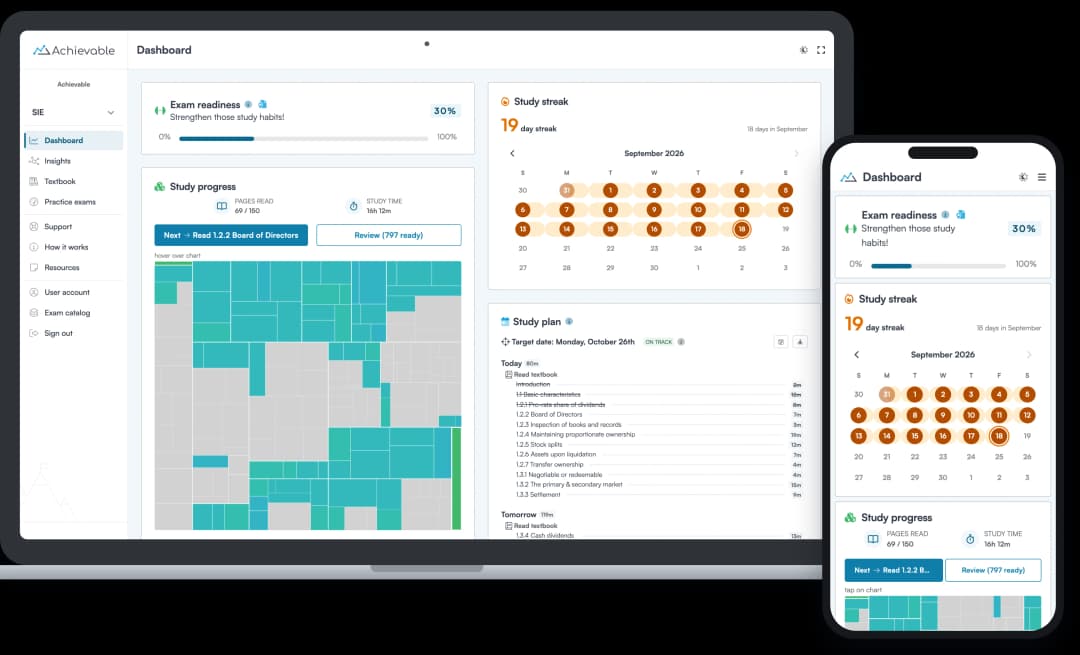
Passing the Securities Industry Essentials (SIE) exam, offered by FINRA, helps you stand out. Earning your SIE before applying for entry-level finance roles shows your understanding of core finance concepts, and employers see candidates with this certification as prepared to contribute right away. If you’re totally new to finance and looking to switch careers, the SIE is a great way to brush up on important financial knowledge and demonstrate your competencies to future employers.
What is the SIE exam?
The SIE is a 75-question standardized exam that tests candidates on fundamental financial knowledge, capital markets, investment vehicles, customer accounts, trading standards, and regulatory frameworks. It demonstrates that an early-career professional can take on the duties expected of an entry-level employee on track for further certification.
| Detail | SIE exam |
|---|---|
| Cost | $100 (effective January 1, 2026) |
| Questions | 75 scored (plus 5 unscored pretest questions) |
| Time limit | 1 hour 45 minutes |
| First-time pass rate | ~74% (commonly cited historical figure; FINRA does not publish a current official rate) |
| Validity | 4 years (if not yet associated with a FINRA member firm) |
| Sponsor required? | No, open to anyone |
Some firms permit employees to take the SIE during onboarding, while others prefer or mandate that new hires complete it beforehand. Many large firms, such as Morgan Stanley and Fidelity, have advisor training programs serving as onboarding for permanent roles. These programs often require passing the SIE first, so completing the exam provides a head start on additional licensure.

How to prepare for your first day
Suppose you receive an offer from your dream firm. First, congratulations! Next, your work starts as soon as you sign your offer letter or make your initial call.
If you’re employed at a company, ensure you complete all logistics and paperwork for new hires early so that you can concentrate on your job responsibilities. Afterward, familiarize yourself with your company’s products, services, and policies, and address any questions with your supervisor beforehand.
It’s crucial to be mentally prepared for what’s coming. Many new advisors earn little to no commission in their initial months as they concentrate on training and obtaining licenses, so expect your income to resemble your base salary. Your focus is on developing relationships and honing your skills; each meeting or follow-up contributes to building your client portfolio. The challenging, foundational work starts now and will pay off in the future.
Month #1: Establishing your foundation
The initial 30 days focus on building a foundation: consider what “future you” will require in four to six months during regular conversations with clients. Use this period to learn, stay organized, and maintain a consistent pace as you progress.
Here are the goals you should try to accomplish:
- Commit to learning your firm’s products, services, and rates
- Shadow experienced securities agents at client meetings
- Familiarize yourself with the processes of advising, from asking for financial documents to making suitable recommendations
- Closely follow financial and market trends to inform your work and future advising
- Take advantage of the training programs your firm provides and gain real-world guidance
- Developing familiarity with required documentation and agreements, such as the Form ADV Part-2 (SEC-required disclosure) and fee schedules (which will likely be set by your firm)
- Write your “elevator sales pitch” and rehearse it regularly
- Dive into your exam preparation by reading study guides, completing practice questions, and taking full-length tests
Your day-to-day will involve product study, training, completing financial analyses on behalf of other advisors, and preparing for your licensing exams. Most employers want their employees to get certified right away so they can assume the full duties of their roles. Your firm will likely provide you and your “class” of incoming advisors with a study program, but you can also seek out free or low-cost study materials on your own for more comprehensive prep.
After passing the SIE, which streamlines onboarding by removing one step, you can start searching for roles at financial firms. This is important for sponsorship with FINRA, which requires an employer to file a U4 and other documents to verify your qualification for a “Top-Off” exam.
The Series 7 is a popular choice among aspiring financial services professionals, as it validates their competence in selling, recommending, and advising on a range of securities, including:
- Equity securities (such as common and preferred stock)
- Exchange-traded funds (ETFs)
- Exchange-traded notes (ETNs)
- Debt securities (like bonds)
- Options
- Mutual funds
- Direct participation programs (DPPs)
- Hedge funds
For financial services professionals, additional North American Securities Administrators Association (NASAA) regulatory exams, also administered through FINRA, are needed to practice in the U.S.:
- Series 63: Uniform Securities Agent State Law Exam: Qualifies you to register as a securities agent under state law
- Series 65: Uniform Investment Adviser Law Exam: Needed to advise clients (and to register as an investment adviser representative, a step toward opening your own RIA practice)
- Series 66: Uniform Combined State Law Exam: Allows professionals to both advise clients and sell securities; must be combined with the Series 7 (which itself requires the SIE) to become active
The combination of SIE + Series 7 + Series 63, 65, or 66 is highly popular among financial representatives: your future employer will probably specify which exam you must take based on your role and responsibilities.
Once you begin this journey, you will typically have a limited window, ranging from a few weeks to a few months, to meet your licensing requirements. Many companies allocate study time during work hours, since ongoing employment often depends on passing these exams. Failing to do so will prevent you from performing the full scope of your job responsibilities.
Month #2: Building up your skills
Days 30 to 60 are when momentum really builds. As your workload increases, remember to communicate with your manager and team. Depending on where you are in your licensing, you may start meeting with clients at this time:
- Continue to prepare for exams, if you have not already taken them
- Continue to support higher-level staff with financial analyses and administrative tasks
- Assist with client services tasks
- Begin meeting with clients and providing services, if licensing is complete
- Set up your customer relationship management (CRM) system (HubSpot, Salesforce, AgencyBloc, etc.), if your firm requires one
- Hold “discovery” calls where you gather information about potential clients’ financial situations, goals, and concerns
- Set clear expectations with new clients on what documents and information they need to provide for the most effective experience
- Explain strategy (investment alignment, tax implications, timeline, and potential risks) clearly and honestly
- Get acquainted with new tools that help speed up routine tasks, like AI CRM features or generative writing support for client communications
- Attend networking events in your area, especially those focused on your specialty
- Start building your online presence on LinkedIn and other social media sites, and keep your network updated with new licenses, career milestones, and more
This is probably the time when you’ll first meet and interact with clients, especially if you’ve completed your licensing requirements. Securing a sale or offering advice is a significant achievement, but it also involves some follow-up:
- Carefully document the events and review your notes. Think about any issues or objections that arose, how you addressed them, and what lessons you can take for the future.
- Set up a follow-up in 30 days to check whether they’re happy with their financial decisions and purchases, and answer any questions.
- Depending on your company’s policies, you can ask for a referral for future clients, as long as you meet regulatory standards.
Remember to be cordial and well-informed in your interactions. You’ll likely continue working closely with other, more experienced advisors during this period before you can take full responsibility for your own clients. This is the time when you’ll be made more aware of advising best practices and adherence to ethical and regulatory standards, as you’ll observe these in action. Absorb as much as you can so you’ll be prepared by the time you have a full client portfolio of your own.

Month #3: Assuming your full duties
By the end of this month, you should have completed your licensing, created a dependable CRM pipeline that includes upcoming meetings, notes, and proper categorization, established a good rapport with clients, and expanded your base. You’ll gain better insight into what strategies are effective and which are not, particularly after securing your first sales, providing your first round of advice, and managing real-life portfolios.
Don’t knock the importance of client psychology in your work: as you hold more meetings, you’ll have a better sense of clients’ risk tolerance and other preferences, allowing you to develop personalized strategies for the people you work with. This awareness will allow you to lead your conversations with both grace and expertise, whether you’re reporting significant portfolio earnings or gently advising a client against an overly risky investment.
The third month focuses on maintaining the momentum that will carry you into your first six months and, ultimately, your first year in the role. Here’s what you can expect in days 60 to 90:
- Preparing new clients for initial meetings by asking for detailed financial documents, objectives, and signed agreements
- Establishing a regular meeting schedule with existing clients, making recommendations, and closing more sales
- Refining your abilities to explain intricate financial plans and concepts in a way that’s manageable and digestible to clients with varying levels of knowledge
- Identifying profitable product lines and financial strategies, and pursuing those
- Modifying plans and setting up revision cycles, taking into account market conditions and client feedback
- Keeping track of sales, commissions, and the financial value of your work
- Writing and sending progress reports to clients on their financial strategies
- Working with client services professionals to assist clients with tasks like transferring money to different accounts
- Pursuing warm leads from referrals or client recommendations, cold-calling new potential clients, and managing relationships
- Receiving feedback from more experienced staff and managers on your performance
You’re still early in your career, but you’ve begun to establish strong relationships, product expertise, and solid work habits. Your daily activities will be more refined versions of month two: appointments, financial analysis, training, quoting and closing, follow-ups and referral requests, and client services tasks. Around now is when you should start considering additional credentials and professional development, such as other financial advising, planning, or accounting licenses, which can add valuable skills to your toolbelt.
You’ll also have more information on what investments and securities are in demand and where your sales and advice have been most successful. This might also be the time when you develop a niche, whether it’s working with families on general planning, retirees on their estate, or high-stakes investors on maximizing output from their portfolios.
You should now be approaching referrals systematically. While asking for referrals might feel uncomfortable at first, they are necessary to sustain business. Request referrals consistently, on meeting days and check-ins, rather than only once during the process.
What are the most common mistakes new advisors make?
Many wealth management professionals hit the ground running but quickly stall or burn out. Developing a plan that leverages your successes and provides support during tough times is key to career longevity. Recognizing and avoiding common pitfalls will prevent further setbacks.
Here are common mistakes to watch out for in your first 90 days:
- Not dedicating time to product study: Reading through financial documents can be dry at times, but it’s necessary to answer questions about associated risk and returns and build credibility.
- Studying ineffectively for licensing exams: Time and your employment are of the essence. Choose a study plan that maximizes impact in the shortest amount of time by using a targeted approach.
- Not following up or establishing regular communication: Having many successful meetings is valuable, but without consistent follow-up, clients may become worried about their financial well-being. Send regular updates, schedule follow-ups, and make yourself available for emails, phone conversations, and answering ad hoc questions.
- Not communicating when something goes wrong: Mistakes happen, and markets are volatile. Sometimes a financial product or strategy you recommended doesn’t go as planned: provide immediate notice of how you will remedy the situation, whether it’s divesting from a certain fund or finding other ways to increase income. You have to be comfortable delivering both good and bad news.
- Ignoring existing clients: Your current clients are the core of your business: serve them effectively and keep them informed about portfolio performance, investment returns, their accounts, and related updates regularly (usually monthly, though some clients may want more or fewer updates).
- Failing to update the CRM: Neglecting to keep your CRM active hampers your capacity to advance clients through the pipeline and can lead to significant problems down the line. Familiarize yourself with your system and set up automations to streamline the process.
- Comparing yourself to seasoned advisors: Experienced securities professionals have distinct client bases and workflows. Instead of just comparing yourself, observe what they excel at and learn from their methods.
- Overworking: Very common in finance, especially at the start, when you’re likely working over 50 hours a week while handling licensing and new responsibilities. It’s crucial to take breaks, prioritize sleep, and manage stress to maintain well-being.
- Focusing on quantity over quality: Don’t rush into product recommendations or overfill your schedule with cold outreach. Building authentic conversations and providing genuine, suitable, and well-researched advice is more valuable than simply increasing volume.
Consider the effort you’re investing now as an investment in your future: within a few years or sooner, successful agents can experience steady business and more predictable hours. Although the job will always involve hosting numerous client meetings and maintaining your financial knowledge, having a clear plan is what distinguishes thriving advisors from others. A strong start at a firm can set you up to pursue your own independent firm, RIA, or practice in the future, allowing you to advise clients on a wider range of products and services.
Maintain realistic expectations while aiming high as you enter this competitive and dynamic field.
Final thoughts: Start your career today
Laying a strong foundation from the beginning can significantly boost your confidence and support a durable career in financial advising. Setting ambitious yet realistic goals for client outreach and closings helps you make progress while learning from mistakes. Keeping comprehensive records and conducting regular reviews lets you evaluate your performance effectively and sustain your pipeline.
Your initial 90 days in wealth management lay the foundation for your future career. During this period, you’ll likely become fully licensed, gain clarity on your achievements, and identify areas for improvement. Stay organized, focused, and committed to acting in your clients’ best interests to foster retention.
Don’t see the first 90 days as just training or orientation; instead, approach them as an opportunity to engage in meaningful work that builds a solid foundation for your career. Along the way, you’ll help your clients safeguard what matters most to them and build long-term wealth.