USMLE Step 1 passing score


Unlike the other two tests in the USMLE (United States Medical Licensing Examination) sequence, the Step 1 exam is scored on a pass/fail basis. Taken during medical school, the test requires students to achieve a minimum competency score to progress. Here is everything you need to know about the passing score and how to structure your study timeline effectively so you can pass on your first try.

What score do you need to pass the USMLE?
Before January 2022, the USMLE Step 1 passing score was reported as a three-digit number, with a minimum passing standard of 196 out of 300. The transition to a pass/fail format for Step 1 occurred at the end of January 2022. As a result, examinees now receive only a “Pass” or “Fail” status on their transcripts, rather than a numeric score. Despite this change, the underlying USMLE Step 1 passing score is still based on the standard of correctly answering approximately 60% of questions. Test takers should aim for at least the equivalent of a 196 to ensure a passing outcome.
Why the change?
The shift to a pass/fail format for the USMLE Step 1 passing score is designed to help students concentrate more on preparing for their medical careers rather than focusing solely on numerical rankings. Step 1 now serves primarily as a foundational test that leads to Step 2, Step 3, and residency programs. As residency selection criteria have evolved, many programs now place greater emphasis on Step 2 scores, clinical skills, clerkship performance, and relevant clinical experience. The USMLE Step 1 passing score standard ensures that all candidates who take the exam demonstrate fundamental medical knowledge competency, which remains crucial for medical licensure. This transition supports fairness and consistency across medical education while upholding the integrity of the licensing process.

USMLE Step 1 pass rate
In 2024, the total Step 1 pass rate for all medical students in the U.S. and Canada was 88%. That same year, only 70% of examinees in other countries scored above the passing mark. The USMLE can pose a particular challenge for international students pursuing medical careers in the U.S., as it includes content on country-specific standards and practices. Pass rates for MDs and DOs were similar (89% and 86%), emphasizing the rigor of both degree programs. Overall, 1st-time test-takers had higher Step 1 pass rates than exam repeaters, highlighting the importance of developing a strong study plan at the very start of your prep.
How to prepare for success
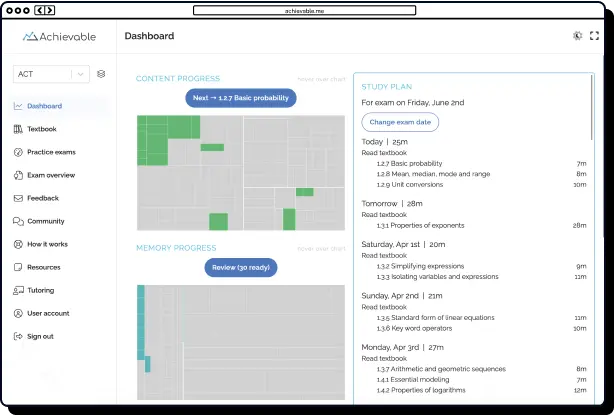
Here is a focused four-month Step 1 study schedule designed for optimal USMLE preparation. Review this schedule and customize it to align with your school curriculum, planned test date, and personal learning pace.
- Foundation: Use the first 4 weeks of your Step 1 study schedule to review foundational subjects thoroughly. Prioritize core areas such as physiology, biochemistry, and pharmacology to build a strong foundation in basic science.
- Dive deeper: In weeks 5-8 of your Step 1 study schedule, focus intensely on advanced topics. Concentrate on pathology, microbiology, and immunology, ensuring you take comprehensive notes and revisit all major subjects to solidify your understanding.
- Practice questions: For weeks 9-12, shift your Step 1 study plan toward practicing high-quality sample questions. Dedicate this phase to tackling a wide range of practice problems and actively seeking out answers to reinforce weak areas.
- Content refresh: Spend weeks 13-16 revisiting your notes and reviewing all material from earlier in your Step 1 study schedule. Emphasize older topics or areas of difficulty that may need extra attention.
- Self-assessment: In weeks 17-18, integrate a full-length practice exam into your study schedule. Use this crucial self-assessment to measure progress and pinpoint content that requires further review.
- Focused review: During weeks 19-22, analyze test results to identify mistakes and allocate extra time to physiology, pharmacology, ethics, and behavioral sciences.
- Comprehensive practice exam: Plan another full practice test in weeks 23-25. This step ensures you are exam-ready and can confidently apply your knowledge under test conditions.
- Final preparation: Reserve the last segment of your Step 1 study schedule for targeted revision, stress management, and light review sessions leading up to exam day.
This step 1 study schedule provides a structured yet flexible framework to help you maximize your preparedness for the USMLE Step 1 exam. To access top-grade Step 1 study resources, explore Achievable’s library of USMLE Step 1 study materials.

Overview
- Daily practice: Your Step 1 study schedule should include practicing 40-60 questions per day, ideally starting around Week 9 of your study plan.
- Self-assessments: At both the midpoint and later stages of your Step 1 study schedule, take full-format NBME (National Board of Medical Examiners) practice exams to benchmark your progress and adjust your review focus.
- Identify weak subjects: Track your weakest subjects throughout your study program, and make time each week to revisit and reinforce them.
- Balance and rest: Building mental and physical breaks into your Step 1 study schedule helps you maintain long-term motivation and avoid burnout.
- Simulated timing: Use official testing conditions during your final NBME practice tests to closely simulate the actual Step 1 exam experience.
- Remember: the exam takes 8 hours to complete. You must be prepared to sit for a test of this length and intensity before your official test day.
Final Thoughts
Passing the USMLE Step 1 exam requires achieving the established passing score, which is about 60% correct responses and has historically aligned with a minimum score of 196 out of 300. With the transition to a pass/fail system, students can focus on key content areas rather than being preoccupied with numerical scores. Consistent implementation of a structured Step 1 study schedule over several months, including regular practice questions and timely self-assessment exams, maximizes potential for success.
Now that Step 1 results are reported as Pass/Fail, other aspects of your medical journey have become more prominent, such as Step 2 CK performance, clinical evaluations, letters of recommendation, and customized elective rotations. This shift means these components carry greater weight in progressing toward medical licensure.
Sticking to an organized preparation plan and maintaining discipline are crucial to navigating your Step 1 study plan effectively. Achieving a passing score on Step 1 is possible with steady effort. Remember to support your physical and mental health throughout your prep period to avoid obstacles that could impact your USMLE Step 1 performance.