

Property Insurance
study guide
Every chapter of the course summarized, with each section linked to its lesson.
Pass the first time
Try Achievable Property Insurance
No credit card required
This free Property Insurance study guide summarizes all 20 chapters of Achievable's Property Insurance course: what each covers, the points to remember, and its 26 sections in order. Read each chapter after you study it, or work through the whole guide before exam day.
Each section links to its full lesson in Achievable, with the review quizzes and full-length practice exams.
Chapter 1: General Insurance Concepts
7 sections
Free chapter
- Insurance basics: Insurance spreads financial risk across policyholders via pooled premiums, and risk management uses avoidance, retention, reduction, and transfer, with insurance as the main transfer tool.
- Core principles: The law of large numbers improves loss prediction, indemnity prevents profit, insurable interest requires financial loss from the event, and utmost good faith requires honest, full disclosure.
- Policy structure: Declarations, insuring agreement, conditions, and exclusions define the contract, while property insurance covers physical loss, casualty centers on liability, and life and accident & health have their own major forms.
- Risk and sources: Pure risk is insurable but speculative risk is not, perils differ from hazards, named perils cover listed causes while open perils cover all except exclusions, and insurance comes from private, government, or service sources.
- Producer and contract rules: Agents, brokers, and other producers operate under authority rules, and insurance contracts require consideration, offer and acceptance, legal capacity, legal purpose, and insurable interest.
Start this chapter free
Chapter 2: Property Insurance Basics
- Loss classifications: Direct loss is physical damage from a covered peril, while indirect/resultant loss is additional loss stemming from a direct loss.
- Proximate cause and indemnity: Coverage applies if the proximate cause is covered, and indemnity restores pre-loss financial position, supported by insurable interest, subrogation, other insurance clauses, depreciation, and ACV.
- Policy administration rules: Cancellation, non-renewal, vacancy, unoccupancy, appraisal, arbitration, assignment, and salvage each follow specific rules for notice, dispute resolution, transfer, and recovery.
Study this chapter in Achievable
Chapter 3: Common Policy Provisions
- Policy period and territory: Coverage runs from 12:01 a.m. standard time at the named insured's address, and the policy territory defines where a loss must happen to be covered.
- Deductibles and insurance sharing: The insured pays before the insurer pays, and other insurance rules prevent payment above the loss using primary, excess, pro rata, or contribution by equal shares.
- Claims and policy rights: First named insured duties, post-loss duties, assignment, waiver, liberalization, subrogation, claim settlement, defense, mortgage and loss payable clauses, and no benefit to the bailee all control claim handling and recovery.
Study this chapter in Achievable
Chapter 4: Underwriting
- Underwriting basics: Insurers can refuse applications to avoid insolvency, and underwriting seeks equity among risk classes with premiums matching risk level.
- Risk information: The application is the most important source, while the producer's report, inspections, and consumer reports help determine risk acceptability and premium level.
- Ratings and rights: Rating services assess financial strength, and waiver and estoppel hold insurers to standards of established behavior after the policy is in force.
Study this chapter in Achievable
Chapter 5: Rate Development and Underwriting Results
- Underwriting results: Loss ratio equals incurred losses ÷ earned premium, expense ratio equals underwriting expenses ÷ premium, and combined ratio below 100% means underwriting profit.
- Rate development: Rate is a price per unit of exposure and must be adequate, not excessive, not unfairly discriminatory; final rate equals loss cost multiplied by the insurer's loss cost multiplier.
- Rating and hazard basics: Judgment, class, and merit rating set rates differently, , and COPE means Construction, Occupancy, Protection, Exposure.
Study this chapter in Achievable
Chapter 6: Claims Settlement
- Claim settlement basics: Losses are settled per policy's loss/valuation provisions, and P&C policies pay "up to specified limits" because the insurer's maximum liability is the stated limit.
- Valuation methods: Market Value, Valued Policy, Agreed Value, Stated Amount, and Functional Replacement Cost each set payment differently, with Valued Policy paying a fixed amount for total loss and Agreed Value suspending coinsurance penalty.
- ACV and coinsurance: ACV is replacement cost minus depreciation, Replacement Cost pays with no depreciation deduction, and coinsurance requires insurance ≥ the specified % or else the formula applies and the insurer pays the lesser amount.
Study this chapter in Achievable
Chapter 7: Dwelling Policies (DP)
- Purpose and eligibility: Dwelling forms are monoline policies for residential property, but farms, structures with 4+ units, and commercial/business-use structures are ineligible.
- DP forms and coverages: Dwelling '02 program uses DP1, DP2, and DP3; DP1 covers hostile fire, lightning, and internal explosion, while DP2, DP3, and DP3 Coverage A and B add broader protection.
- Exclusions and liability: Nine general exclusions apply to all forms, DP2/DP3 give back limited ordinance/law coverage, and the Personal Liability supplement adds Coverage L and Coverage M by endorsement.
Study this chapter in Achievable
Chapter 8: Dwelling Policy Conditions
- Other coverage extensions: Other Coverage is listed in every dwelling policy and is subject to deductible, except Fire Department Service Charge, which pays up to $500 in addition to limits.
- Shared and extra extensions: Other Structures, Debris Removal, World Wide Coverage, Removal, Rental Value, Trees, Shrubs, Plants, Collapse, Glass Breakage, and Ordinance or Law have the limits and DP-1 or DP-2/DP-3 treatment stated.
- Claim and policy conditions: VMM is a covered peril with the stated exclusions and vacancy rule, and claims, duties, cancellation, mortgagee protection, other insurance, suit limits, and liberalization follow the stated rules.
Study this chapter in Achievable
Chapter 9: Home Owners Policies (HO)
- Policy structure and eligibility: Homeowners insurance is a multi-line policy with Section I and Section II, written for residences only, and forms HO-2, HO-3, HO-5, and HO-8 are for owner-occupants of 1-4 family dwellings.
- Property coverages: Section I provides Coverage A, B, C, and D, with named perils or open perils depending on the form, and HO-8 uses only 10 named perils.
- Liability coverage: Section II has Coverage E and Coverage F with the same scope across all HO forms, and exclusions apply to both coverages as specified.
Study this chapter in Achievable
Chapter 10: Homeowners Policy Definitions and Conditions
- Defined terms: The policy uses quoted terms to identify who, what, and where is covered, and follows ISO homeowners forms, 2011 edition.
- Coverage terms: “You” and “your” mean the named insured plus resident spouse, “insured” is broader, and “residence premises” and “insured location” define the covered places.
- Conditions and limits: Section I and Section II set notice, loss settlement, appraisal, payment, fraud, cancellation, subrogation, and other rules, and state statutes often override cancellation/nonrenewal notice periods.
Study this chapter in Achievable
Achievable Property Insurance
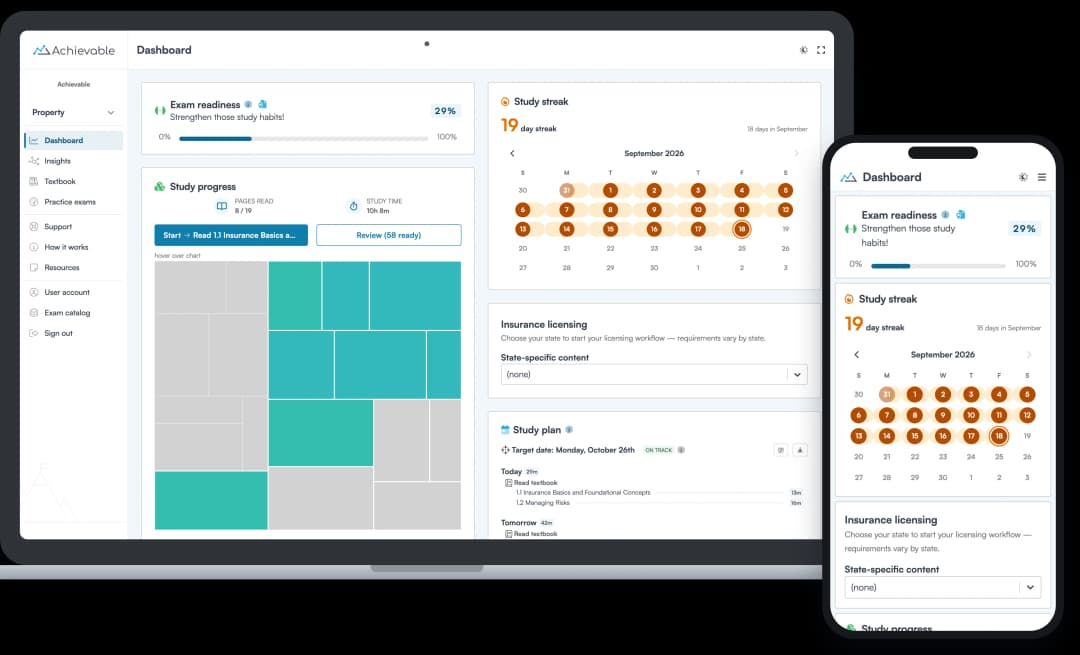
Pass the Property Insurance license exam on your first try with Achievable's interactive online license exam prep course. Includes everything you need: easy-to-understand online textbook, 1,000+ practice questions, and 6 full-length practice exams.
6 full-length practice exams for your state
1,000+ practice questions, explained in depth
State law questions for 45 states and DC
Pass guaranteed, or your money back
Chapter 11: Endorsements and Scheduled Property
- Limits and occupancy: Inflation guard auto-increases Coverages A-D yearly by set %, pro rata, and ordinance or law auto-includes 10% of Coverage A, with endorsements raising the scheduled %.
- Liability extensions: Business pursuits extends liability for eligible outside occupations, permitted incidental occupancies removes the business-activity exclusion, and home day care adds liability subject to listed exclusions.
- Property endorsements: Mobile home and watercraft endorsements adjust residence premises and liability coverage, personal injury adds Section II liability, earthquake covers earth movement, and personal property replacement cost, scheduled personal property, and the personal articles floater change how property is covered.
Study this chapter in Achievable
Chapter 12: Flood and Other Limited Policies
- NFIP basics: The NFIP is administered by FEMA, available in participating communities regardless of flood zone, and requires a 30-day waiting period except for loan transactions and map revision.
- Flood coverage limits: Flood policy coverage requires direct physical loss from flood, mudflow is covered as flood, and deductibles are separate for building and contents with minimums $1,000–$2,000.
- Other limited policies: Mobile home, watercraft, earthquake, inland marine, CPL, and umbrella policies each apply specific coverage rules, exclusions, and deductible or limit features.
Study this chapter in Achievable
Chapter 13: Commercial Package Policy (CPP)
- CPP purpose and definition: Commercial package policy combines multiple coverages into one policy, one insurer, one policy period, and two or more coverage parts make a package policy.
- Coverages and extensions: Available parts include liability, commercial property, inland marine, crime, auto, equipment breakdown, and farms, and coverage extensions act as additional insurance with the stated limits.
- Policy structure and exclusions: Every commercial policy uses declarations, conditions, and coverage forms, each coverage form states its own insuring agreement, and exclusions are found in the causes of loss form.
Study this chapter in Achievable
Chapter 14: Commercial Property Forms
- Commercial forms overview: Commercial property forms insure buildings, contents, and dependent income, with own declarations and conditions within package policy.
- Building coverage rules: The Building and Personal Property Coverage Form covers building, your business personal property, and personal property of others, subject to limits, exclusions, coinsurance, and vacancy conditions.
- Other form rules: Builders Risk, Business Income, Legal Liability Coverage Form, and Extra Expense each use their own valuation, restoration, liability, and expense rules.
Study this chapter in Achievable
Chapter 15: Cause of Loss Forms and Commercial Property Endorsements
- Cause of loss forms: Basic, Broad, and Special are the three forms; named perils are covered only if listed, while open perils cover all direct physical loss unless excluded or limited.
- Key endorsements: Ordinance or Law, Spoilage, Peak Season Limit of Insurance, and Value Reporting Form add specific coverages, limits, or reporting rules not provided by the standard forms.
- Earthquake coverage: Earth movement, including earthquake and volcanic eruption, is excluded in all 3 cause of loss forms, but an Earthquake Endorsement can add it, and DIC insurance covers excluded perils.
Study this chapter in Achievable
Chapter 16: Commercial Crime Insurance
- Need for coverage: Commercial property policies leave crime losses uninsured, and the special form excludes employee dishonesty and property given up by trick.
- Insuring agreements and definitions: A shown limit activates 7 agreements, and key terms control coverage for employee theft, robbery, safe burglary, forgery, custodian, messenger, and occurrence.
- Rules and conditions: The form excludes listed dishonest and indirect losses, uses discovery or loss sustained timing rules, and requires prompt notice, proof of loss, valuation, other insurance, and termination rules.
Study this chapter in Achievable
Chapter 17: Ocean and Inland Marine Insurance
- Ocean marine coverage: Ocean Marine Insurance covers ships/cargo on oceans & navigable waters and includes hull, cargo, freight, and protection & indemnity, with named perils, implied warranties, and exclusions.
- Inland marine scope: Inland Marine Insurance covers property commercial property policies exclude, including the six eligible categories and forms such as transportation, bailee, equipment floaters, valuable papers, installation, sign, EDP, and Jewelers Block.
- Aviation coverages: Aviation Insurance includes aircraft hull insurance, aircraft liability, additional coverages, and hangar keeper's liability for stored aircraft damage.
Study this chapter in Achievable
Chapter 18: Equipment Breakdown and Farm Coverage
- Equipment breakdown coverage: Formerly called boiler and machinery insurance, it covers breakdown of boilers, pressure vessels, and mechanical/electrical machinery and can be added to CPP or be optional under BOP.
- Breakdown and suspension: Property forms exclude mechanical breakdown, artificially generated electrical energy, and steam-boiler explosions, and a breakdown means mechanical breakdown or electrical failure of covered equipment, while the insurer may suspend coverage for equipment in dangerous condition by written notice.
- Farm coverage rules: Farm coverage adds ten coverages A–J to CPP, with A–G covering property and H–J liability, and key rules include the Coverage A replacement cost 80% test, Coverage B at 10% of Coverage A, and Coverage H, I, and J limits and exclusions.
Study this chapter in Achievable
Chapter 19: Business Owners Policy (BOP)
- Policy structure: Businessowners Policy (BOP) is the commercial equivalent of homeowners policy and combines property and liability coverage in Businessowners Coverage Form.
- Property coverages: Section I covers buildings and business personal property within 100 feet of premises, with business income and extra expense paid outside Section I limits and automatic increases for building and seasonal peaks.
- Key limits: Section I exclusions, deductibles, valuation, vacancy, and loss conditions control payment, including replacement cost if the limit is at least 80% of full replacement cost and suit within two years of loss date.
Study this chapter in Achievable
Chapter 20: Businessowners Policy: Section II Liability
- Section II overview: Section II covers legal liability from business premises/operations, pays damages the insured owes others, provides defense, and includes business liability and medical expenses.
- Liability coverages and limits: Business liability pays for bodily injury, property damage, personal/advertising injury, and the products-completed operations hazard, while medical expenses pay regardless of fault and limits apply separately each annual period.
- Conditions and definitions: Section II also sets insured status, exclusions, separate limits, and general conditions, including prompt notice, no voluntary payments, separation of insureds, cancellation, liberalization, and transfer of rights of recovery.
Study this chapter in Achievable
Property Insurance license exam at a glance
- Questions
- ~100 multiple-choice questions (varies by state)
- Time
- ~2 hours (varies by state)
- Passing score
- Around 70%
- Exam fee
- $40-$60
More on the Property Insurance license exam
- Property Insurance license exam prep courseAchievable's course: online textbook, review quizzes and full-length practice exams.
- Property Insurance license exam format, content and scoringWhat's tested, how long it takes, what it costs, and the score you need to pass.
- Property Insurance FAQThe questions asked most about the exam and preparing for it, answered.
- Property Insurance study resourcesGuides and study advice from Achievable's instructors.
Pass the Property Insurance exam.
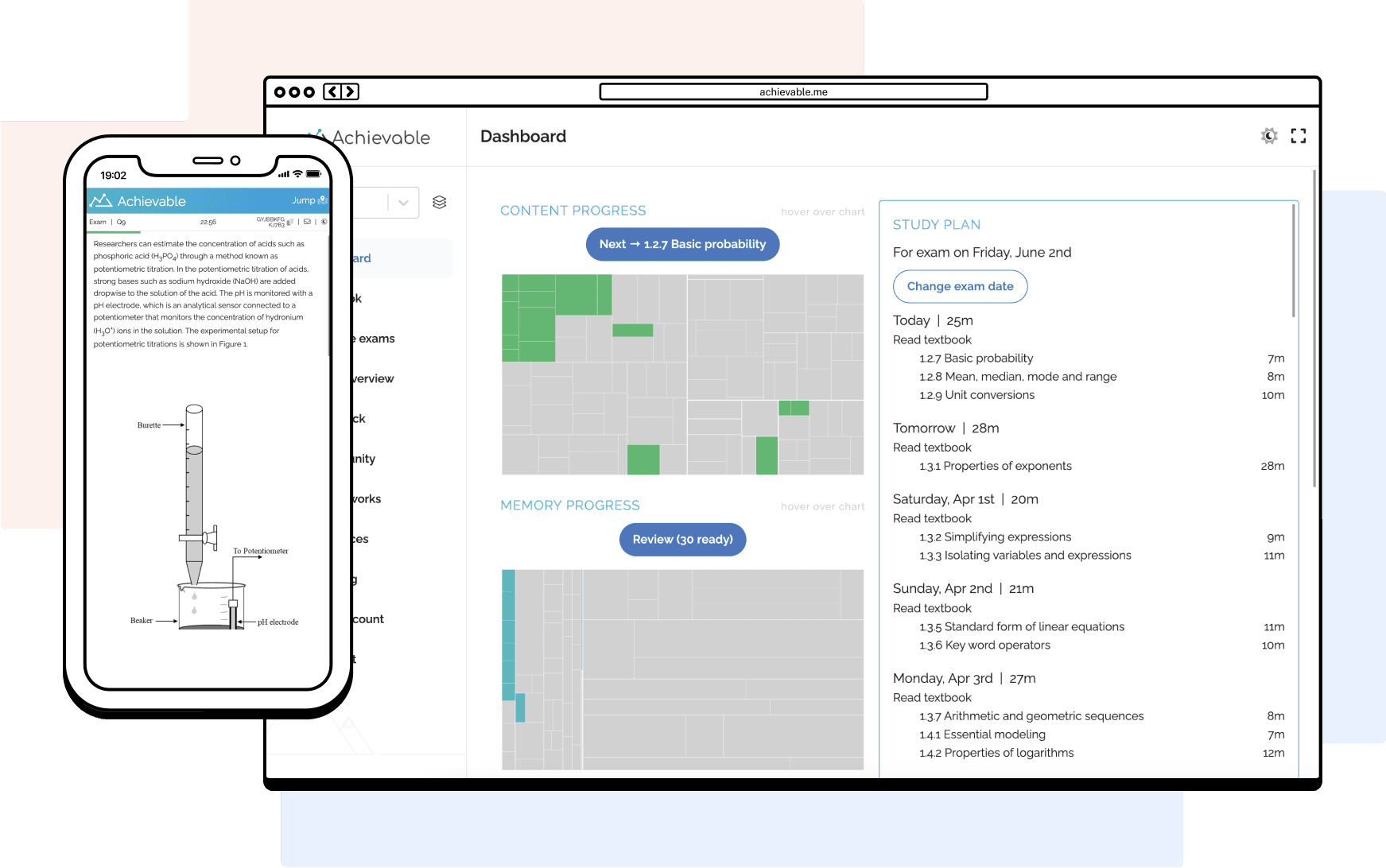
Guaranteed.Achievable is the best Property Insurance exam prep course: effective, personalized, and convenient. With Achievable, you'll spend less time studying and pass your exam the first time, or your money back.