

PTCB
study guide
Every chapter of the course summarized, with each section linked to its lesson.
Pass the first time
Try Achievable PTCE
No credit card required
This free PTCB study guide summarizes all 4 chapters of Achievable's PTCB course: what each covers, the points to remember, and its 54 sections in order. Read each chapter after you study it, or work through the whole guide before exam day.
Each section links to its full lesson in Achievable, with the review quizzes and full-length practice exams.
Chapter 1: Medications
42 sections
- Generic vs brand names: Generic name is the "chemical name" equivalent assigned by USAN Council, while brand name is the "trade name" equivalent chosen by manufacturer and patent-protected.
- Name structure matters: The stem usually appears at the end, prefix distinguishes drug within its class, and infix adds classification markers such as "-den-" in sildenafil.
- Bioequivalence rules: Generic drugs must match the brand drug in amount of active ingredient released, rate of release, and quality of release.
- Therapeutic equivalence: Therapeutic equivalence equals Bioequivalence + Pharmaceutical equivalence, and therapeutically equivalent drugs are substitutable.
- Orange Book codes: Approved Drug Products with Therapeutic Equivalence Evaluations is the FDA reference, with A codes generally substitutable and B codes needing further review before substitution.
- Core medical terms: Hypotension, bradycardia, tachycardia, thrombocytopenia, edema, hyperkalemia, diabetes mellitus, and QTc each describe specific cardiovascular, blood, metabolic, endocrine, or cardiac monitoring findings.
- Drug classes and schedules: Drug classes may be based on chemical structure, mechanism of action, therapeutic use, organ system, formulary category, or abuse potential, and DEA drug schedules I–V reflect medical use, abuse, and dependency potential.
- Interactions, safety, and forms: Drug interactions, contraindications, organ-system medications, dosage forms, routes of administration, storage, and adverse effects all affect how medications are used, handled, and monitored.
In this chapter
- Generic names and brand namesFree
- Medical terminology
- Classification of medications
- Drug interactions and contraindications
- Medications by organ system
- Anti-neoplastic drugs
- Antimicrobials
- Drugs of the endocrine and reproductive system
- Respiratory system
- Drugs of the cardiovascular system
- Gastrointestinal (digestive) system
- Drugs of the nervous system
- Drugs of the urinary, integumentary, and musculoskeletal systems
- Drug strengths, dose, and dosage forms
- Routes of administration and special handling of drugs
- Medication side effects, adverse effects and allergies
- Indications of medications and dietary supplements
- Drug stability
- Narrow therapeutic index (NTI) medications
- Pharmaceutical incompatibilities
- Proper storage of medicationsFree
- Vaccine types and schedules
Start this chapter free
Chapter 2: Patient safety and quality assurance
2 sections
- LASA medications: Drugs with similar names, packaging, or strengths are prone to confusion, and tall man lettering, color coding, detailed prescriptions, and separate storage help prevent errors.
- Medication error prevention: Medication errors and dispensing errors can happen at any stage, so use multiple patient identifiers, allergy and medication history, current drug information, barcoding, and precise labeling.
- Quality assurance measures: NDC and UPC identify drugs, errors must be reported through FDA, state boards, MedWatch, FAERS, or VAERS, and RCA, DUR, substitution, follow-up, and hygiene support safety.
In this chapter
Study this chapter in Achievable
Achievable PTCE
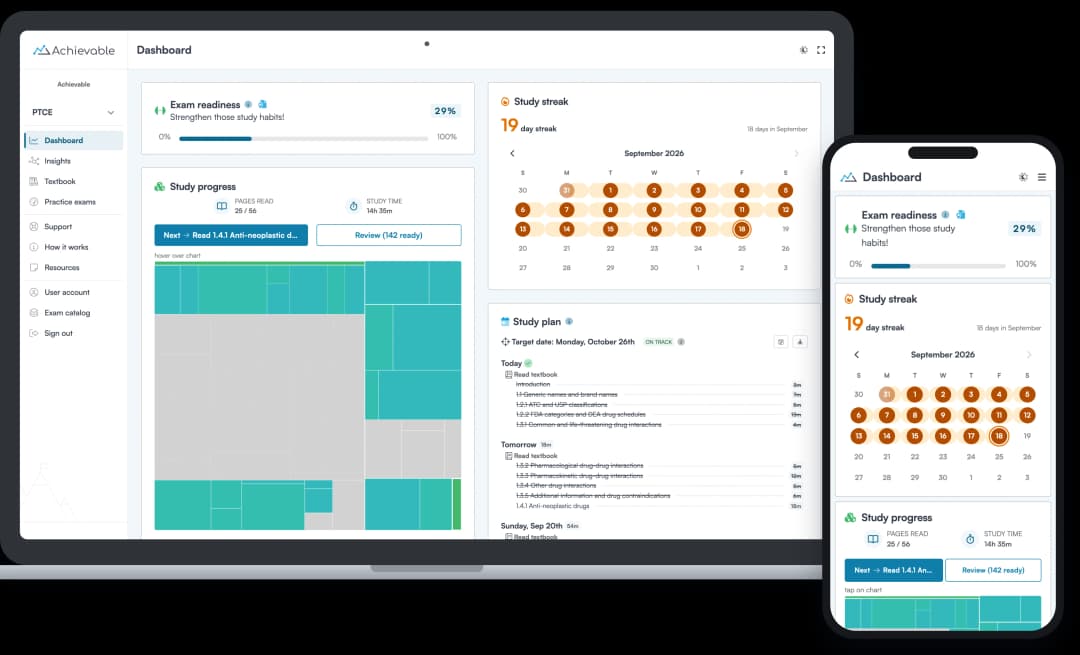
The PTCB exam (the Pharmacy Technician Certification Exam, or PTCE) is the most widely recognized exam for becoming a Certified Pharmacy Technician (CPhT). Achievable's interactive online PTCB exam prep course makes complex topics simple and engaging. Our adaptive platform and AI tutor personalize your study plan, while memory science ensures effective Pharmacy Tech prep that gets results.
4 full-length practice exams
910+ practice questions with explanations
Pass guaranteed, or your money back
Free first lessons, no credit card needed
Chapter 3: Order entry and processing
8 sections
- Compounding basics: Compounding combines, mixes, or alters ingredients for individual patient needs, and non-sterile products must follow laws and USP standards with proper authorization and documentation.
- Non-sterile methods: Powders, tablets, capsules, solutions, suspensions, ointments, pastes, suppositories, and enemas each use specific preparation methods, and spatulation mixes powders with semi-solids on a slab.
- Calculations and sigs: Conversions, concentrations, ratios, dilution, aliquot method, pediatric dosing, IV flow rates, IU, mEq/L, and sig codes guide accurate dosing, use, timing, routes, and frequency.
- Prescription processing: Intake includes prescription type, origin code, patient and prescriber details, DAW, allergies, insurance, days' supply, refill rules, controlled substance limits, and order entry with the correct NDC.
- Insurance and inventory: PBMs adjudicate claims, insurance identifiers route coverage, inventory uses FIFO, FEFO, JIT, ABC, PAR, and perpetual tracking, while expired or unclaimed medications are removed or returned.
Study this chapter in Achievable
Chapter 4: Federal requirements
2 sections
- Waste rules: RCRA governs solid and hazardous waste lifecycle, and hazardous waste is never flushed but placed in color-coded bins with PPE and proper sharps containers.
- Controlled substances: CSA schedules I-V control prescribing, transfers, refills, partial fills, inventory, and reporting through DEA forms, with storage in steel safe/vault and limited access.
- Other federal laws: PPPA, FDA laws, HIPAA, PDMPs, OBRA, REMS, CMEA, and the Ryan Haight Act set packaging, labeling, privacy, counseling, monitoring, and access requirements.
In this chapter
Study this chapter in Achievable
PTCB exam at a glance
- Questions
- 80 scored + 10 unscored multiple-choice questions
- Time
- 2 hours
- Passing score
- 1,400 / 1,600
- Exam fee
- $129
More on the PTCB exam
- PTCB exam prep courseAchievable's course: online textbook, review quizzes and full-length practice exams.
- PTCB exam format, content and scoringWhat's tested, how long it takes, what it costs, and the score you need to pass.
- Free PTCB practice examPractice questions written to match the real thing, with an explanation for every answer.
- PTCB FAQThe questions asked most about the exam and preparing for it, answered.
- Best PTCB exam prep coursesHow the leading providers compare on content, format and price.
- PTCB study resourcesGuides and study advice from Achievable's instructors.
Pass the PTCE. Guaranteed.
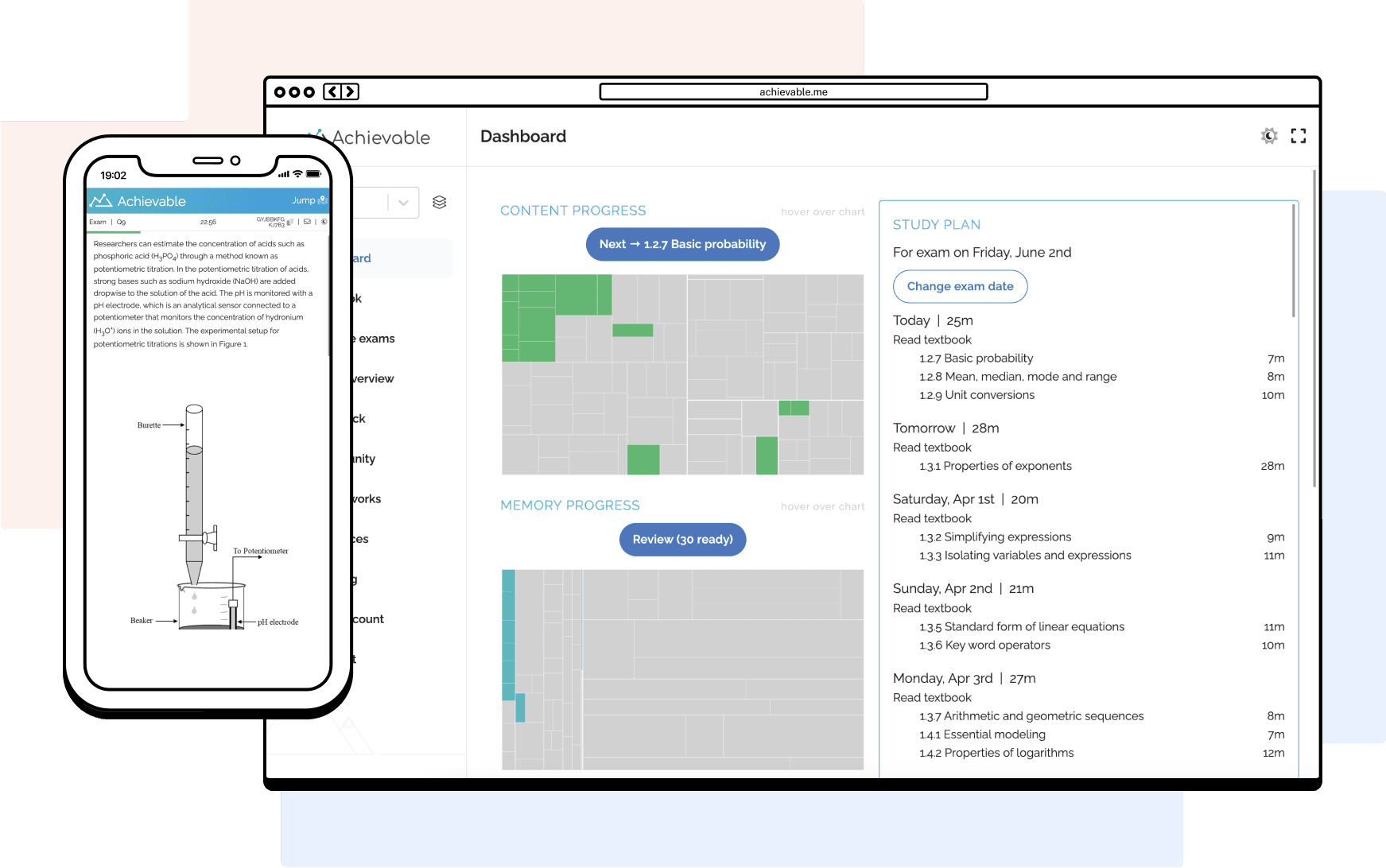
Achievable is the best PTCE exam prep course: effective, personalized, and convenient. With Achievable, you'll spend less time studying and pass your exam the first time, or your money back.