CLT Colleges inMinnesota
CLT Colleges in Minnesota
A growing number of U.S. colleges in Minnesota now recognize the Classic Learning Test (CLT) for undergraduate admissions, making it a compelling option alongside conventional standardized exams. A relatively recent addition to college admissions testing, the CLT distinguishes itself through its focus on text-based analysis.
As of 2025, over 300 schools accept the CLT, with more universities nationwide adopting this exam each year. If you are considering applying to faith-based liberal arts institutions, many of these schools now accept the exam as part of their application process. For students seeking broader options, the number of colleges that consider CLT scores has rapidly expanded.
Below is a comprehensive list of colleges in Minnesota currently accepting the CLT, including details on average accepted scores, tuition rates, and campus locations. In this guide, you’ll find everything you’ll need to compare your college options and begin your test preparation confidently.
What is the CLT?
The CLT is a college entrance exam grounded in the values and principles of a traditional liberal arts education. Launched in 2015, the exam is unique for its focus on history, literature, philosophy, and mathematical logic, drawing heavily upon the Western intellectual tradition. The test differs from other college admissions exams in that it requires students to analyze longer texts written by canonical authors, philosophers, and scholars. If you take the CLT, you’re likely to encounter passages from works by Aristotle, Plato, Frederick Douglass, Jane Austen, and other great writers of the past. Students can take this exam in their junior or senior year instead of the more common SAT or ACT, and it is considered as rigorous in measuring the reading, grammar, and mathematical skills needed for undergraduate studies. Despite the exam’s focus on traditional content, the CLT adopts a modern approach to test-taking by being primarily administered online.
The test also diverges from other exams by asking students to go beyond basic comprehension and truly connect with the works presented. Jeremy Tate, the instructor and CEO of the CLT, found that having students engage directly with enriching literature enabled them to derive deeper meaning from the material. As a teacher, he observed that contemporary education pushes students to focus on achieving high scores on assignments and tests without fully engaging with the content taught. He describes the exam’s method as follows:
“The work we are doing puts the very best texts in front of students…Give them something that deserves their attention, and they will respond.”
The test emphasizes philosophical inquiry, prompting students to consider the relevance of each passage to everyday life.
In addition to assessing core academic competencies, the CLT requires students to apply higher-order thinking and evaluative skills to each question. The test’s emphasis on logical inference, reasoning, and reflective judgment helps students improve their analytical proficiency and enhances the test-taking experience. Classic texts can be dense and difficult to parse, but the skills gained through rigorous, argumentative analysis are both crucial and timeless.
Why take the CLT?
The CLT is a fantastic option for students who excel at complex textual analysis and classical approaches to learning. For students who love classic literature and writing, the CLT offers an enriching examination that aligns with their strengths and interests. While success on the ACT and the SAT relies more on skills gained through standard instruction, the CLT takes test-taking a step further by emphasizing critical and logical thinking, even within the quantitative section.
For students from non-traditional educational backgrounds, such as those who are homeschooled or attend faith-based high schools, the CLT assessment may offer an advantage. The test is designed specifically for those who have been taught using more holistic, text-based curricula than those found in conventional schooling.
The exam also offers unmatched flexibility: at about two hours, the CLT is much shorter than the ACT (with all sections). The test is also offered more frequently throughout the year than other exams and can be taken either at home or in a proctored setting. Remote proctoring offers a convenient, accessible option not available for the SAT or ACT.
The most important factor to consider, however, is school choice, as the number of institutions that accept the CLT at this time is limited. However, the CLT offers a great alternative for those set on applying to specialized schools that also place a strong emphasis on traditional learning.
Which colleges accept the CLT?
The CLT primarily opens up opportunities at smaller colleges with curricula steeped in cultural and historical analysis. Students who are committed to attending a private, religious institution, such as Liberty University, Texas Christian University, or Wheaton College, should strongly consider taking the CLT to demonstrate the skills valued by these schools.
In 2024, thirty Christian colleges in the U.S. experienced significant enrollment growth, bucking the national trend of declining undergraduate matriculation rates following the COVID-19 pandemic. As interest in faith-based learning grows, the importance and relevance of the CLT in college admissions continues to rise.
While most schools that accept the CLT fill a particular niche, taking the exam does not preclude admission at a larger research institution, such as the University of Florida. U.S. service academies that train future military officers will begin accepting the CLT in 2027, further expanding options for those who choose to take it. While the majority of schools that accept the exam are located in the U.S., a growing number of international schools are now entering partnerships with the CLT.
List of CLT colleges
Familiarizing yourself with the colleges that accept the CLT can help you decide if the exam is right for you and assess your options when applying to schools. Each listing features key information, including average CLT scores, school location, annual tuition, and total cost of attendance. Brief descriptions and direct homepage links are included, making it easy to learn more about each university’s distinctive programs, academic opportunities, and admissions requirements.
Scroll down to discover the schools that meet your criteria and align with your academic goals:
Bethel University, MN cost and key information


Bethlehem College and Seminary cost and key information
Crown College cost and key information


Free Lutheran Bible College cost and key information


Saint Mary’s University of Minnesota cost and key information



St. Olaf College cost and key information
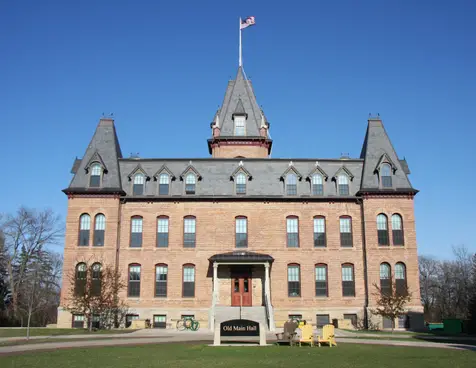

University of Northwestern – St. Paul cost and key information
University of St. Thomas – Catholic Studies cost and key information


CLT scoring is straightforward: the test contains 120 multiple-choice questions, each worth one point. Each individual section of the exam contributes up to 40 points toward your overall score. The average CLT score falls between 75 and 80, and a score above 90 is considered competitive.
There are three main parts of the exam, not including an optional essay, which cover foundational skills for undergraduate admission:
- Verbal Reasoning (40 questions)
- Grammar and Writing (40 questions)
- Quantitative Reasoning (40 questions)
Each section is further divided into content domains. For Verbal Reasoning, the two main subsections are Analysis and Comprehension, which include questions on interpreting and comparing passages. For Grammar/Writing, the corresponding sections require students to answer questions on agreement, punctuation, sentence structure, style, and word choice. Algebra, Geometry, and Mathematical Reasoning make up the mathematical content covered in the Quantitative Reasoning section.
The official CLT concordance table helps test-takers understand how CLT scores translate to scores on the ACT and SAT, the two exams most frequently used for college admission decisions. For example, a score of 70 on the CLT corresponds to a 1080 on the SAT or a 21 on the ACT, both of which fall within the 60th–70th percentile on each test.
The table below lists CLT scores in intervals of 20 alongside corresponding ranges of SAT and ACT scores:
| CLT interval | SAT range | ACT range |
|---|---|---|
| 0 – 19 | 510 – 650 | 9 – 11 |
| 20 – 39 | 660 – 820 | 11 – 14 |
| 40 – 59 | 830 – 1000 | 15 – 19 |
| 60 – 79 | 1000 – 1160 | 19 – 24 |
| 80 – 99 | 1170 – 1380 | 24 – 30 |
| 100 – 120 | 1390 – 1600 | 31 – 36 |
Because the ACT and SAT are more widely used for college admissions, students can use the table above to gauge how their CLT scores compare with those of a larger group. If you’re deciding between exams for your college applications, start by taking ACT, SAT, and CLT practice tests and comparing your scores. You might find that the CLT’s structure and content are a better fit, even if the SAT and ACT are more widely accepted.
All colleges that recognize the CLT also take SAT or ACT scores. The SAT and ACT remain the most widely used undergraduate admissions exams, focusing primarily on technical math, grammar, and reading knowledge. The choice of which test or tests to take depends heavily on your assessment preferences and the variety of schools you’re applying to. If you’ve narrowed your list down to schools that partner with the CLT, then you will not need to take an additional exam.
To register for the CLT exam, begin by creating an online account through the official CLT website. Once your account is set up, you can register for the CLT by selecting the appropriate exam. Be sure to choose carefully, as the CLT3-8 test and CLT10 exam are designed for younger students. The online registration platform allows you to pick your preferred CLT test date, decide whether to take the exam in-person or remotely, and securely pay your exam fee to finalize your registration.
For the best results on the CLT exam, plan to dedicate at least 3 – 4 months to focused preparation; consistent studying and practice will maximize your potential for achieving a top score.
Conclusion
The CLT caters to college applicants who value rigorous academics and classical learning; it goes beyond rote memorization, focusing on interpretive and analytical skills over other tests. Some of the leading religious and liberal arts institutions in the U.S. accept the CLT exam as part of their admissions process. The schools listed above in Minnesota offer excellent choices for students seeking a college community rooted in traditional learning and values. With the exam growing in popularity and the scope of schools accepting CLT scores expanding, students who take the test now have more options than ever.
For more information on the exam and preparation tips, visit our CLT course guide and exam overview.
Interested in CLT colleges in other states?