Achievable logo
Table of contents
Achievable blue logo on white background

CLT Colleges in
Pennsylvania

Achievable blue logo on white background

CLT Colleges in Pennsylvania

A growing number of U.S. colleges in Pennsylvania now recognize the Classic Learning Test (CLT) for undergraduate admissions, making it a compelling option alongside conventional standardized exams. A relatively recent addition to college admissions testing, the CLT distinguishes itself through its focus on text-based analysis.

As of 2025, over 300 schools accept the CLT, with more universities nationwide adopting this exam each year. If you are considering applying to faith-based liberal arts institutions, many of these schools now accept the exam as part of their application process. For students seeking broader options, the number of colleges that consider CLT scores has rapidly expanded.

Below is a comprehensive list of colleges in Pennsylvania currently accepting the CLT, including details on average accepted scores, tuition rates, and campus locations. In this guide, you’ll find everything you’ll need to compare your college options and begin your test preparation confidently.

What is the CLT?

The CLT is a college entrance exam grounded in the values and principles of a traditional liberal arts education. Launched in 2015, the exam is unique for its focus on history, literature, philosophy, and mathematical logic, drawing heavily upon the Western intellectual tradition. The test differs from other college admissions exams in that it requires students to analyze longer texts written by canonical authors, philosophers, and scholars. If you take the CLT, you’re likely to encounter passages from works by Aristotle, Plato, Frederick Douglass, Jane Austen, and other great writers of the past. Students can take this exam in their junior or senior year instead of the more common SAT or ACT, and it is considered as rigorous in measuring the reading, grammar, and mathematical skills needed for undergraduate studies. Despite the exam’s focus on traditional content, the CLT adopts a modern approach to test-taking by being primarily administered online.

The test also diverges from other exams by asking students to go beyond basic comprehension and truly connect with the works presented. Jeremy Tate, the instructor and CEO of the CLT, found that having students engage directly with enriching literature enabled them to derive deeper meaning from the material. As a teacher, he observed that contemporary education pushes students to focus on achieving high scores on assignments and tests without fully engaging with the content taught. He describes the exam’s method as follows:

“The work we are doing puts the very best texts in front of students…Give them something that deserves their attention, and they will respond.”

The test emphasizes philosophical inquiry, prompting students to consider the relevance of each passage to everyday life.

In addition to assessing core academic competencies, the CLT requires students to apply higher-order thinking and evaluative skills to each question. The test’s emphasis on logical inference, reasoning, and reflective judgment helps students improve their analytical proficiency and enhances the test-taking experience. Classic texts can be dense and difficult to parse, but the skills gained through rigorous, argumentative analysis are both crucial and timeless.

Why take the CLT?

The CLT is a fantastic option for students who excel at complex textual analysis and classical approaches to learning. For students who love classic literature and writing, the CLT offers an enriching examination that aligns with their strengths and interests. While success on the ACT and the SAT relies more on skills gained through standard instruction, the CLT takes test-taking a step further by emphasizing critical and logical thinking, even within the quantitative section.

For students from non-traditional educational backgrounds, such as those who are homeschooled or attend faith-based high schools, the CLT assessment may offer an advantage. The test is designed specifically for those who have been taught using more holistic, text-based curricula than those found in conventional schooling.

The exam also offers unmatched flexibility: at about two hours, the CLT is much shorter than the ACT (with all sections). The test is also offered more frequently throughout the year than other exams and can be taken either at home or in a proctored setting. Remote proctoring offers a convenient, accessible option not available for the SAT or ACT.

The most important factor to consider, however, is school choice, as the number of institutions that accept the CLT at this time is limited. However, the CLT offers a great alternative for those set on applying to specialized schools that also place a strong emphasis on traditional learning.

Which colleges accept the CLT?

The CLT primarily opens up opportunities at smaller colleges with curricula steeped in cultural and historical analysis. Students who are committed to attending a private, religious institution, such as Liberty University, Texas Christian University, or Wheaton College, should strongly consider taking the CLT to demonstrate the skills valued by these schools.

In 2024, thirty Christian colleges in the U.S. experienced significant enrollment growth, bucking the national trend of declining undergraduate matriculation rates following the COVID-19 pandemic. As interest in faith-based learning grows, the importance and relevance of the CLT in college admissions continues to rise.

While most schools that accept the CLT fill a particular niche, taking the exam does not preclude admission at a larger research institution, such as the University of Florida. U.S. service academies that train future military officers will begin accepting the CLT in 2027, further expanding options for those who choose to take it. While the majority of schools that accept the exam are located in the U.S., a growing number of international schools are now entering partnerships with the CLT.

List of CLT colleges

Familiarizing yourself with the colleges that accept the CLT can help you decide if the exam is right for you and assess your options when applying to schools. Each listing features key information, including average CLT scores, school location, annual tuition, and total cost of attendance. Brief descriptions and direct homepage links are included, making it easy to learn more about each university’s distinctive programs, academic opportunities, and admissions requirements.

Scroll down to discover the schools that meet your criteria and align with your academic goals:

Alvernia University cost and key information
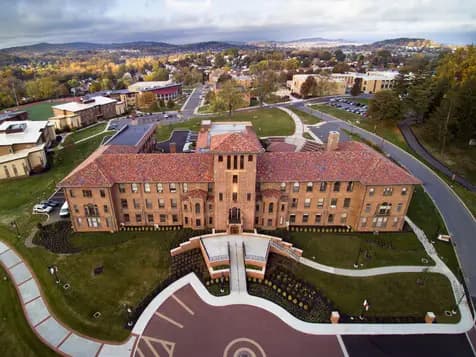
Alvernia University acceptance rate is 74.5%. The average SAT Reading and Writing score for Alvernia University is 530, and the Math score is 520. The average SAT composite score is 525. The average ACT composite score is 21. The average CLT Verbal Reasoning score is 44, and the Quantitative Reasoning score is 18. The average CLT composite score is 66. The tuition fee is $22,425 and the total cost is $44,850. Learn more on the tuition page.
Alvernia University
Alvernia University, a Franciscan university in Reading, Pennsylvania, emphasizes moral leadership and experiential learning. Founded in 1958 and granted university status in 2008, it offers 50+ undergraduate majors, pre-professional programs, and a variety of graduate degrees with an emphasis on academic achievement. Accredited by respected bodies, Alvernia blends liberal arts with professional preparation. The 121-acre campus, which is located near major cities such as Philadelphia and New York, is home to 3,000 students. Its Golden Wolves, originally known as the Crusaders, compete in NCAA Division III athletics in a variety of men's and women's sports, sustaining a strong athletic tradition.

Cairn University cost and key information
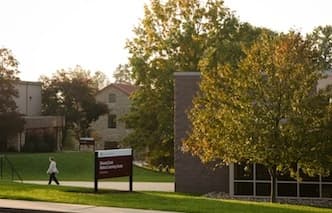
Cairn University acceptance rate is 74%. The average SAT Reading and Writing score for Cairn University is 590, and the Math score is 580. The average SAT composite score is 1190. The average ACT composite score is 24. The average CLT Verbal Reasoning score is 53, and the Quantitative Reasoning score is 23. The average CLT composite score is 82. The tuition fee is $16,997 and the total cost is $23,996. Learn more on the tuition page.
Cairn University
Desteini at English Wikipedia / Wikimedia Commons / "Cairn University, campus including BLC and Music Building, fall 2012" / CC BY-SA 3.0
Cairn University, founded in 1913, is a private Christian institution in Langhorne, Pennsylvania, with an undergraduate enrollment of 820. Offering over 70 academic programs, Cairn provides degrees in business, education, ministry, music, social work, and theology, with a strong emphasis on biblical integration. The university’s athletic teams, known as the Highlanders, compete in 12 sports within the United East Conference, NCAA, and NCCAA. The men's soccer team has won seven NCCAA Division II National Championships. Cairn also offers graduate programs and dual-degree options, maintaining a commitment to preparing students for professional service with a foundation in Christian faith and academic excellence.

Eastern University cost and key information

Eastern University acceptance rate is 68.4%. The average SAT Reading and Writing score for Eastern University is 555, and the Math score is 540. The average SAT composite score is 548. The average ACT composite score is 21. The average CLT Verbal Reasoning score is 47, and the Quantitative Reasoning score is 20. The average CLT composite score is 72. The tuition fee is $18,840 and the total cost is $21,917. Learn more on the tuition page.
Eastern University
Eastern University, a Christian institution founded in 1925, emphasizes Faith, Reason, and Justice. With 7,000 students enrolled in programs ranging from undergraduate to graduate to seminary, it promotes transformative education via service learning and vibrant campus communities. The institution, now Eastern University, is rooted in St. Davids, PA, and evolved from Eastern Baptist Theological Seminary. It encourages holistic student growth. Accredited programs encompass the arts, business, education, health sciences, and theology on a 114-acre campus that blends historical and modern structures. Eastern's NCAA Division III sports teams, the Eagles, promote a well-rounded student experience. Notable graduates are examples of social participation and professional success.

Geneva College cost and key information
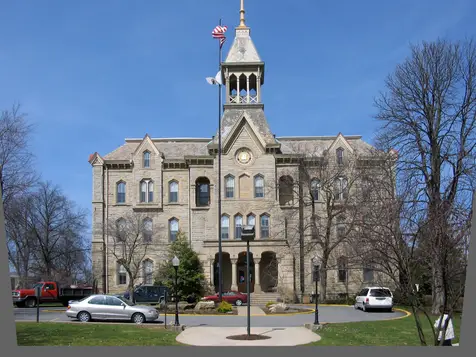
Geneva College acceptance rate is 63.3%. The average SAT Reading and Writing score for Geneva College is 567, and the Math score is 560. The average SAT composite score is 564. The average ACT composite score is 23. The average CLT Verbal Reasoning score is 49, and the Quantitative Reasoning score is 21. The average CLT composite score is 75. The tuition fee is $16,490 and the total cost is $23,090. Learn more on the tuition page.
Geneva College
Geneva College, a Christ-centered academic community in Pennsylvania, offers more than 80 traditional undergraduate programs, Adult Degree Programs, and highly sought-after graduate degrees. It is ranked as a Top Three Best Value Regional University, with a core curriculum that stresses Scripture truth and prepares students for today's issues. Founded in 1848 in Ohio, it relocated to Beaver Falls in 1881 and built its campus. Professors incorporate faith and experience into their classroom instruction. Academics include arts, sciences, and an adult degree completion program. Geneva's athletics, the Golden Tornadoes, compete in a variety of sports and are members of both the NCAA Division III and the NCCAA Division I.

Grove City College cost and key information
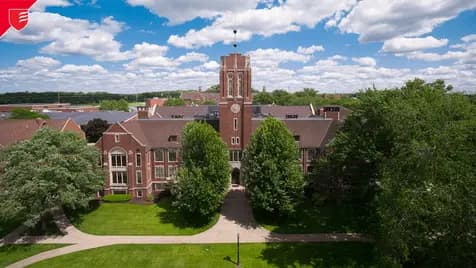
Grove City College acceptance rate is 92.9%. The average SAT Reading and Writing score for Grove City College is 631, and the Math score is 570. The average SAT composite score is 601. The average ACT composite score is 27. The average CLT Verbal Reasoning score is 59, and the Quantitative Reasoning score is 22. The average CLT composite score is 83. The tuition fee is $22,570 and the total cost is $35,290. Learn more on the tuition page.
Grove City College
Grove City College, a private Christian liberal arts college founded in 1876, promotes a Christ-centered education by offering 60 majors and robust ABET-accredited programs. Faculty influence is felt in economic conservatism and libertarian think groups. It is based on the Austrian School of Economics and hosts the Austrian Student Scholars Conference as well as the writings of Ludwig von Mises. The athletic Wolverines play in NCAA Division III and excel in a variety of sports. Noteworthy alumni span music, philosophy, law, economics, and sports, contributing significantly to their respective fields.

Lancaster Bible College cost and key information

Lancaster Bible College acceptance rate is 57%. The average SAT Reading and Writing score for Lancaster Bible College is 580, and the Math score is 550. The average SAT composite score is 565. The average ACT composite score is 23. The average CLT Verbal Reasoning score is 51, and the Quantitative Reasoning score is 21. The average CLT composite score is 75. The tuition fee is $29,990 and the total cost is $48,479. Learn more on the tuition page.
Lancaster Bible College
Lancaster Bible College | Capital Seminary and Graduate School provides a thorough, biblically based education through a variety of programs, including non-credit courses, undergraduate, master's, and doctoral degrees. Founded in 1933 as the Lancaster School of the Bible, it relocated to its current building in 1957 and has since acquired clearance for additional degree offerings. The institution operates from its main campus in Lancaster, Pennsylvania, with additional sites in Maryland and Philadelphia, providing a diverse range of programs for students of different backgrounds. It is accredited by a number of recognized organizations and stresses experiential learning while preparing graduates for service-oriented leadership. The athletic teams at the college play in numerous leagues, and the college also manages The Trust Performing Arts Center in downtown Lancaster.

Messiah College cost and key information

Messiah College acceptance rate is 78.9%. The average SAT Reading and Writing score for Messiah College is 602, and the Math score is 600. The average SAT composite score is 601. The average ACT composite score is 26. The average CLT Verbal Reasoning score is 54, and the Quantitative Reasoning score is 24. The average CLT composite score is 83. The tuition fee is $42,540 and the total cost is $56,345. Learn more on the tuition page.
Messiah College
Messiah University, founded in 1909 by the Brethren in Christ Church, is a notable private Christian college in central Pennsylvania with a 375-acre campus. Originally a Bible school, it expanded to include liberal arts departments before becoming a university. While retaining evangelical roots, it welcomes students from various Christian traditions. Academically, it provides over 150 undergraduate majors, minors, and graduate programs with a strong emphasis on off-campus study and diverse academic honors. Athletic excellence is a hallmark, particularly in soccer, with a notable commitment to spiritual life through chapel services and community covenant adherence.

Messiah University cost and key information

Messiah University acceptance rate is 78%. The average SAT Reading and Writing score for Messiah University is 670, and the Math score is 670. The average SAT composite score is 1340. The average ACT composite score is 30. The average CLT Verbal Reasoning score is 64, and the Quantitative Reasoning score is 30. The average CLT composite score is 96. The tuition fee is $42,540 and the total cost is $56,345. Learn more on the tuition page.
Messiah University
Krishardy83 / Wikimedia Commons / "Messiah College - Fall 2016" / CC BY-SA 4.0
Messiah University, founded in 1909, is a private Christian university in Mechanicsburg, Pennsylvania, with a 471-acre campus near Harrisburg. It offers over 80 undergraduate majors, 21 graduate programs, and a rigorous Honors Program. With a 72.2% four-year graduation rate, Messiah provides strong academic and career preparation, boasting a 99% placement rate for 2023 graduates. The Falcons have won 35 NCAA Division III championships, including four dual national soccer titles. All undergraduates receive financial aid, with an average package of $33,440. Recognized for academic excellence and value, Messiah integrates faith, leadership, and service into its mission of preparing students for impactful careers.
Achievable blue logo on white background
Achievable CLT - $99
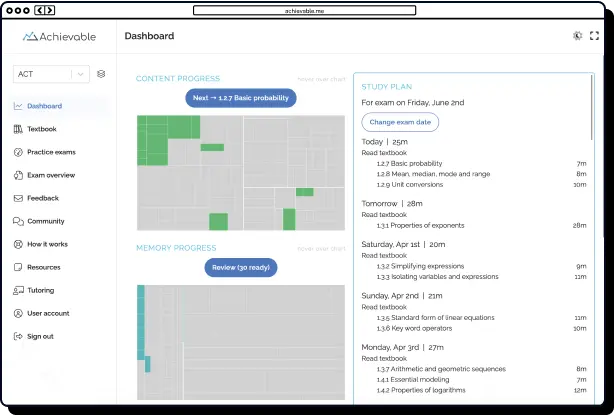
Prepare with the best online CLT self-study prep course. Built for today's students: mobile, guided, and personally optimized.
Easy-to-understand online textbook
Full practice exams
Adaptive study planner
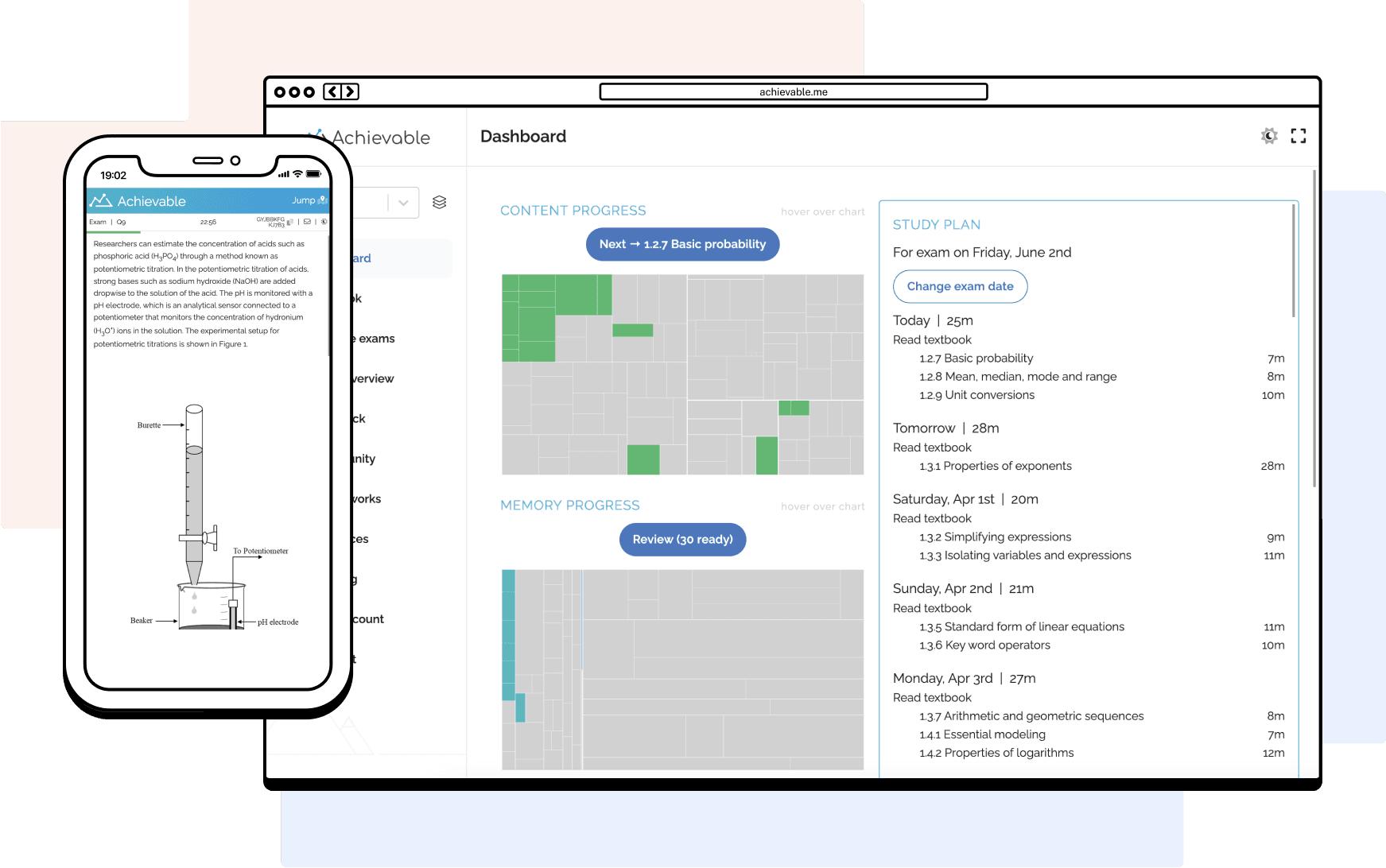
Laptop displaying the Achievable exam prep dashboard and a smartphone displaying a quiz question

Mount Aloysius College cost and key information
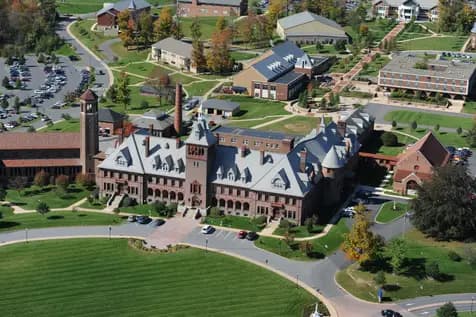
Mount Aloysius College acceptance rate is 60.9%. The average SAT Reading and Writing score for Mount Aloysius College is 520, and the Math score is 520. The average SAT composite score is 520. The average ACT composite score is 20. The average CLT Verbal Reasoning score is 42, and the Quantitative Reasoning score is 18. The average CLT composite score is 65. The tuition fee is $26,156 and the total cost is $35,768. Learn more on the tuition page.
Mount Aloysius College
Mount Aloysius College, a Catholic institution rooted in the Sisters of Mercy tradition, offers a comprehensive, career-focused education in Pennsylvania. It began as a junior college in 1853 and has since grown to provide bachelor's and master's degrees. The academic, residential, and student life buildings are spread across 193 picturesque acres in the Allegheny Mountains. It promotes personalized learning through a varied selection of programs and a low student-to-faculty ratio. The college has cutting-edge athletic and wellness facilities and competes in 16 NCAA Division III sports. Patricia Egan Jones, a renowned politician, is among the notable alumni.

Neumann University cost and key information

Neumann University acceptance rate is 96.3%. The average SAT Reading and Writing score for Neumann University is 489, and the Math score is 490. The average SAT composite score is 490. The average ACT composite score is 18. The average CLT Verbal Reasoning score is 37, and the Quantitative Reasoning score is 16. The average CLT composite score is 57. The tuition fee is $37,020 and the total cost is $56,640. Learn more on the tuition page.
Neumann University
Neumann University, founded in 1965, is a Franciscan institution that promotes respect, environmental awareness, and social responsibility. It has a 13:1 student-faculty ratio and offers a wide range of undergraduate, master's, and doctorate programs. The campus, located in the Delaware Valley near Philadelphia, gives easy access to cultural and sporting events. It is Middle States Commission accredited and has contemporary residence halls, several clubs, and 23 NCAA Division III sports teams. Neumann University offers a varied student body and a notable sporting heritage, including NCAA titles in ice hockey. There are three residence halls and rented apartments on campus, as well as living possibilities in a nearby convent.

Penn View Bible Institute cost and key information

The tuition fee is $2,394. Learn more on the tuition page.
Penn View Bible Institute (PVBI), founded in 1966 and governed by God's Missionary Church, is a nationally accredited four-year Bible college in Penns Creek, Pennsylvania. Accredited by the Association for Biblical Higher Education, PVBI offers Associate and Baccalaureate degrees in ministry-related fields. It also operates a K-12 Christian Academy. The campus features academic, residential, and recreational facilities, including the G.I. Straub Memorial Tabernacle, Miller Dining Center, and Mason/McIntire Student Life Center. PVBI is approved by the Pennsylvania Department of Education and the U.S. Department of Veterans Affairs. The school upholds Wesleyan-Arminian beliefs and focuses on training preachers, missionaries, teachers, and musicians.

Saint Vincent College cost and key information

Saint Vincent College acceptance rate is 68.4%. The average SAT Reading and Writing score for Saint Vincent College is 574, and the Math score is 560. The average SAT composite score is 567. The average ACT composite score is 23. The average CLT Verbal Reasoning score is 50, and the Quantitative Reasoning score is 21. The average CLT composite score is 75. The tuition fee is $41,180 and the total cost is $60,678. Learn more on the tuition page.
Saint Vincent College
Boniface Wimmer founded Saint Vincent College in 1846 as a private Benedictine college in Latrobe, Pennsylvania. It is made up of four schools that provide a variety of undergraduate and graduate degrees and are founded on Catholic religion and Benedictine traditions. With a strong emphasis on comprehensive education, the institution houses schools focused on Business, Social Sciences, Humanities, and Natural Sciences. It is well-known for holding the Pittsburgh Steelers' training camp while hosting NCAA Division III sports as the Bearcats. It maintains its commitment to great education by participating in rich traditions such as Founders Day and merging professional goals with broader life purposes.

St. Francis University cost and key information

St. Francis University acceptance rate is 73%. The average SAT Reading and Writing score for St. Francis University is 630, and the Math score is 610. The average SAT composite score is 1240. The average ACT composite score is 26. The average CLT Verbal Reasoning score is 59, and the Quantitative Reasoning score is 25. The average CLT composite score is 87. The tuition fee is $44,600 and the total cost is $55,232. Learn more on the tuition page.
St. Francis University
Darthgriz98 / Wikimedia Commons, / "Female Dorms at Saint Francis University" / Public domain
Saint Francis University (SFU) is a private Catholic university in Loretto, Pennsylvania, founded in 1847 by six Franciscan friars from Ireland. It is the oldest Franciscan college in the U.S. and among the first Catholic co-ed institutions. SFU offers 60+ undergraduate, graduate, and professional programs across four academic divisions. Its 600-acre campus houses research centers, a museum, and the historic Immergrün Golf Course. SFU competes in NCAA Division I as the Red Flash in the Northeast Conference. Recognized for value and impact, it boasts a 73.4% graduation rate and strong early career earnings of $62,101. The university also operates a campus in Ambialet, France.

St. Vincent College cost and key information

St. Vincent College acceptance rate is 74%. The average SAT Reading and Writing score for St. Vincent College is 640, and the Math score is 610. The average SAT composite score is 1255. The average ACT composite score is 28. The average CLT Verbal Reasoning score is 61, and the Quantitative Reasoning score is 25. The tuition fee is $41,180 and the total cost is $51,244. Learn more on the tuition page.
St. Vincent College
© Tom Fish, geo.fish
Saint Vincent College is a Catholic institution rooted in Benedictine traditions, offering undergraduate and graduate programs that integrate professional goals with broader life purposes. Graduate programs include education, business, and health sciences, such as a Doctor of Nurse Anesthesia Practice. The college emphasizes affordability and flexibility. St Vincent Secondary School, established in 1975, became Gosport Sixth Form College in 1990. The campus features a small museum, a gym, and sports teams, including hockey, football, netball, and ultimate frisbee. Sports facilities include a full-sized AstroTurf pitch, and the gym is available for both students and the local community.

University of Valley Forge cost and key information

University of Valley Forge acceptance rate is 78%. The average SAT Reading and Writing score for University of Valley Forge is 595, and the Math score is 575. The average SAT composite score is 1165. The average ACT composite score is 22. The average CLT Verbal Reasoning score is 53, and the Quantitative Reasoning score is 24. The average CLT composite score is 79. The tuition fee is $23,800 and the total cost is $36,990. Learn more on the tuition page.
The University of Valley Forge (UVF) is a private university near Phoenixville, Pennsylvania, affiliated with the Assemblies of God USA. Founded in 1932 as a summer Bible school, it evolved into Eastern Bible Institute in 1939 and later Northeast Bible College before moving to the former Valley Forge Army Hospital campus in 1976. It became Valley Forge Christian College and gained university status in 2014. UVF offers over 40 undergraduate and 10 graduate programs. The Patriots compete in NCAA Division III athletics, now in the United East Conference.

How is the CLT scored?

CLT scoring is straightforward: the test contains 120 multiple-choice questions, each worth one point. Each individual section of the exam contributes up to 40 points toward your overall score. The average CLT score falls between 75 and 80, and a score above 90 is considered competitive.

There are three main parts of the exam, not including an optional essay, which cover foundational skills for undergraduate admission:

  • Verbal Reasoning (40 questions)
  • Grammar and Writing (40 questions)
  • Quantitative Reasoning (40 questions)

Each section is further divided into content domains. For Verbal Reasoning, the two main subsections are Analysis and Comprehension, which include questions on interpreting and comparing passages. For Grammar/Writing, the corresponding sections require students to answer questions on agreement, punctuation, sentence structure, style, and word choice. Algebra, Geometry, and Mathematical Reasoning make up the mathematical content covered in the Quantitative Reasoning section.

How do CLT scores compare to the SAT and ACT?

The official CLT concordance table helps test-takers understand how CLT scores translate to scores on the ACT and SAT, the two exams most frequently used for college admission decisions. For example, a score of 70 on the CLT corresponds to a 1080 on the SAT or a 21 on the ACT, both of which fall within the 60th–70th percentile on each test.

The table below lists CLT scores in intervals of 20 alongside corresponding ranges of SAT and ACT scores:

CLT intervalSAT rangeACT range
0 – 19510 – 6509 – 11
20 – 39660 – 82011 – 14
40 – 59830 – 100015 – 19
60 – 791000 – 116019 – 24
80 – 991170 – 138024 – 30
100 – 1201390 – 160031 – 36

Because the ACT and SAT are more widely used for college admissions, students can use the table above to gauge how their CLT scores compare with those of a larger group. If you’re deciding between exams for your college applications, start by taking ACT, SAT, and CLT practice tests and comparing your scores. You might find that the CLT’s structure and content are a better fit, even if the SAT and ACT are more widely accepted.

Do CLT colleges also accept the SAT and ACT?

All colleges that recognize the CLT also take SAT or ACT scores. The SAT and ACT remain the most widely used undergraduate admissions exams, focusing primarily on technical math, grammar, and reading knowledge. The choice of which test or tests to take depends heavily on your assessment preferences and the variety of schools you’re applying to. If you’ve narrowed your list down to schools that partner with the CLT, then you will not need to take an additional exam.

How do I register for the CLT?

To register for the CLT exam, begin by creating an online account through the official CLT website. Once your account is set up, you can register for the CLT by selecting the appropriate exam. Be sure to choose carefully, as the CLT3-8 test and CLT10 exam are designed for younger students. The online registration platform allows you to pick your preferred CLT test date, decide whether to take the exam in-person or remotely, and securely pay your exam fee to finalize your registration.

For the best results on the CLT exam, plan to dedicate at least 3 – 4 months to focused preparation; consistent studying and practice will maximize your potential for achieving a top score.

Conclusion

The CLT caters to college applicants who value rigorous academics and classical learning; it goes beyond rote memorization, focusing on interpretive and analytical skills over other tests. Some of the leading religious and liberal arts institutions in the U.S. accept the CLT exam as part of their admissions process. The schools listed above in Pennsylvania offer excellent choices for students seeking a college community rooted in traditional learning and values. With the exam growing in popularity and the scope of schools accepting CLT scores expanding, students who take the test now have more options than ever.

For more information on the exam and preparation tips, visit our CLT course guide and exam overview.

Interested in CLT colleges in other states?
Achievable CLT dashboard
Hit your target score
Achievable is the best online CLT exam prep course: effective, personalized, and convenient. With Achievable, you'll spend less time studying and hit your target score with confidence.