Achievable logo
Table of contents
Achievable blue logo on white background

CLT Colleges in
California

Achievable blue logo on white background

CLT Colleges in California

A growing number of U.S. colleges in California now recognize the Classic Learning Test (CLT) for undergraduate admissions, making it a compelling option alongside conventional standardized exams. A relatively recent addition to college admissions testing, the CLT distinguishes itself through its focus on text-based analysis.

As of 2025, over 300 schools accept the CLT, with more universities nationwide adopting this exam each year. If you are considering applying to faith-based liberal arts institutions, many of these schools now accept the exam as part of their application process. For students seeking broader options, the number of colleges that consider CLT scores has rapidly expanded.

Below is a comprehensive list of colleges in California currently accepting the CLT, including details on average accepted scores, tuition rates, and campus locations. In this guide, you’ll find everything you’ll need to compare your college options and begin your test preparation confidently.

What is the CLT?

The CLT is a college entrance exam grounded in the values and principles of a traditional liberal arts education. Launched in 2015, the exam is unique for its focus on history, literature, philosophy, and mathematical logic, drawing heavily upon the Western intellectual tradition. The test differs from other college admissions exams in that it requires students to analyze longer texts written by canonical authors, philosophers, and scholars. If you take the CLT, you’re likely to encounter passages from works by Aristotle, Plato, Frederick Douglass, Jane Austen, and other great writers of the past. Students can take this exam in their junior or senior year instead of the more common SAT or ACT, and it is considered as rigorous in measuring the reading, grammar, and mathematical skills needed for undergraduate studies. Despite the exam’s focus on traditional content, the CLT adopts a modern approach to test-taking by being primarily administered online.

The test also diverges from other exams by asking students to go beyond basic comprehension and truly connect with the works presented. Jeremy Tate, the instructor and CEO of the CLT, found that having students engage directly with enriching literature enabled them to derive deeper meaning from the material. As a teacher, he observed that contemporary education pushes students to focus on achieving high scores on assignments and tests without fully engaging with the content taught. He describes the exam’s method as follows:

“The work we are doing puts the very best texts in front of students…Give them something that deserves their attention, and they will respond.”

The test emphasizes philosophical inquiry, prompting students to consider the relevance of each passage to everyday life.

In addition to assessing core academic competencies, the CLT requires students to apply higher-order thinking and evaluative skills to each question. The test’s emphasis on logical inference, reasoning, and reflective judgment helps students improve their analytical proficiency and enhances the test-taking experience. Classic texts can be dense and difficult to parse, but the skills gained through rigorous, argumentative analysis are both crucial and timeless.

Why take the CLT?

The CLT is a fantastic option for students who excel at complex textual analysis and classical approaches to learning. For students who love classic literature and writing, the CLT offers an enriching examination that aligns with their strengths and interests. While success on the ACT and the SAT relies more on skills gained through standard instruction, the CLT takes test-taking a step further by emphasizing critical and logical thinking, even within the quantitative section.

For students from non-traditional educational backgrounds, such as those who are homeschooled or attend faith-based high schools, the CLT assessment may offer an advantage. The test is designed specifically for those who have been taught using more holistic, text-based curricula than those found in conventional schooling.

The exam also offers unmatched flexibility: at about two hours, the CLT is much shorter than the ACT (with all sections). The test is also offered more frequently throughout the year than other exams and can be taken either at home or in a proctored setting. Remote proctoring offers a convenient, accessible option not available for the SAT or ACT.

The most important factor to consider, however, is school choice, as the number of institutions that accept the CLT at this time is limited. However, the CLT offers a great alternative for those set on applying to specialized schools that also place a strong emphasis on traditional learning.

Which colleges accept the CLT?

The CLT primarily opens up opportunities at smaller colleges with curricula steeped in cultural and historical analysis. Students who are committed to attending a private, religious institution, such as Liberty University, Texas Christian University, or Wheaton College, should strongly consider taking the CLT to demonstrate the skills valued by these schools.

In 2024, thirty Christian colleges in the U.S. experienced significant enrollment growth, bucking the national trend of declining undergraduate matriculation rates following the COVID-19 pandemic. As interest in faith-based learning grows, the importance and relevance of the CLT in college admissions continues to rise.

While most schools that accept the CLT fill a particular niche, taking the exam does not preclude admission at a larger research institution, such as the University of Florida. U.S. service academies that train future military officers will begin accepting the CLT in 2027, further expanding options for those who choose to take it. While the majority of schools that accept the exam are located in the U.S., a growing number of international schools are now entering partnerships with the CLT.

List of CLT colleges

Familiarizing yourself with the colleges that accept the CLT can help you decide if the exam is right for you and assess your options when applying to schools. Each listing features key information, including average CLT scores, school location, annual tuition, and total cost of attendance. Brief descriptions and direct homepage links are included, making it easy to learn more about each university’s distinctive programs, academic opportunities, and admissions requirements.

Scroll down to discover the schools that meet your criteria and align with your academic goals:

Biola University cost and key information

Biola University acceptance rate is 60%. The average SAT Reading and Writing score for Biola University is 690, and the Math score is 670. The average SAT composite score is 1360. The average ACT composite score is 30. The average CLT Verbal Reasoning score is 67, and the Quantitative Reasoning score is 30. The average CLT composite score is 97. The tuition fee is $50,904 and the total cost is $62,694. Learn more on the tuition page.
Biola University
Loren_Kerns / Flickr / "Biola University campus tour" / CC BY-NC-ND 2.0
Biola University, founded in 1908 as the Bible Institute of Los Angeles, is a nationally ranked Christian university in La Mirada, California. It offers biblically centered education with over 150 academic programs across eight schools, including the Crowell School of Business and Talbot School of Theology. All students take 30 Bible units, and the faculty, staff, and students are professing Christians. Biola is an NCAA Division II member, competing as the Eagles. It’s known for conservative theology, academic excellence, and spiritual development. With over 6,000 students, Biola integrates faith and learning, preparing graduates to impact the world for Christ.

California Baptist University cost and key information

California Baptist University acceptance rate is 77.1%. The average SAT Reading and Writing score for California Baptist University is 550, and the Math score is 540. The average SAT composite score is 545. The average ACT composite score is 21. The average CLT Verbal Reasoning score is 46, and the Quantitative Reasoning score is 20. The average CLT composite score is 71. The tuition fee is $40,638 and the total cost is $55,766. Learn more on the tuition page.
California Baptist University
Spatms / Wikimedia Commons / "CBU Events Center (Riverside, California)" / CC BY-SA 4.0
California Baptist University (CBU) in Riverside, founded in 1950, is a private Baptist Christian university affiliated with the California Southern Baptist Convention. With programs ranging from associate's to doctoral degrees, CBU provides a Christ-centered education that merges academics, spirituality, and social development. CBU stresses community involvement and spiritual growth on its 162-acre campus. CBU became a university in 1998 after being recognized for academic achievement, a diverse student body, and a successful NCAA Division I athletic program. The Events Center and Troesh Engineering Building are two notable campus additions. CBU, which is WASC accredited, is dedicated to its Christian mission.

Hildegard College cost and key information

The tuition fee is $16,000. Learn more on the tuition page.
Hildegard College, located in Costa Mesa, CA, is a unique blend of a business incubator and a classical honors college. It offers a single, rigorous Bachelor's degree in Liberal Arts and Entrepreneurship, replacing traditional lectures and tests with Socratic discussions, real-world projects, and hands-on mentorship. Rooted in Christian tradition, the college emphasizes wisdom, leadership, and cultural impact. With accessible tuition and financial aid options, students engage in the Great Works curriculum and an Entrepreneurship Incubation Lab. High schoolers and adult learners can also participate in seminars and certificates. Hildegardians form a tight-knit, pioneering community dedicated to transformative learning and innovation.

John Paul the Great Catholic University cost and key information

John Paul the Great Catholic University acceptance rate is 79%. The average SAT Reading and Writing score for John Paul the Great Catholic University is 690, and the Math score is 570. The average SAT composite score is 1200. The average ACT composite score is 27. The average CLT Verbal Reasoning score is 67, and the Quantitative Reasoning score is 22. The average CLT composite score is 83. The tuition fee is $30,000. Learn more on the tuition page.
John Paul the Great Catholic University
SHarold / Wikimedia Commons / "JPCatholic Campus Academic 2019" / CC BY-SA 4.0
John Paul the Great Catholic University (JPCatholic) is a private Roman Catholic university in Escondido, California, offering professionally focused, three-year degree programs in Film, Animation, Acting, Illustration, Creative Entrepreneurship, and more. Founded in 2003 as "New Catholic University," it was renamed in 2005 to honor Pope John Paul II. The university operates on a year-round quarter system, combining hands-on industry experience with a Catholic liberal arts education. Located near San Diego and two hours from Hollywood, JPCatholic provides students with strategic access to the entertainment industry. It is ranked #10 in "Regional Colleges West" and #3 in "Best Value" by *U.S. News & World Report* (2025). The university emphasizes faith-driven creative collaboration and entrepreneurship through initiatives like the Feature Film Program and Business LaunchPad.

Masters University & Seminary cost and key information

Masters University & Seminary acceptance rate is 78%. The average SAT Reading and Writing score for Masters University & Seminary is 650, and the Math score is 600. The average SAT composite score is 1250. The average ACT composite score is 27. The average CLT Verbal Reasoning score is 62, and the Quantitative Reasoning score is 24. The average CLT composite score is 88. Learn more on the tuition page.
Masters University & Seminary
Lukasinla / Wikimedia Commons / "TMC Aerial" / CC BY 3.0
The Master’s University (TMU), founded in 1927, is committed to academic excellence and a biblical worldview. Ranked #1 nationwide for “Character Development” by the *Wall Street Journal* (2025) and in the top 10 for “Career Preparation,” TMU fosters wisdom, convictions, and leadership. With 2,700 students on a 100+ acre campus, including The Master’s Seminary and an Israel campus, TMU has grown from 24 students with no campus to a thriving institution. Faculty and staff instill professional excellence while upholding Scripture’s authority. TMU's extensive alumni and church network reflect its nearly century-long mission to honor God through education and leadership.

Providence Christian College cost and key information

Providence Christian College acceptance rate is 93%. The tuition fee is $39,642. Learn more on the tuition page.
Providence Christian College, founded in 2002 in Pasadena, California, is a Reformed Christian liberal arts institution emphasizing biblical truth and classical education. Originally planned in the 1960s, it was formally established in 2002 and moved to Pasadena in 2010. The college offers a single bachelor's degree in Liberal Studies and operates in historic Witherspoon Hall. Accredited by WASC, it holds to Presbyterian and Reformed confessions. Its athletics teams, the Sea Beggars, compete in the NAIA's California Pacific Conference. Providence promotes virtue, liberty, and intellectual tradition while preparing students for service to humanity and engagement in church and society.

Saint Mary’s College, CA cost and key information
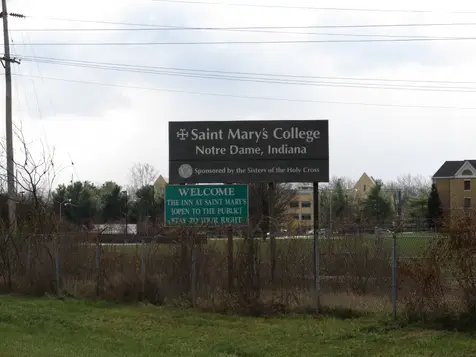
Saint Mary’s College, CA acceptance rate is 81.6%. The average SAT Reading and Writing score for Saint Mary’s College, CA is 590, and the Math score is 570. The average SAT composite score is 580. The average ACT composite score is 25. The average CLT Verbal Reasoning score is 50, and the Quantitative Reasoning score is 22. The average CLT composite score is 79. The tuition fee is $59,251 and the total cost is $83,593. Learn more on the tuition page.
Saint Mary’s College, CA
Cristiano Tomás / Wikimedia Commons / "Brousseau Hall 4716 (cropped)" / CC BY-SA 4.0
Saint Mary's College of California, founded in 1863 as a diocesan boys' college, became a coeducational institution under the De La Salle Christian Brothers. It began in Oakland before relocating to Moraga in 1928. Historically all-male until 1970, it now houses roughly two dozen Christian Brothers, with non-Christian Brother President James A. Donahue taking office in 2013. Academically, it consists of four schools, with a focus on liberal arts and Business Administration as the primary major. Moraga's attractive campus features a variety of architectural styles. Student housing options range from first-year community-style accommodation to upperclassmen suites and townhouses. Living Learning Communities are promoted on campus, creating thematic residential interaction. Athletic facilities, community service opportunities, and cultural centers all improve the student experience.
Achievable blue logo on white background
Achievable CLT - $99
Prepare with the best online CLT self-study prep course. Built for today's students: mobile, guided, and personally optimized.
Easy-to-understand online textbook
Full practice exams
Adaptive study planner
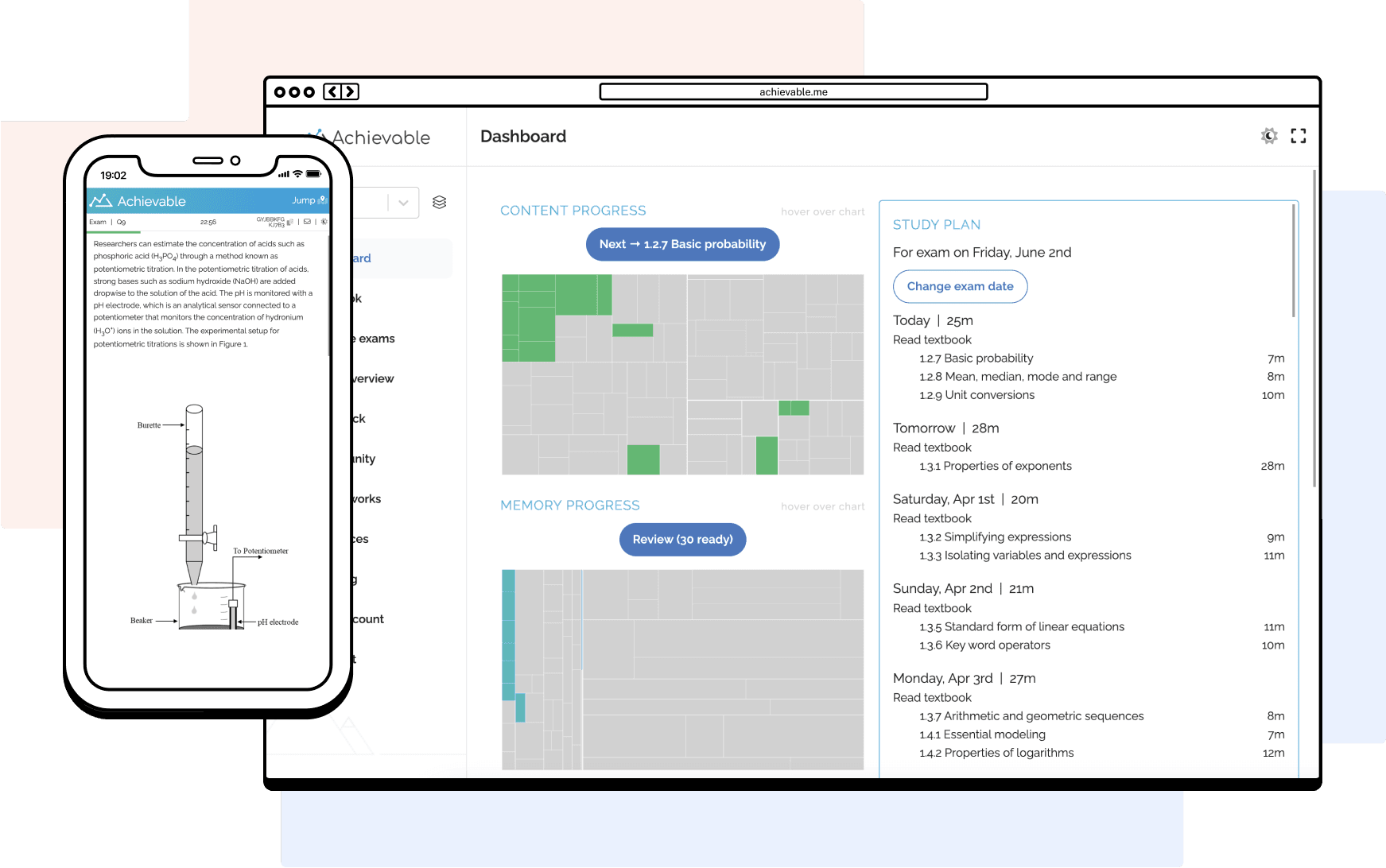
Laptop displaying the Achievable exam prep dashboard and a smartphone displaying a quiz question

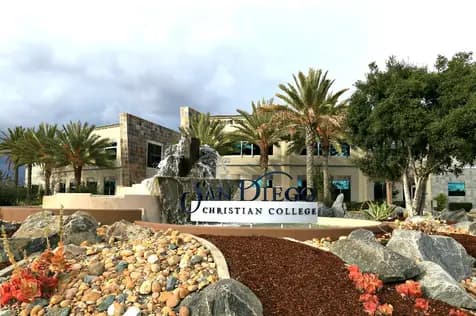
San Diego Christian College cost and key information

San Diego Christian College acceptance rate is 50%. The average SAT Reading and Writing score for San Diego Christian College is 580, and the Math score is 540. The average SAT composite score is 1120. The average ACT composite score is 23. The average CLT Verbal Reasoning score is 51, and the Quantitative Reasoning score is 20. The average CLT composite score is 74. The tuition fee is $13,764. Learn more on the tuition page.
San Diego Christian College
Devindad / Wikimedia Commons, / "San Diego Christian College" / CC BY-SA 3.0
San Diego Christian College (SDCC) is a private, Christian liberal arts college in Santee, California, founded in 1970. It offers certificates, associate, bachelor's, and master's degrees in both on-campus and online formats. Accredited by the Western Association of Schools and Colleges (WASCUC), SDCC is affiliated with the CCCU, AICCU, and NAICU. The college has a student-to-faculty ratio of 12:1 and emphasizes a biblical worldview in education. SDCC previously competed in the NAIA as the Hawks before transitioning away from intercollegiate athletics.

St. Mary’s College of California cost and key information

St. Mary’s College of California acceptance rate is 88%. The average SAT Reading and Writing score for St. Mary’s College of California is 640, and the Math score is 620. The average SAT composite score is 1260. The average ACT composite score is 28. The average CLT Verbal Reasoning score is 60, and the Quantitative Reasoning score is 26. The average CLT composite score is 89. The tuition fee is $59,251 and the total cost is $83,593. Learn more on the tuition page.
St. Mary’s College of California
Pi.1415926535 / Wikimedia Commons, / "Aerial view of Saint Mary's College of California, October 2020" / CC BY-SA 4.0
Saint Mary's College of California, founded in 1863 and located in Moraga, is a private Catholic institution administered by the De La Salle Brothers. It offers undergraduate and graduate programs across four schools, emphasizing a liberal arts education. The college is known for its Lasallian tradition, strong academics, and research funding from institutions like the NSF and NEH. Saint Mary’s competes in NCAA Division I athletics, with a successful men's basketball team. It also offers club sports, including championship-winning rugby. With a student-faculty ratio of 13:1, the college provides a Collegiate Seminar and Integral Program, focusing on discussion-based learning inspired by the Great Books curriculum.

Thomas Aquinas College, CA cost and key information

Thomas Aquinas College, CA acceptance rate is 79%. The average SAT Reading and Writing score for Thomas Aquinas College, CA is 690, and the Math score is 640. The average SAT composite score is 1460. The average ACT composite score is 33. The average CLT Verbal Reasoning score is 67, and the Quantitative Reasoning score is 30. The average CLT composite score is 105. The tuition fee is $31,000 and the total cost is $42,400. Learn more on the tuition page.
Thomas Aquinas College, founded in 1971, is a private, coeducational Catholic institution offering a Great Books-based Bachelor of Arts in Liberal Arts. With campuses in California (845 acres) and New England (110 acres), it enrolls 566 students from 42 states and multiple countries. It has a 1:11 faculty-student ratio and a 92% freshman retention rate. Accredited by WASC, the college emphasizes faith-based education and academic excellence, earning top rankings from Kiplinger’s, Princeton Review, and U.S. News & World Report. Nearly 40% of alumni pursue graduate studies, with 10% entering religious life. The college remains committed to its founding mission of Catholic liberal education.

Thrive College cost and key information

The tuition fee is $8,136 and the total cost is $14,036. Learn more on the tuition page.
Thrive College is a 9-month discipleship program at Bayside Church in Roseville, CA, designed for 18-25-year-olds seeking vocational or secular ministry preparation. Students engage in a 20-hour internship and take accredited college courses to earn their degree. Tuition ranges from $10,000 to $14,100, covering housing for out-of-town students. Located near Sacramento, Thrive offers mentorship and faith-based community support during a critical life stage. The program emphasizes spiritual growth, leadership development, and hands-on ministry experience, providing an alternative to traditional college paths while fostering deep connections within the Church.

Westmont College cost and key information

Westmont College acceptance rate is 62.4%. The average SAT Reading and Writing score for Westmont College is 630, and the Math score is 610. The average SAT composite score is 620. The average ACT composite score is 25. The average CLT Verbal Reasoning score is 59, and the Quantitative Reasoning score is 25. The average CLT composite score is 87. The tuition fee is $52,320 and the total cost is $70,544. Learn more on the tuition page.
Westmont College
Westmont College, a Christian liberal arts college in Santa Barbara, emphasizes developing intelligent scholars, grateful servants, and loyal leaders. The college mixes disciplines, values deep knowledge, and spiritual growth, and has a student-to-faculty ratio that encourages individualized attention. Offering 31 majors, it encourages students to think for themselves while also living for others. The devotion to faith is obvious in the weekly chapel services. Education is made more affordable by financial help and generous scholarships. The Westmont Warriors excel in athletics, winning championships, and the student experience is enhanced with study abroad possibilities and a scenic location. The college places an importance on diversity, fairness, and adherence to the traditional Christian religion.

Zaytuna College cost and key information

Zaytuna College acceptance rate is 71%. The average SAT Reading and Writing score for Zaytuna College is 700, and the Math score is 670. The average SAT composite score is 1370. The average ACT composite score is 31. The average CLT Verbal Reasoning score is 69, and the Quantitative Reasoning score is 31. The average CLT composite score is 98. The tuition fee is $20,000 and the total cost is $30,750. Learn more on the tuition page.
Zaytuna College, the first accredited Muslim undergraduate college in the U.S., is a private liberal arts institution in Berkeley, California. Established in 2009 from the Zaytuna Institute (founded in 1996 by Hamza Yusuf and Hesham Alalusi), it integrates Islamic education with the American liberal arts tradition. Offering a BA in Liberal Arts & Islamic Studies and an MA in Islamic Texts, its curriculum blends classical Muslim and Great Books traditions. Zaytuna emphasizes Arabic proficiency, theology, philosophy, and law. Accredited by WASC, it fosters morally committed leaders grounded in Islamic scholarship and engaged with contemporary culture, reviving the denominational liberal arts college model with a Muslim ethos.

How is the CLT scored?

CLT scoring is straightforward: the test contains 120 multiple-choice questions, each worth one point. Each individual section of the exam contributes up to 40 points toward your overall score. The average CLT score falls between 75 and 80, and a score above 90 is considered competitive.

There are three main parts of the exam, not including an optional essay, which cover foundational skills for undergraduate admission:

  • Verbal Reasoning (40 questions)
  • Grammar and Writing (40 questions)
  • Quantitative Reasoning (40 questions)

Each section is further divided into content domains. For Verbal Reasoning, the two main subsections are Analysis and Comprehension, which include questions on interpreting and comparing passages. For Grammar/Writing, the corresponding sections require students to answer questions on agreement, punctuation, sentence structure, style, and word choice. Algebra, Geometry, and Mathematical Reasoning make up the mathematical content covered in the Quantitative Reasoning section.

How do CLT scores compare to the SAT and ACT?

The official CLT concordance table helps test-takers understand how CLT scores translate to scores on the ACT and SAT, the two exams most frequently used for college admission decisions. For example, a score of 70 on the CLT corresponds to a 1080 on the SAT or a 21 on the ACT, both of which fall within the 60th–70th percentile on each test.

The table below lists CLT scores in intervals of 20 alongside corresponding ranges of SAT and ACT scores:

CLT intervalSAT rangeACT range
0 – 19510 – 6509 – 11
20 – 39660 – 82011 – 14
40 – 59830 – 100015 – 19
60 – 791000 – 116019 – 24
80 – 991170 – 138024 – 30
100 – 1201390 – 160031 – 36

Because the ACT and SAT are more widely used for college admissions, students can use the table above to gauge how their CLT scores compare with those of a larger group. If you’re deciding between exams for your college applications, start by taking ACT, SAT, and CLT practice tests and comparing your scores. You might find that the CLT’s structure and content are a better fit, even if the SAT and ACT are more widely accepted.

Do CLT colleges also accept the SAT and ACT?

All colleges that recognize the CLT also take SAT or ACT scores. The SAT and ACT remain the most widely used undergraduate admissions exams, focusing primarily on technical math, grammar, and reading knowledge. The choice of which test or tests to take depends heavily on your assessment preferences and the variety of schools you’re applying to. If you’ve narrowed your list down to schools that partner with the CLT, then you will not need to take an additional exam.

How do I register for the CLT?

To register for the CLT exam, begin by creating an online account through the official CLT website. Once your account is set up, you can register for the CLT by selecting the appropriate exam. Be sure to choose carefully, as the CLT3-8 test and CLT10 exam are designed for younger students. The online registration platform allows you to pick your preferred CLT test date, decide whether to take the exam in-person or remotely, and securely pay your exam fee to finalize your registration.

For the best results on the CLT exam, plan to dedicate at least 3 – 4 months to focused preparation; consistent studying and practice will maximize your potential for achieving a top score.

Conclusion

The CLT caters to college applicants who value rigorous academics and classical learning; it goes beyond rote memorization, focusing on interpretive and analytical skills over other tests. Some of the leading religious and liberal arts institutions in the U.S. accept the CLT exam as part of their admissions process. The schools listed above in California offer excellent choices for students seeking a college community rooted in traditional learning and values. With the exam growing in popularity and the scope of schools accepting CLT scores expanding, students who take the test now have more options than ever.

For more information on the exam and preparation tips, visit our CLT course guide and exam overview.

Interested in CLT colleges in other states?
Achievable CLT dashboard
Hit your target score
Achievable is the best online CLT exam prep course: effective, personalized, and convenient. With Achievable, you'll spend less time studying and hit your target score with confidence.